1. INTRODUCTION
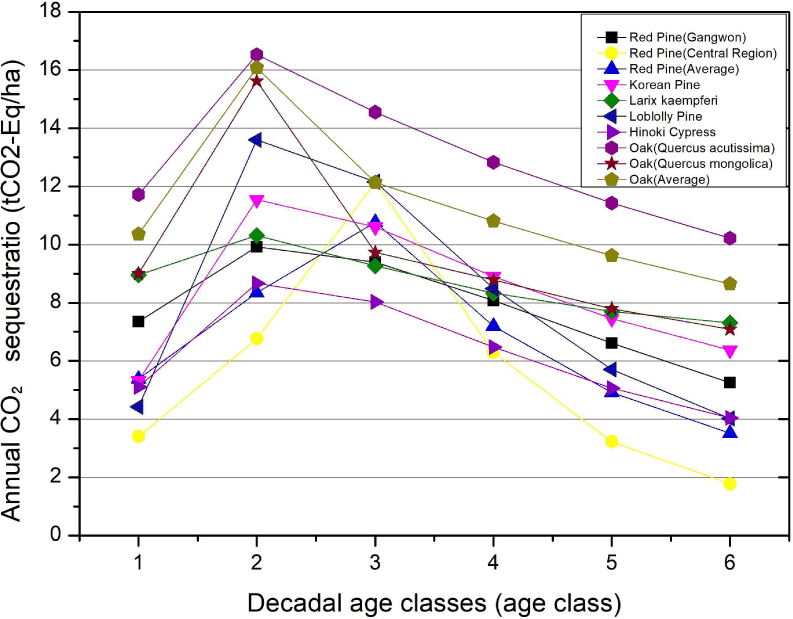
As of 2020, forested areas in the Republic of Korea cover approximately 6,298 thousand hectares, accounting for approximately 62.7% of the nation’s total land area (National Institute of Forest Science, 2024). The age class distribution of forests indicates that stands older than Class IV constitute most forests, as shown in Table 1. Carbon dioxide absorption per unit area has declined with forest age (Fig. 1). This may lead to a long-term reduction in the net annual carbon sequestration in national forests (Korea Forest Service, 2021a). To address this situation, it is necessary to establish a forest management system that includes appropriate harvesting of aging trees, their use as wood products, and the implementation of reforestation to ensure sustainable forest cycles. In line with this, the Korea Forest Service has developed and is actively promoting the “2050 Carbon Neutrality Strategy for the Forest Sector.” This aims to increase domestic timber production to 8 million m3 by 2050 to restore the carbon sink function of forests and achieve national carbon neutrality goals (Korea Forest Service, 2021b). According to the guidelines of the Intergovernmental Panel on Climate Change (IPCC), the carbon stored in harvested wood product (HWP) can be included in a country’s greenhouse gas inventory. The 17th Conference of the Parties (COP17) of the United Nations Framework Convention on Climate Change (UNFCCC) recognized only the carbon contained in HWPs produced from domestically harvested roundwood and manufactured domestically. This highlights that the effective use of domestic forest resources can directly contribute to national greenhouse gas mitigation strategies.
| Category | Total | Age class | |||||
|---|---|---|---|---|---|---|---|
| I | II | III | IV | V | VI | ||
| Forest area | 5,996 | 258 | 199 | 674 | 2,452 | 2,069 | 344 |
| Growing stock | 1,040,447 | - | 8,124 | 75,285 | 438,090 | 437,281 | 81,667 |
Data from Korea Forest Service (2021a).
International studies have continuously developed methodologies for quantitatively estimating carbon stored in wood and have applied these approaches to assess the carbon storage value of HWP. Cláudia Dias et al. (2009) compared several methods for estimating carbon accumulation in HWP, including the Winjum method and the Tier 2 and Tier 3 approaches based on the IPCC Good Practice Guidance, and demonstrated that carbon stock estimates can vary substantially depending on the selected methodology and accounting approach. In addition, Braun et al. (2016) analyzed carbon stocks and half-life (HL) characteristics of HWP pools in Austria according to final use categories such as construction, furniture, and packaging, thereby quantitatively illustrating how carbon storage outcomes differ according to wood product utilization pathways. Together, these studies provide an important methodological foundation and analytical framework for the national-level quantification of carbon storage effects associated with HWP.
In Korea, studies on HWP carbon stocks began in earnest after the 2006 IPCC Guidelines introduced standardized methodologies for calculating carbon storage (Choi et al., 2010). Subsequent studies analyzed the changes in carbon stocks and emissions from domestically HWPs (Choi and Kang, 2007) and evaluated the carbon storage effects of sawnwood in the housing sector (Choi and Joo, 2011). In addition, several studies have quantitatively evaluated the carbon mitigation effects of domestically produced wood products (Chang et al., 2018). However, these studies primarily focused on calculating the carbon storage for individual product categories and did not fully assess the long-term carbon storage effects across different use patterns.
The long-term carbon storage potential of HWPs depends strongly on their mode of use and service life, which the IPCC characterizes using product-specific HL values (IPCC, 2019). Among HWP categories, sawnwood has the longest HL (35 years), and increasing its use in structural applications has been shown to enhance overall carbon storage, although specific application sectors have not been sufficiently examined in a policy-relevant context (Chang et al., 2022).
The HL values for HWP presented by the IPCC represent statistical averages; however, when sawn timber and other wood-based materials are used as structural components in buildings, their actual service life typically exceeds 50 years, and in the case of long-life buildings, often extends to 70–100 years (Yamashita et al., 2024). Moreover, several studies have demonstrated that extended service lives and longer half-lives of HWP allow carbon to be stored for longer periods, thereby exerting a significant influence on carbon mitigation outcomes (Huo et al., 2026; Moreau et al., 2025). In this regard, the application of wood products in building construction offers substantially greater carbon storage potential than would be inferred from statistical HWP HL values alone, highlighting the particular relevance of building-oriented wood-use strategies from a policy perspective.
At present, to support the long-term use of wood in buildings, research on structural systems for timber buildings is being conducted to facilitate the application of wood in construction (Kim et al., 2025a). In parallel, studies have actively addressed the standardization of design approaches for applying cross-laminated timber (CLT) as a building material, as well as the evaluation of the structural strength of CLT itself and the thermal performance of CLT wall systems (Kim et al., 2025b; Pang et al., 2017; Rahmawati et al., 2025). In addition, research on the structural performance of laminated veneer lumber used in timber–concrete composite systems is being carried out in parallel (Kim et al., 2024), indicating that the technical foundation for utilizing wood as a building material is being progressively established.
Accordingly, this study assumes an increase in domestic roundwood production under the “2050 Carbon Neutrality Strategy for the Forest Sector” and evaluates the long-term carbon storage effects associated with different utilization pathways. In particular, because buildings represent the HWP category with the longest potential service life, we establish a scenario in which the additional sawn timber is utilized for the reconstruction of aging public educational buildings. Public educational buildings were selected as the target sector because they are widely distributed nationwide, subject to standardized public procurement systems, and characterized by long service lives. Moreover, the high proportion of aging school buildings indicates substantial reconstruction demand, providing a scalable and policy-relevant pathway for applying domestically produced sawnwood. This scenario is analyzed to assess its policy relevance and potential contribution to long-term carbon mitigation.
2. MATERIALS and METHODS
The UNFCCC recommends that countries estimate greenhouse gas emissions and removal from sources and sinks using one of the three methodological tiers (Tier 1, Tier 2, or Tier 3) described in the IPCC Guidelines (Greenhouse Gas Inventory and Research Center of Korea, 2024). This study employed the Tier 1 methodology and applied the production approach to estimate the carbon stock in HWPs. This approach reports the annual changes in carbon stocks within a country’s forest carbon pool, including all HWP produced from domestically harvested roundwood. Even if these HWPs are exported, their carbon content is still considered a part of the reporting country’s HWP pool (IPCC, 2019; Park, 2014).
Annual changes in carbon stocks of HWP were calculated using the first-order decay function recommended in the IPCC Tier 1 methodology. The carbon stock of product category l in year i + 1 was estimated as follows:
where Cl(i) represents the carbon stock at the beginning of year i,Inflow(i) denotes the annual carbon inflow to the HWP pool, and k is the decay constant derived from the product-specific half-life (k = ln(2)/ HL). Initial carbon stocks were estimated following the back-calculation procedure described in the IPCC Guidelines (IPCC, 2019). For sawnwood, which has a default HL of 35 years, the corresponding decay constant is 0.0198, indicating gradual carbon release over time rather than instantaneous emissions.
To evaluate carbon stocks associated with different domestic roundwood utilization patterns, this study used domestic roundwood supply data and use ratios provided by the Korea Forest Service (2024). The analysis covered the period from 2005 to 2023, during which the average annual supply of domestic roundwood was approximately 2.79 million m3. In accordance with the IPCC Guidelines, biomass and other uses that are not recognized as carbon storage categories were excluded, and sawnwood, wood-based panels, and paper were selected as the HWP categories for analysis. Based on this classification, the final use ratios applied for estimating HWP carbon stocks were set at 20% for sawnwood, 50% for wood-based panels, and 30% for paper (Table 2).
Roundwood can be processed into various forms of HWP, allowing carbon storage for specific periods. However, the expected service life varies among the HWP product types, resulting in differences in the rate and duration of carbon release. The IPCC defines the storage period using the concept of HL, which refers to the average time required for half of the carbon stored in a particular wood product category to be released into the atmosphere. The 2019 IPCC Guidelines classify HWP into three main categories—sawnwood, wood-based panels, and paper—and provide Tier 1 default half-lives of 35, 25, and two years, respectively (IPCC, 2019).
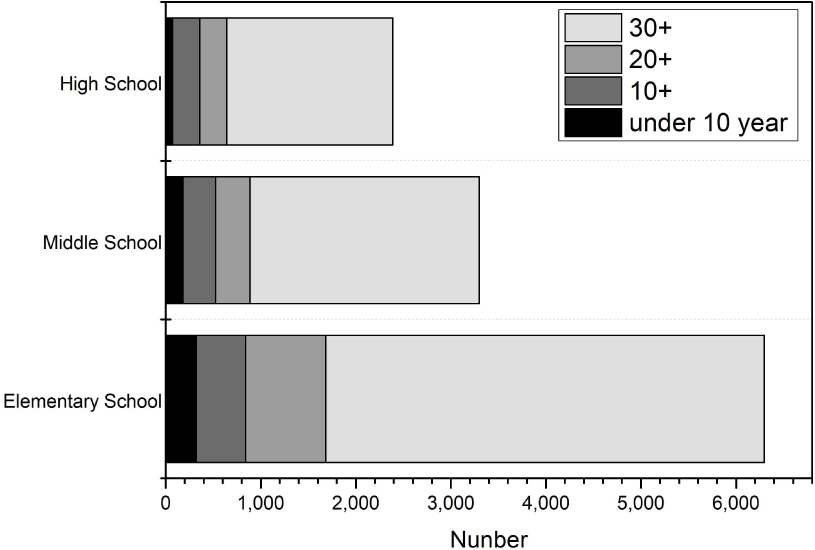
According to data from the Public Data Portal, 8,777 out of 11,985 elementary, middle, and high school buildings nationwide (approximately 73%) are over 30 years old and classified as aging structures (KLEA, 2025). Given this high proportion of aging facilities, this study designates the reconstruction of school buildings as the target sector for applying scenario of domestic sawnwood utilization. Educational facilities were selected because they are widely distributed nationwide, follow standardized public procurement systems, and are characterized by long service lives, making them a suitable and representative sector for scenario-based analysis (Fig. 2).
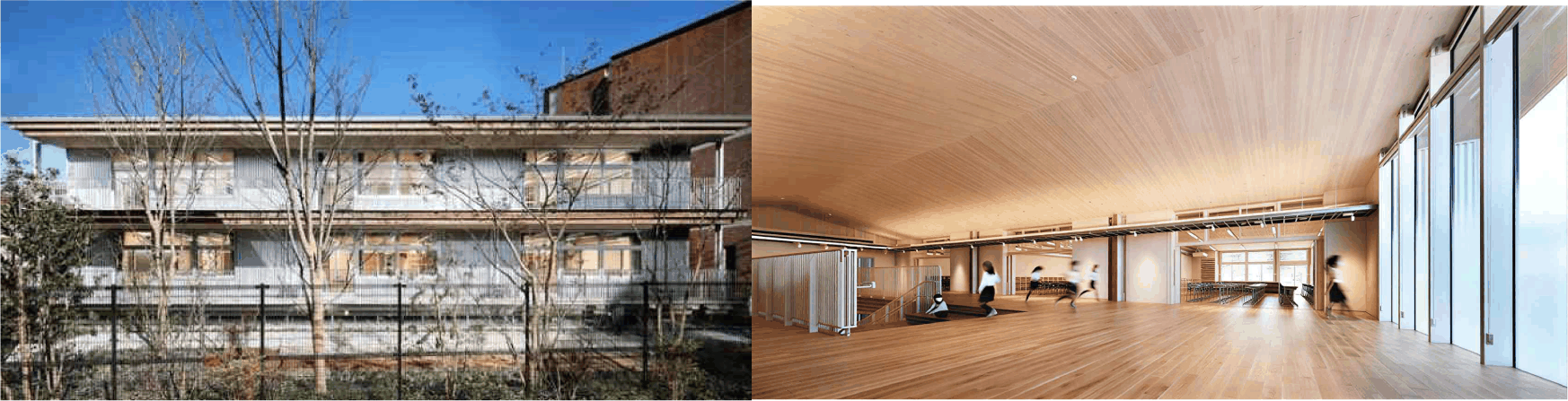
To estimate the amount of wood required for reconstruction, this study used an average floor area of 11,763 m2 per school, based on data from the Seoul Metropolitan Office of Education (2025). The unit wood demand was calculated using the floor-area-to-wood volume ratio from Showa Gakuin Elementary School West Wing in Chiba, Japan. This building, designed with Japanese- sourced CLT, was completed in November 2021 and used 700 m3 of CLT for a total floor area of 1,467.84 m2 (Japan Cross Laminated Timber Association, 2022). In this study, the resulting floor-area-to-CLT ratio was applied as the unit CLT demand for structural members only, excluding wood used solely for non-structural interior finishes or furnishings. Figs. 3 and 4 show the building exterior and interior, respectively. Accordingly, the required timber volume was calculated as 0.4772 m3 per square meter and was applied in this study.
In this study, one baseline case and two scenarios were developed to provide a practical analytical framework that supports the Korea Forest Service’s strategy of achieving carbon neutrality by 2050 and maximizing the carbon storage benefits of domestic wood use. The case and scenarios were designed based on variations in HWP utilization pathways and roundwood production levels. The analysis covered the period from 2005 to 2050, comprising a historical phase (2005–2024) based on observed domestic roundwood production and use data, and a projection phase (2025–2050) in which roundwood production and utilization were estimated under case-specific and scenario-specific assumptions to reflect the carbon neutrality targets.
As summarized in Table 3, the analytical framework consists of a baseline case, scenario 1 (current use scenario), and scenario 2 (sawnwood-focused scenario). The carbon stocks of HWP under each case and scenario were estimated according to the IPCC 2019 guidelines. The baseline case was included to quantitatively assess not only the differences in carbon storage resulting from alternative wood-use patterns but also the importance of increasing domestic roundwood production itself. Serving as a baseline case in which the carbon neutrality strategy is not implemented, the baseline case assumes that roundwood production remains at the current average level through 2050 while applying the same 2:5:3 use ratio. Both scenario 1 and scenario 2 reflect a gradual increase in domestic roundwood production, consistent with the 2050 Carbon Neutrality Strategy for the Forest Sector. In scenario 1, it was assumed that the total increase in roundwood production was processed and used according to the historical average ratio of sawnwood: wood-based panels: paper = 2:5:3. In contrast, scenario 2 retains the same 2:5:3 use ratio for the existing roundwood harvest but allocates all additional production entirely to sawnwood. Sawnwood is assumed to be used in the reconstruction of domestic elementary, middle, and high school buildings. By comparing scenario 1 and scenario 2, which assume identical increases in domestic roundwood production but differ in the utilization pathway of the additional supply, this study evaluates how alternative wood-use strategies influence long-term carbon storage outcomes.
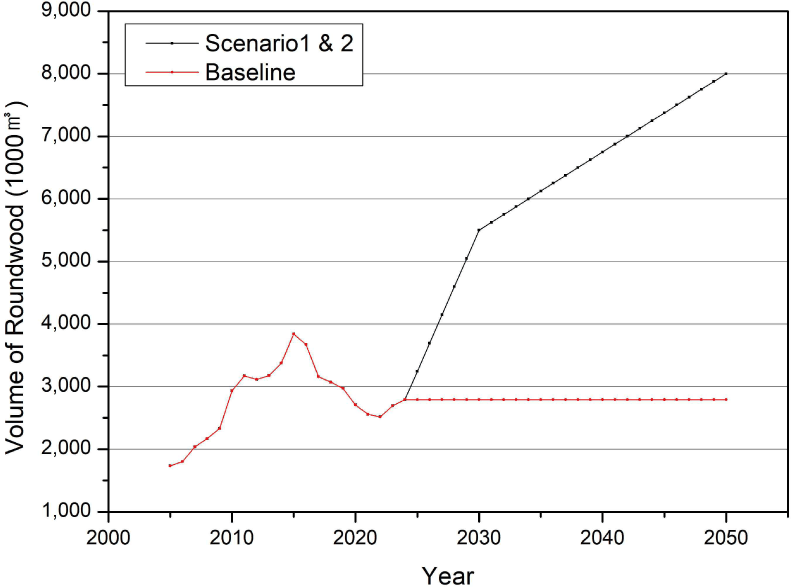
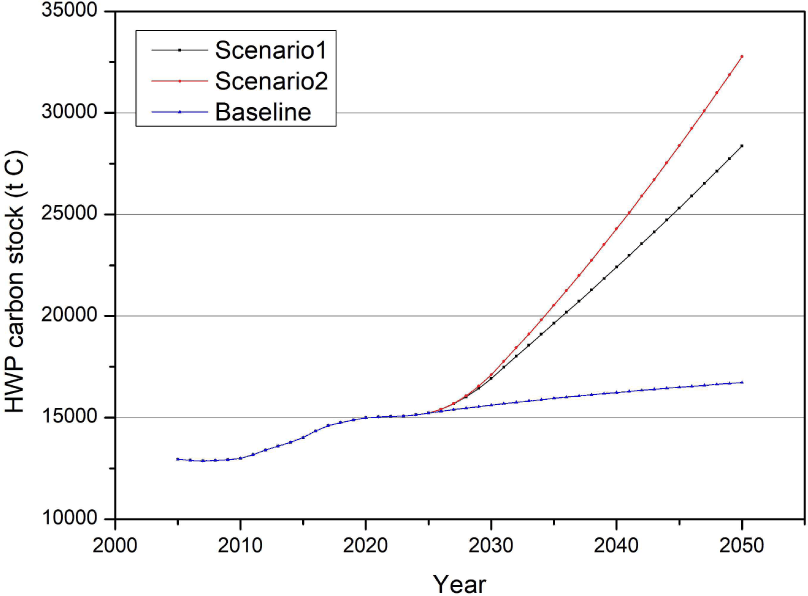
The roundwood production trends for the baseline case and the two scenarios from 2005 to 2050 are shown in Fig. 5. Scenarios 1 and 2 assumed a steady increase in roundwood production, whereas the baseline case followed a conservative pathway, maintaining production at the current average level throughout the period. Together, these comparisons enable a clear assessment of both the effect of expanded domestic roundwood production and the influence of alternative wood-use pathways on long-term carbon storage.
3. RESULTS and DISCUSSION
Based on data for domestic roundwood production and use by category from 2005 onward, the total carbon stock stored in the HWP as of 2024 is estimated to be 15,135 t C. Of this amount, wood-based panels accounted for the majority at 9,571 t C, followed by sawnwood at 5,034 t C and paper at 530 t C. Using the 2024 carbon stock as the baseline case, this study applied the proposed scenarios to assess changes in the carbon stock in the HWP projected through 2050.
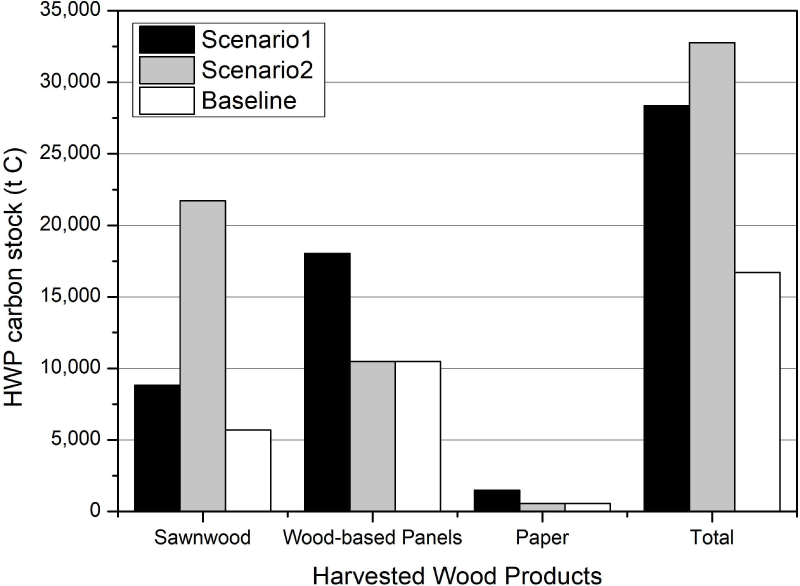
Baseline case is defined as a conservative approach, in which both roundwood production and use ratios remain at their historical averages until 2050. This Baseline case serves as the reference for evaluating the effects of Scenarios 1 and 2. The trends in carbon stock under this Baseline case are shown in Fig. 5. By 2050, the estimated carbon stock will be 5,687 t C in sawnwood, 10,473 t C in wood-based panels, and 557 t C in paper, resulting in a total of 16,717 t C. When converted to carbon dioxide storage, this amounts to approximately 61,297 t CO2, which is the lowest total carbon storage among the analytical cases.
Under the 2050 Carbon Neutrality Strategy for the Forest Sector, Scenario 1 assumes that all additional roundwood production beyond the average domestic harvest up to 2024 is used according to the historical ratio of sawnwood: wood-based panels: paper = 2:5:3. As roundwood production increased, the use of all HWP categories increased proportionally, as illustrated in Fig. 5. By 2050, the estimated carbon stock will be 8,819 t C in sawnwood, 18,047 t C in wood-based panels, and 1,501 t C in paper, with a total of 28,367 t C stored in HWP. This corresponds to approximately 104,012 t CO2 when converted to carbon dioxide storage.
Similar to scenario 1, this scenario assumes an increase in domestic roundwood production. However, it allocates all additional roundwood exclusively to sawnwood use. Therefore, the amount of sawnwood in the HWP pool increased substantially. Meanwhile, the quantities of wood-based panels and paper remained at their average levels until 2024. The changes in the carbon stocks under this use pattern are illustrated in Fig. 5. By 2050, the estimated carbon stock will be 21,741 t C for sawnwood, 10,473 t C for wood-based panels, and 557 t C for paper, totaling 32,772 t C. This is equivalent to approximately 120,163 t CO2 when converted to carbon dioxide storage.
Scenario 2 encompasses the scale of aging elementary, middle, and high school buildings that could be reconstructed using an increased amount of sawnwood. The average floor area of these school buildings was assumed to be 11,763.2 m2, with an estimated wood demand of 0.48 m3 per square meter (Japan Cross Laminated Timber Association, 2022). Based on these assumptions, the annual number of schools that could be reconstructed under scenario 2 was calculated and summarized in Table 4. The analysis suggests that all 8,777 aging schools identified in 2024 could be sequentially reconstructed by 2042.
However, this reconstruction potential represents a theoretical estimate derived from quantitative calculations, and actual policy implementation would require future research to further examine practical constraints such as budget availability, administrative procedures, construction timelines, and the stability of domestic sawnwood supply chains.
Table 5 illustrates the increase in carbon stock relative to the 2024 baseline for each analytical case. Scenario 2 shows the greatest increase, with a 116.5% rise compared to 2024, followed by Scenario 1 with an 87.4% increase, and Baseline case with a 10.5% increase. These results indicate that both changes in domestic roundwood production levels and differences in utilization pathways substantially influence long-term carbon storage outcomes in HWPs.
| Analytical case | Carbon stocks (t C) | Increase relative to 2024 (%) |
|---|---|---|
| 2024 | 15,135 | - |
| 2050 Baseline | 16,717 | +10.45 |
| 2050 Scenario1 | 28,367 | +87.4 |
| 2050 Scenario2 | 32,772 | +116.5 |
The Baseline case and Scenario 1 apply the same use ratio for domestic roundwood; however, they differ substantially in the total volume of roundwood utilized. As shown in Table 5, the carbon stock in 2050 is 11,650 t C higher in Scenario 1 than in Baseline case, owing to the increased roundwood production assumed in Scenario 1. This comparison isolates the effect of expanding domestic roundwood production on carbon storage, demonstrating that increased domestic supply can play a meaningful role in supporting national carbon neutrality targets.
Scenarios 1 and 2 assume the same total volume of domestic roundwood; however, they differ significantly in their allocation ratios. As shown in Table 5, Scenario 2—characterized by a higher proportion of sawnwood use—results in 4,405 t C more stored carbon compared to Scenario 1. This comparison highlights the role of wood utilization pathways, indicating that even under identical production levels, the allocation of harvested wood among product categories critically influences carbon storage outcomes. Prioritizing long-lived products such as sawnwood, particularly for use in building materials, can significantly enhance long-term carbon retention and thus substantially strengthen the climate mitigation potential of HWPs.
By explicitly separating the effects of production expansion from those of utilization structure changes, these results demonstrate that a combined strategy of increasing roundwood production while prioritizing sawnwood use yields the greatest carbon storage benefits among the analytical cases examined. From a carbon storage perspective, this comparison highlights the relevance of linking forest production policies with product-level utilization strategies. In addition, the allocation of additional sawnwood to the reconstruction of long-life public educational buildings suggests that forest-sector production targets can be translated into tangible, long-term carbon storage within the built environment. From a carbon storage perspective, as illustrated in Table 4, the reconstruction of public educational buildings under Scenario 2 generates a steady annual inflow of carbon into long-lived building stocks through newly constructed facilities. This annual inflow represents the amount of carbon newly incorporated into the building sector each year, which subsequently contributes to sustained long-term carbon retention when accounted for within the HWP carbon stock framework.
4. CONCLUSIONS
This study examined how variations in domestic roundwood production and utilization patterns influence long-term carbon storage in HWPs and proposed effective wood-use strategies to support national carbon neutrality goals. As illustrated in Table 5 and Figs. 4–6, the comparative analysis across the analytical cases shows that an increase in domestic roundwood production leads to a direct and quantifiable increase in total HWP carbon stocks, and that this effect is further enhanced when a greater share of harvested wood is allocated to long-lived products, particularly sawnwood.
In addition, this study explored the practical applicability of using sawnwood in the reconstruction of public buildings, particularly elementary, middle, and high school facilities distributed nationwide. Moving beyond previous studies that largely remained at the product- category level, this study establishes a quantitative linkage between increased domestic roundwood supply and a specific, scalable application pathway in the built environment. In this context, this study highlights its unique contribution by connecting domestic timber production policy with public building demand, thereby demonstrating a realistic pathway for maximizing the carbon retention potential of HWP.
Despite these contributions, the study has several limitations. First, carbon stock estimation was conducted using the Tier 1 method of the IPCC 2019 Guidelines, which may not fully capture domestic-specific characteristics such as actual service life, variability in HL, and end-of-life pathways of wood products. Accordingly, the carbon storage values reported in this study should be interpreted as conservative estimates, representing a lower-bound assessment of the carbon retention potential of HWPs under domestic conditions. Second, the estimation of reconstruction demand relied on a simplified criterion based on building age, which did not account for partial renovation and may have resulted in potential overestimation of reconstruction demand. Third, the assumption that all additional roundwood in the sawnwood-focused scenario would be allocated to public building reconstruction does not fully reflect administrative, financial, and construction-related constraints, which may affect the temporal distribution of sawnwood use.
Nevertheless, this study offers both academic and policy contributions by providing an integrated, case- based assessment of domestic roundwood production and utilization structures from the perspective of long- term carbon storage, and by quantitatively demonstrating that a sawnwood-centered utilization strategy, when combined with increased roundwood production, can substantially enhance the carbon retention potential of HWPs. Furthermore, by explicitly linking forest-sector production policies with reconstruction scenarios for public educational buildings, this study presents a differentiated and application-oriented framework that can support the achievement of national carbon neutrality objectives. In this respect, the findings of this study are not intended to prescribe a single optimal solution, but rather to provide quantitative evidence that can help justify and inform the expanded use of wood in the building sector under future climate, construction, and material policies.