1. INTRODUCTION
Acacia auriculiformis A. Cunn. ex. Benth. commonly referred to as earleaf Acacia belongs to Fabaceae family and is renowned for the rapid growth rate and adaptability to diverse soil types and environmental conditions. This species has been extensively cultivated for valuable timber and ecological benefits in tropical and subtropical regions, including Southeast Asia, particularly Indonesia. A. auriculiformis serves multiple purposes as a source of pulpwood, timber for construction, and firewood, contributing significantly to the economy and environment (Haque et al., 2021). Furthermore, the ability to enhance soil fertility through nitrogen fixation positions the species as a crucial component of sustainable forestry practices (Davis et al., 2024; Haque et al., 2021). The multifaceted utilization of A. auriculiformis shows the importance in commercial forestry and ecological restoration efforts (Nirsatmanto et al., 2023).
In the context of breeding programs aimed at enhancing the quality of trees, progress with A. auriculiformis has experienced numerous challenges. The primary objective of the programs was to increase the desirable growth traits and simultaneously mitigate undesirable attributes associated with faster-growing species, such as inferior wood quality and strength (Harwood et al., 2015; Hidayati et al., 2019; Kim and Kim, 2020). Other tropical fast-growing species, such as Neolamarckia cadamba and hybrid Eucalyptus, show no correlation between rapid growth and wood quality (Maharani et al., 2025; Prasetyo et al., 2018). The rapidly growing A. auriculiformis wood often lacks the durability of mechanical properties compared to slower-growing hardwoods (Shukla, 2019). This inferiority presents significant challenges for the utilization in high-strength applications, such as construction, where quality and stability are needed. Genetic factors, including low variation within populations, further complicate the breeding effort aimed at producing durable forms of A. auriculiformis for industrial applications (Harwood et al., 2015). In addition, silvicultural practice, particularly pruning and thinning, played an important role in enhancing physical and mechanical attributes of tropical trees (Seta et al., 2023). While foundational work has established a basis for selection in initial provenance and first generation (F-1) trials, the evaluation of second-generation (F-2) progeny is a critical next step in a recurrent breeding strategy. The F-2 generation allows for the assessment of inherited wood traits in a population with increased genetic recombination from the crossing of selected F-1 parents, providing essential information on the heritability and potential for further genetic gain. Therefore, this study focuses on a 4-year-old F-2 progeny trial to evaluate the genetic variation in physical and mechanical properties among selected families, information that is vital for advancing the breeding cycle and identifying superior genetic material for deployment.
In Indonesia, the hybrid of A. auriculiformis × Acacia mangium, stands out as a preferred species over Eucalyptus sp. This is true in terms of growth performance, wood characteristics, and relative resistance to cadmium (Cd) concentrations leading to reduced growth rates and productivity (Davis et al., 2024; Nirsatmanto et al., 2023). Even though A. auriculiformis grows rapidly, wood density and properties may not match Eucalyptus or other Acacia species such as A. mangium, which are favored for the superior wood qualities (Haque et al., 2021). Breeding programs therefore emphasize not only growth traits but also wood quality parameters, including modulus of elasticity (MOE), compressive strength, and anatomical characteristics that determine inherent wood strength (Prasetyo et al., 2016, 2018). Wood strength is especially important for selecting clones capable of withstanding wind damage and maintaining structural integrity (Hutabarat et al., 2024).
A further challenge arises from Indonesia’s reliance on fast-growing species with short rotation cycles of four to six years, which yield predominantly juvenile wood (Hardiyanto et al., 2024; Kojima et al., 2009; Makino et al., 2012). Encouragingly, early selection for wood quality can already be performed at three to four years of age, enabling the identification of promising genotypes prior to harvest (Makino et al., 2012; Martins et al., 2020; Prasetyo et al., 2018). Research on demarcation of juvenile and mature woods on this species is still limited, but several researchers have successfully identified these areas on other tropical fast-growing wood species. For example, mature wood formation in Indonesian A. mangium was reported at beyond 45.8 to 60 mm from pith or after 4.5 years of age (Makino et al., 2012; Nugroho et al., 2012). Other cases in Indonesia, specifically to Diospyros kaki, mature wood was formed at 44.1 mm from the pith (Kartikawati et al., 2024). Differences in the demarcation between juvenile and mature wood depend on species, genotype, and geographic origin (Boruszewski et al., 2017; Zobel and Buijtenen, 1989).
Previous research has underscored that the mechanical properties of A. auriculiformis timber are critical for its sustainable utilization, particularly in load-bearing applications where insufficient stability could result in both structural failures and economic losses (Haque et al., 2021; Shukla et al., 2007). In this study, wood utilization for various applications was analyzed by identifying traits that improve wood quality, particularly strength and dimensional stability. Therefore, this research aimed to evaluate the potential of F-2 A. auriculiformis for improving wood quality traits relevant to solid-wood utilization. The study focused on identifying relationships among physical and mechanical properties and discussing possible end uses such as furniture, paneling, and light structural components.
2. MATERIALS and METHODS
The study was conducted at the Gunung Kidul Research Forest (KHDTK), located in the special region of Yogyakarta, Indonesia (7°59’10’’–7°59’42’’ South Latitude and 110°30’00’’–110°30’59’’ East Longitude). The area has an elevation of approximately 200 m above sea level.
The region is characterized by a Type C climate according to the Schmidt-Ferguson classification. Meteorological data indicate an average annual rainfall of 1,894 mm, distributed over an average of 103 rainy days per year. The climate pattern includes 7 wet months and 5 dry months annually. The temperature ranges from a minimum of 23.2°C to a maximum of 32.4°C, with common wind speeds ranging between 25 and 30 m/s.
The topography of the site is undulating, with slopes varying from 8% to 30%. The dominant soil type in the area is Black Grumusol (Sumunar et al., 2020; Yasa et al., 2022).
The plant material consisted of 4-year-old trees from three selected families of A. auriculiformis A. Cunn. ex Benth. The genetic origin of the trees traces back to a provenance from Papua New Guinea (family 3) and Australia (families 11 and 12). The specific seed source for the established plantation was a first-generation Seed Seedling Orchard (SSO-F1) located in Wonogiri, Central Java, Indonesia. The three families were selected based on growth performance (diameter and height) and tree shape. Stem diameter at breast height (DBH), total height (TH), and free branch height (Hfb) were measured using Diameter Tape (F10-02DM, KDS, Kyoto, Japan) and Tape Roll meter before selected trees were cut down (KW01-658, Krisbow, Jakarta, Indonesia). In total, 9 trees were sampled, comprising of 3 families by 3 repetition of tree samples.
Although the sample size was small (three families × three replicates), it was chosen to represent best growth and stem form within the broader progeny trial. The selected families were intended to provide preliminary insight into the variation of wood properties among different genetic materials (different families) originating from distinct provenances. Due to the small number of samples that constrains the statistical robustness and generalization of the findings, therefore, the results should be interpreted as indicative rather than conclusive, and as a foundation for subsequent studies involving larger sample sizes and broader family representation.
Seeds were sown in July 2014, and the resulting seedlings were planted in the field in January 2015. The plantation was established on a total site area of 1.78 hectares, specifically in Compartment no. 93. The trial employed a Randomized Complete Block Design (RCBD). The experimental layout consisted of 30 families, replicated 33 times. Each plot contained 4 trees, planted at a spacing of 3 × 1.5 meters.
Land preparation was carried out using mechanical ground cultivation. At the time of planting, a fertilizer application of 100 grams of Triple Superphosphate (TSP) was applied per planting hole. The existing vegetation cover at the site was primarily dominated by Kayu Putih (Melaleuca leucadendra) wildlings.
Each felled tree was cut into 65-cm-long sections representing the base, middle, and top portions (Fig. 1). Logs were divided into test samples of 8 cm discs for MCg, basic density (BD), and dimensional shrinkage [radial shrinkage (RS), tangential shrinkage (TS), longitudinal shrinkage (LS), and ratio of RS and TS (T/R)], as well as 50 cm logs for static bending [MOE and modulus of rupture (MOR)] and compressive strength [compressive strength at parallel to grain (CSpr) and compressive strength at perpendicular to grain (CSper)] tests. Subsequently, small-clear specimens were obtained radially for each 2 cm distance from pith toward bark side (Fig. 1). All the data of axial and radial directions was averaged for each sample tree. The procedure of physical and mechanical properties was according to British Standard (BS. 373:1957).
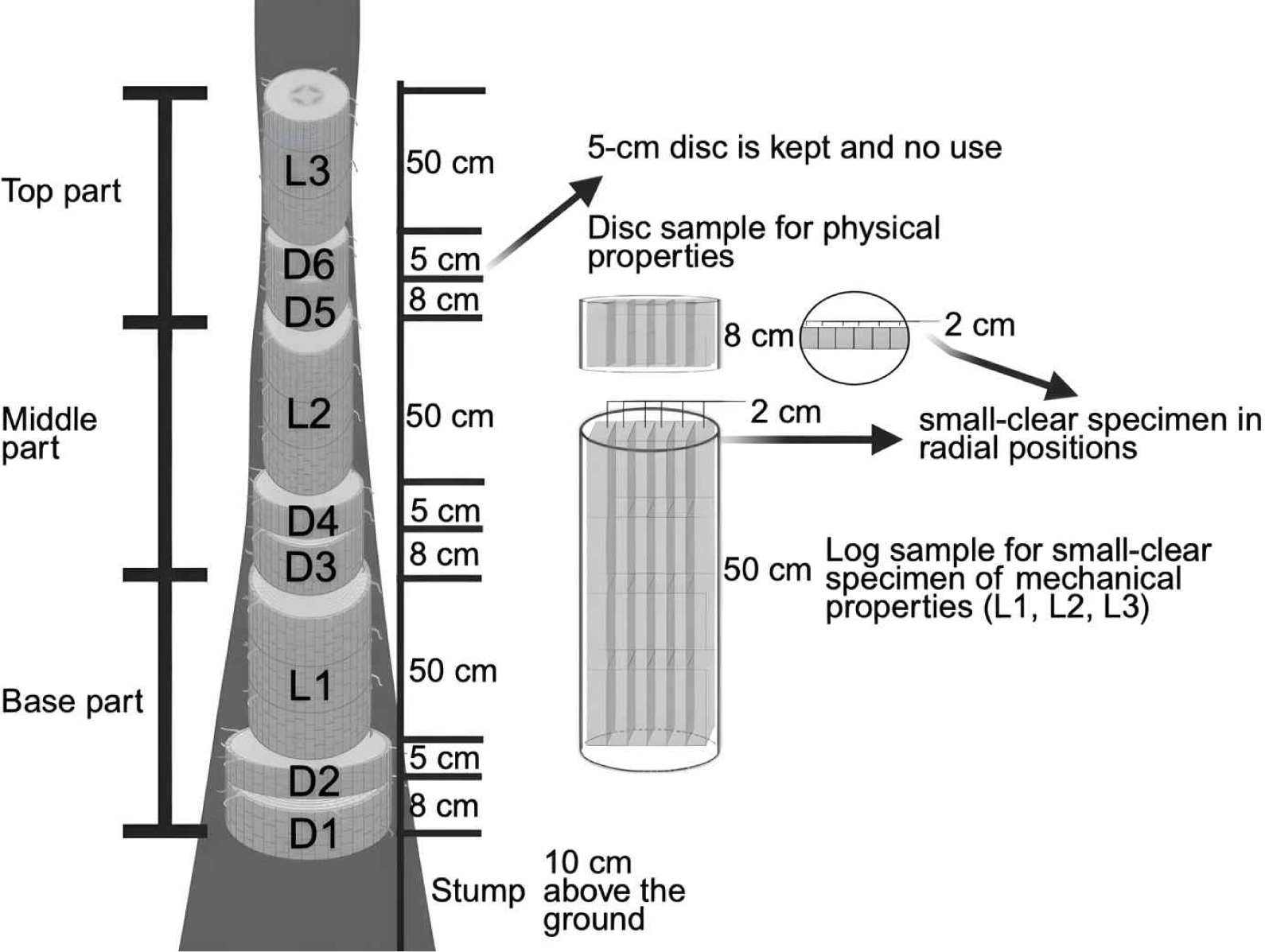
MCg and BD were measured on 8-cm-thick disks, while radial strips (2 × 2 × 2 cm) were prepare from each disk. Small blocks were also obtained from two opposite sides with respect to the pith of the disk, and then all data were used to average the value of these properties. BD was calculated as the ratio of oven-dry weight to green volume as determined by the water displacement method. Analytical Balance (XE-310, Denver Instrument, Denver, CO, USA) was used for measuring the weight of the samples. The radial, tangential, and longitudinal dimensions of the specimens under air- and oven-dried conditions were measured by digital caliper (CD-6 CS, Mitutoyo, Kawasaki, Japan). Furthermore, the values of MCg, BD, and shrinkage parameters (RS, TS, VS, and T/R-ratio) were determined using Equations (1) to (4) as follows (British Standards Institution, 1957; Savero et al., 2020):
where MCg (%) is the green moisture content of wood, Wg (g) is wood sample weight in green conditions, Wod (g) is wood sample weight under oven-dried conditions, BD (g/cm3) is wood basic density, Vg (cm3) is wood sample volume in green condition, xSg.o. is the percentage of dimensional shrinkage (%) of certain dimension (RS, TS, and LS) from green to oven-dried condition, Lx.g. is the dimension length of certain direction (L, T, and R) in green condition (mm), Lx.o. is the dimension length of certain direction (L, T, and R) in oven-dried condition (mm), and T/R-ratio is the shrinkage ratio of tangential (TS) and radial (RS) dimension from green to oven-dried condition.
Air-dried specimens of static bending for MOR and MOE (2 × 2 × 30 cm), CSpr and CSper to the grain (2 × 2 × 6 cm) were obtained from air-dried radial-sawn board cut from logs at 2-cm intervals. The procedure of the testing was according to British Standard (BS. 373:1957). Mechanical tests were performed on samples with moisture content of 12 ± 1%. The MOE, MOR, and compressive tests were conducted using a Universal Testing Machine (Instron 3369, Instron, Norwood, MA, USA). The static bending test was carried out using a single-point loading at the centre of wood sample. The span and loading rate used was 28 cm and 2.54 mm/ minute, respectively. In CSpr and CSper, the loading rate used was 0.50 mm/minute and 0.60 mm/minute, respectively. The values of MOE, MOR, CSpr, and CSper were calculated using Equations 5 to 8 as stated below (British Standards Institution, 1957; Savero et al., 2020):
where MOE is the modulus of elasticity (kgf cm–2, then converted to GPa), ΔP is the load changes in proportion limit area (kgf), L is the span length of wood sample (cm), ΔY is deflection at mid-length at the limit of area (cm), b is wood sample width (cm), h is wood sample thickness (cm), MOR is the modulus of rupture (kgf/cm2 converted to MPa), Pmax is the maximum load (kgf), CSpr is the compressive strength parallel to the grain (kgf/cm2), A parallel is wood sample surface parallel to the grain (cm2), CSper is the compressive strength perpendicular to the grain (kgf/cm2 converted to MPa), A perpendicular is wood sample surface perpendicular to the grain (cm2 converted to MPa).
Prior to analysis, the data were tested for normality using the Shapiro–Wilk test and for homogeneity of variances using the Levene’s test. Significant differences in the measured traits among families were evaluated using one-way analysis of variance (ANOVA) at 5% and 1% significance levels. When the ANOVA indicated significant effects, mean separations among families were performed using Tukey’s Honest Significant Difference (HSD) test. Internal relationships among physical and mechanical properties were analyzed using Pearson’s correlation coefficients. In addition, Principal component analysis (PCA) was conducted to identify variable groupings, patterns, reduce dimensionality, and visualize relationships through a biplot. All statistical analyses were performed using the R statistical environment (R Core Team, 2024) within RStudio version 2024.04.1.+748.
3. RESULTS and DISCUSSION
The data in Fig. 2 reflect genetic differences influencing tree growth characteristics. There was no significant difference observed in DBH (p-value = 0.54) within three families. However, family 12 reported a consistent DBH distribution, with values between 10.1 cm and 10.9 cm. TH from all sampled trees ranged from 12.3 to 15.0 m with family 12 showing superior vertical growth (14.4–15.0 m) considering the variation within sampled trees (p = 0.30). In contrast, free-branched height (Hfb)—the height of the lowest major branch—showed significant variation. The value ranged from 1.8 m to 3.6 m, with family 3 showing significantly higher branching compared to others.
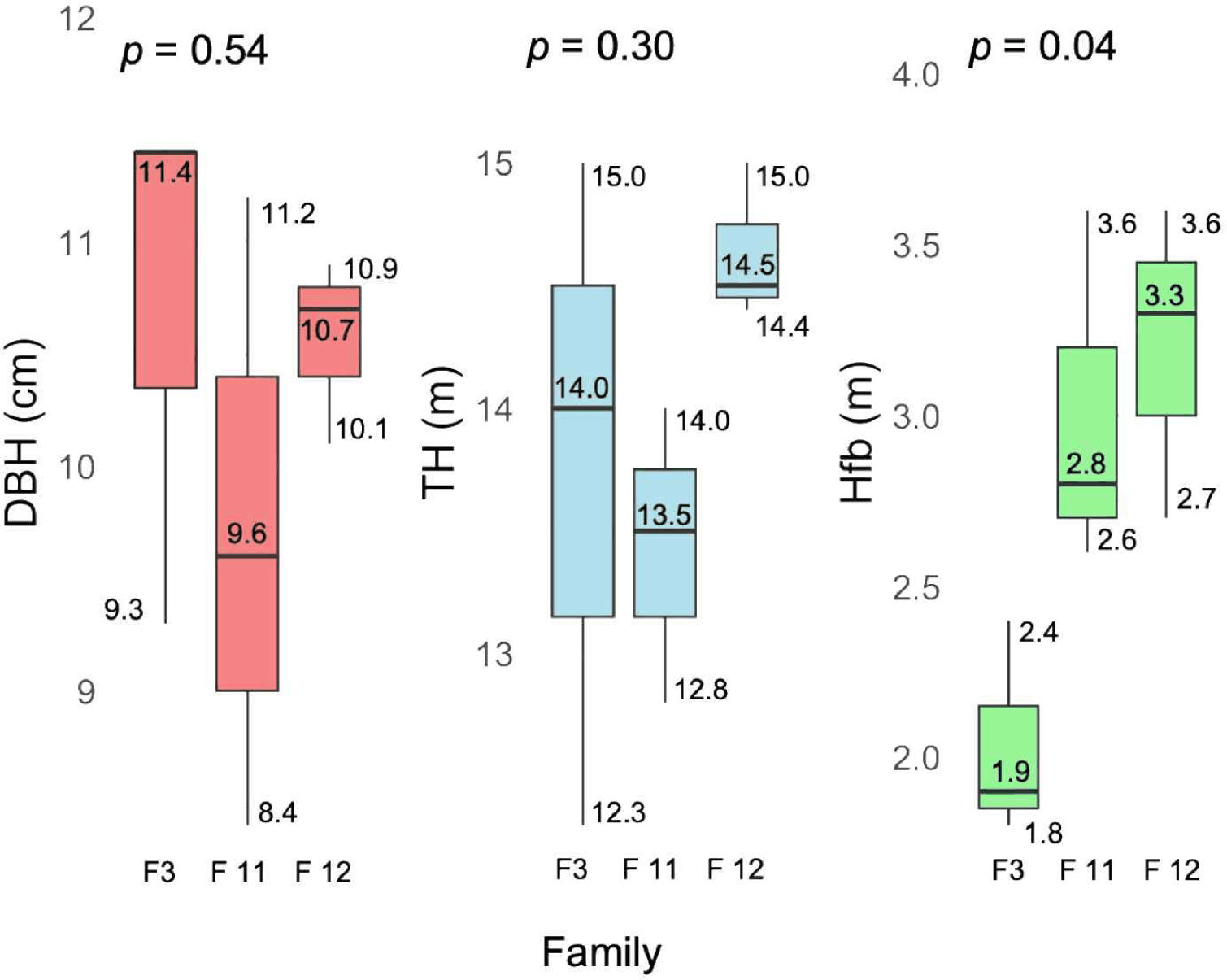
Widhiati et al. (2025) conducted an analysis of all families in the progeny trial and reported that family effect significantly influenced the diameter and stem form of 9-year-old A. auriculformis planted in Yogyakarta, Indonesia. In other tropical fast-growing species, such as Eucalyptus, the tree height and stem diameter are genetically control with heritability higher than 0.8 (Fadwati et al., 2023). Although, this species has been well-known for its capability to adapt wide variety of difficult sites (Asif et al., 2017; Haque et al., 2016; Wiersum and Ramlan, 1982), the primary disadvantage associated with stem form which had moderate score of 3.34 out of 5, serving as the primary concern in the breeding program (Widhiati et al., 2025).
At 5-year-old, A. auriculiformis had mean DBH, TH, and Hfb of 17.2 cm, 12.5 m, and 7 m, with planting density of 790 trees per hectare (3.56 × 3.56 m planting spacing) in Southern Benin, West Africa (Hounlonon et al., 2021). A 10-year-old A. auriculiformis had 24.5 cm and 19.8 m in DBH and TH, planted in 2,500 trees per hectare (2 × 2 m planting spacing), in Malaysia (Asif et al., 2017). In this study, observed lower values for the parameters investigated could be affected by the age (younger). However, this research corroborated the observation, reporting that the families showed potential improvement in Hfb.
Significant difference was observed in MCg, BD, TS, LS, MOE, and CSpr among three families (Table 1). This results suggesting that this properties are genetically controlled in A. auriculiformis. Moisture content and specific gravity were significantly different among families of 3-year-old A. mangium planted in South Sumatra, Indonesia (Susanto et al., 2025). In other hardwood trees, BD and compressive strength were significant different among clones of 12-year-old teak planted in Java, Indonesia (Hidayati et al., 2014). Furthermore, family 12 was reported as the most promising family for tree improvement due to superior physical and mechanical properties as an ideal choice of parent trees candidate for wood quality improvement aiming for structural applications. LS was slightly higher than family 3 but remained within an acceptable range. Family 3 showed moderate performance of mechanical properties. In contrast, family 11 reported the lowest mechanical strength values. Despite having a BD similar to family 3, the LS was the highest due to a greater tendency to shrink and distort. Given the lower mechanical strength, this family may not be the best choice for high-strength applications but can be considered when stability is required.
n: number of sampled trees, MCg: moisture content at green condition, BD: basic density, RS: radial shrinkage, TS: tangential shrinkage, LS: longitudinal shrinkage, T/R Ratio: ratio of RS and TS, MOE: modulus of elasticity, MOR: modulus of rupture, CSpr: compressive strength at parallel to grain, CSper: compressive strength at perpendicular to grain.
The MCg, BD, RS, TS, LS, and T/R ratio ranged from 68.5% to 85.2%, 0.55 to 0.61 g/cm3, 2.21%–2.25%, 3.32% to 3.86%, 0.32% to 0.40%, and 1.49 to 1.80, respectively (Table 1). For mechanical properties, the three families had 6.90 to 8.64 GPa of MOE, 74.9 to 88.6 MPa of MOR, 41.3 to 53.9 MPa of CSpr, and 18.7 to 20.5 MPa of CSper (Table 1). Compared to younger A. auriculiformis, the BD ranges from 0.35 to 0.43 g/cm3 for 3-year-old planted in Indonesia (Marsoem and Irawati, 2016). The total shrinkage properties in this species were better than those reported on Vietnamese 5.5-year-old A. auriculformis (3.23%, 5.92%, 0.96% for RS, TS, and LS) (Hai et al., 2009). At 8-year-old, A. auriculiformis planted in India had MC, RS, TS, LS, T/R, BD, MOE, MOR, CS parallel and CS perpendicular to grain of 54%, 2.66%, 5.34%, 0.53%, 2.0, 0.57 g/cm3, 8.9 GPa, 73.9 MPa, 32 MPa, and 6.6 MPa, respectively (Shukla et al., 2007). Compared to most commercial timber materials (Tectona grandis and Shorea leprosula), A. auriculiformis mechanical properties have slightly lower MOE (9.35–12.16 GPa), comparable MOR (72.0–81.1 MPa), slightly increased CSpr (37.9–41.9 MPa), and within range of CSper (13.4–64.1 MPa; Lee et al., 2024; Nugroho et al., 2024). This research showed relatively comparable physical and mechanical properties when compared to older trees and teakwood.
The study’s findings must be considered in the context of the wood’s juvenile nature, as the sampled trees are mostly juvenile wood, which is less dense, more dimensionally unstable, and weaker mechanically than mature wood (Zobel and Buijtenen, 1989). While the obtained results can be used as early selection procedures for seeking the best gain in mechanical properties, it means the reported MOE and CSpr values are likely lower than those in older trees. Thus, while our results are valuable for identifying top-performing families at this stage, caution is advised when extrapolating these property values to predict mature tree performance (> 6 years). Strong family rankings for wood quality are expected to persist, but structural application performance would improve with more mature wood.
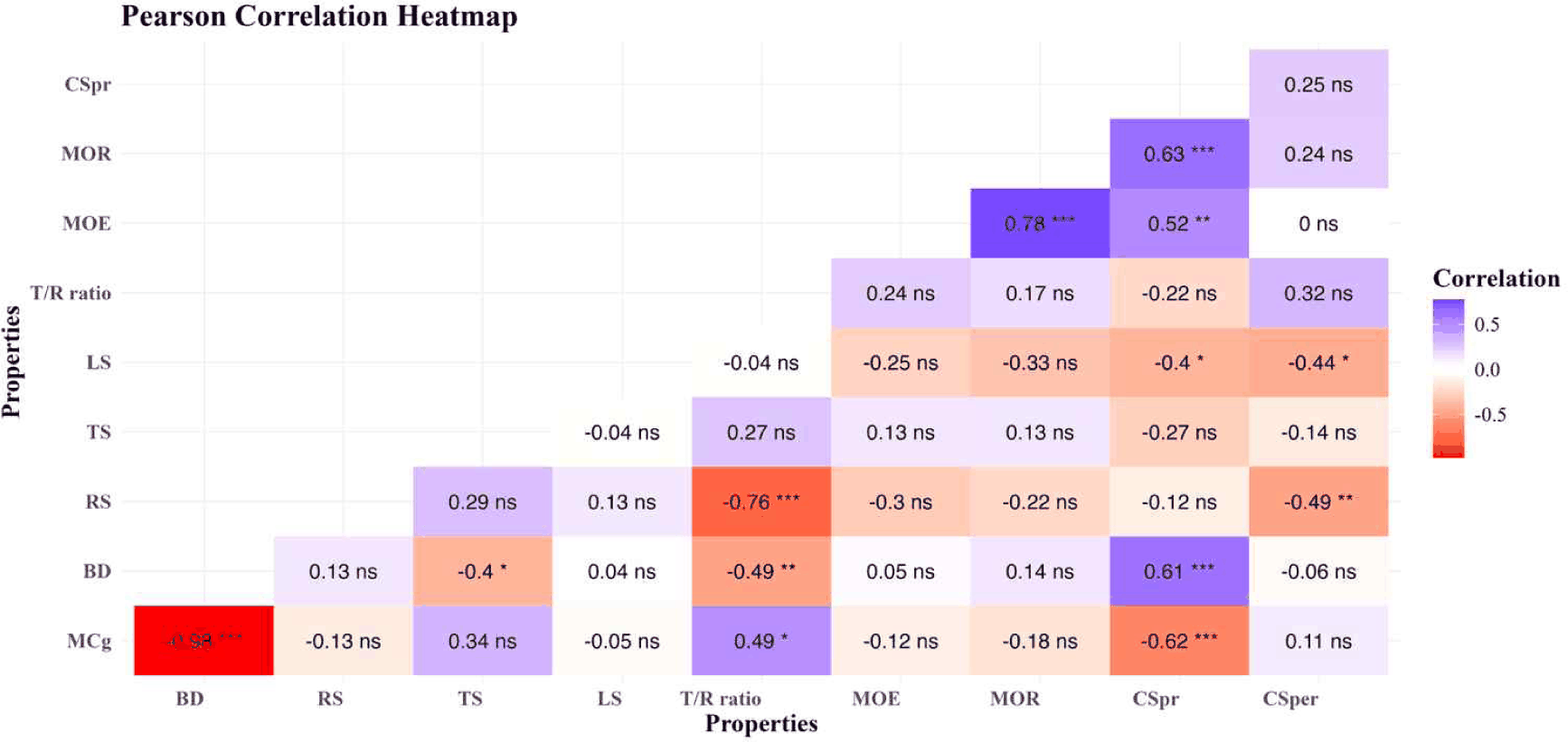
The correlation analysis in Fig. 3 shows that MCg reports varied relationships with physical and mechanical properties of A. auriculiformis. The correlation between MCg and BD is strong and negative (–0.98***). Additionally, MCg shows a medium and significant correlation with the T/R ratio (0.49*) since higher moisture content may influence dimensional stability. MCg does not report strong correlations with mechanical properties such as MOE, MOR, or CSpr and CSper. MCg has a significant effect on density and shrinkage behavior but may not be a strong predictor of mechanical strength. BD had negative, positive, and strong correlations with TS (–0.4*), T/R (0.49**), and CSpr (0.61***), respectively. There is a trend of stronger relationships between BD with MOE, MOR, and shear strength from 5 to 20 years old A. auriculiformis planted in West Africa (Hounlonon et al., 2021). At 5-year-old, the coefficient of determination (R2) between BD and mechanical properties ranges from 0.31 to 0.91. Meanwhile, these correlations increased with R2 ranging from 0.72 to 0.99 (Hounlonon et al., 2021). In other species, such as 15-year-old Styrax sumatrana, BD or specific gravity had a strong correlation with MOE and MOR (Iswanto et al., 2016). Negative correlation between moisture content and wood mechanical properties also was found in softwood species, such as spruce, pine, and fir (Kim and Kim, 2020). At this stage, where the tree is relatively young, BD is a strong predictor of dimensional stability, but not reliable for all mechanical strength properties except for CSpr. This pattern may also be a feature of juvenile wood, where the relationship between density and strength is still developing. In more mature trees, with a more complex anatomical structure, these correlations often become stronger and more consistent across different strength properties (Zobel and Jett, 1995).
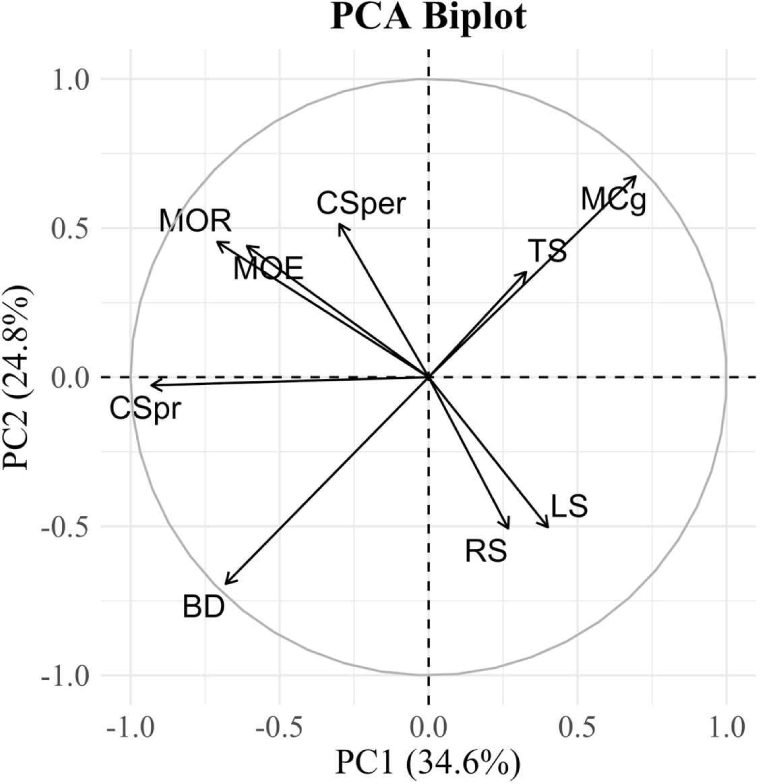
The PCA biplot shows that Principal Components 1 (PC1) and 2 (PC2) explain 34.6% and 24.8% of the total variance, as reported in Fig. 4. These two principal components explain 59.4% of the total variance, which provides a moderate level of confidence in interpreting the major patterns of the dataset. Additional components may contribute to unexplained variability since 70%–80% are not collectively exceeded, such as genetic or environmental factors. Based on PCA biplot, MCg had opposite directions with shrinkage properties and CSpr. The selection of low MCg would favor high BD and a preference for dimensional stability when trees are standing. However, caution should be exercised due to the potential low mechanical strength parallel to grain direction (CSpr). To mitigate this negative effect, a trade-off between MCg and BD should be considered. The second selection traits can be attributed to mechanical properties (MOE, MOR, and CSper) collectively forming a distinct group uncorrelated with shrinkage-related variables. This shows the potential for independent improvement. The significant impact of moisture content (MCg) on other wood properties can be attributed to the strong correlation between dry and wet wood properties. For example, an absolute high coefficient of determination (R2 = 0.97) was reported between compressive strength at wet and dry conditions in spruce (Aicher and Stapf, 2016).
The wood of A. auriculiformis shows considerable differences in density and mechanical characteristics across various clones and provenances, leading to its common utilization as structural wood because of its enhanced mechanical properties (Muhammad et al., 2018; Tonouéwa et al., 2020). In this study, family 12 showed rapid growth with relatively uniform DBH, dimensional stability, and mechanical properties, as a promising candidate for high-yield forestry, especially when it comes to being a hybridization source with A. mangium as reported by Sunarti et al. (2013). They reported that hybridization between A. mangium and A. auriculiformis had improved 17.28% height growth over to superior parents. The superior traits also suggest strong potential as a tree in hybridization programs aimed at improving growth and wood properties. The shortcoming of family 3 in the low canopy led to trees producing more branches and wood knots as well as a reduction in the value of timber production. Conversely, family 12 reported the highest Hfb compared to others. Intraspecific hybridization between families 12 and 3 led to improved individual trees with superior growth, high dimensional stability, mechanical properties, and Hfb. To optimize the utilization of family 12 as timber, the use of outer wood is recommended, especially for younger ages (< 6 years old), where portions of juvenile wood are present. Use of this wood, especially the outerwood part, is essential for timber application, especially when mature wood commonly forms after 60 mm from the pith or beyond 4.5 to 6 years old in Indonesian fast-growing species (Makino et al., 2012; Nugroho et al., 2012).
4. CONCLUSIONS
The significant difference among families was observed in growth characteristics and wood properties. This indicates that genetic selection in 4-year-old A. auriculiformis can prioritize families with superior mean performance to gain wood quality improvement without sacrificing yield.
Family 12 exhibited higher BD, MOE, and compressive strength, coupled with acceptable dimensional stability, suggesting preliminary potential for solid-wood products such as furniture frames, flooring, and small structural components. Family 11, with greater free-branch height but lower mechanical strength, may be more suitable for interior or non-load-bearing uses, including panels, joinery, and decorative elements. Family 3 demonstrated intermediate properties and could serve as a potential hybrid parent for balancing strength and stability traits. These results provide initial indications of the potential application of A. auriculofrmis families for wood utilization. However, further evaluation involving larger sample sizes, older trees, and additional property testing (e.g., tensile, shear, durability, and bonding performance) is required to confirm suitability for engineered or structural applications.