1. INTRODUCTION
Wood is an essential resource that has been utilized for various purposes such as housing, furniture, musical instruments, and fuel throughout human history, and has recently been attracting attention as a key material for the transition to a sustainable society. In particular, wood possesses a carbon storage function and is evaluated as a representative eco-friendly building material because its carbon emissions during the product production process are relatively low compared to other construction materials (Hemström et al., 2010). Accordingly, various countries such as Canada, Finland, Sweden, Japan, and the United States are actively expanding the application of wooden construction and interior wood, and in Korea, policies to promote the use of wood are being strengthened, centered on the public sector.
Recently, wood has been recognized as a core element of biophilic design in the field of architecture, moving beyond environmental sustainability (Grinde and Patil, 2009). Biophilic design aims to promote the emotional stability, cognitive recovery, and stress relief of occupants through the integration of natural elements (Tekin et al., 2025). In this context, convergence research to verify the psychological and physical recovery potential of wood environments is being actively conducted not only in architecture but also in various academic fields such as psychology and physiology.
In Japan, studies analyzing the effects of wood environments on the human psycho-physiological response have been reported using physiological measurement techniques such as near-infrared spectroscopy (NIRS) to evaluate brain activity, electroencephalography (EEG), and heart rate variability (HRV; Ikei et al., 2017; Sakuragawa et al., 2008; Tsunetsugu et al., 2002). Furthermore, in Europe and North America, the impact of wood environments on emotional and psychological responses has been evaluated using the semantic differential (SD) scale, profile of mood states (POMS), and positive and negative affect schedule (PANAS; Burnard and Kutnar, 2015; Fell, 2010; Kotradyova et al., 2019).
Meanwhile, domestic research has primarily focused not on directly evaluating human responses, but rather on identifying the physical and chemical properties of wood that may influence such responses. Yang et al. (2020) confirmed the insulation performance of wooden structures, which may be associated with indoor comfort, through an analysis of heat transfer characteristics by material. In addition, Han et al. (2022) reported that, based on a user perception survey of indoor spaces where wood was applied, an increase in the amount of wood used was associated with improvements in evaluations of emotional stability and comfort.
These previous studies demonstrate that academic interest in the potential influence of wood environments on human psychological and physiological responses has been gradually expanding. However, in the existing literature, the indicators used and the criteria for interpretation differ across studies, which limits the comprehensive understanding and comparison of research findings. In particular, related research remains relatively limited in Korea, and there have been few cases in which the indicators used in experimental studies have been systematically organized and compared. Accordingly, this study aims to systematically review and comprehensively analyze experimental studies published between 2000 and 2025 in accordance with the PRISMA 2020 guidelines. This review was conducted based on the following research questions. First, it sought to identify the types and characteristics of psychological and physiological indicators used to evaluate human responses in wood environments. Next, by comparing and analyzing the results and consistency of findings according to types of stimuli, visual, olfactory, tactile, and multisensory, this study aims to propose psychological and physiological indicators applicable to future experimental designs.
2. MATERIALS and METHODS
This study was conducted in accordance with the PRISMA 2020 guidelines for systematic reviews (Page et al., 2020). The literature search was designed to include articles published between January 1, 2000, and July 31, 2025, using three major academic databases: PubMed, Scopus, and Google Scholar. The search strategy combined key terms such as “wood,” “wooden interior,” “timber environment,” “psychological effect,” “physiological response,” “psychophysiological effect,” and “volatile compounds.”
Among the retrieved records, experimental studies conducted in actual wooden indoor environments or simulated indoor environments were selected. Studies reporting at least one psychological or physiological indicator were included. In contrast, studies that did not involve human participants, review articles, conference abstracts, and articles written in languages other than English were excluded from the analysis. After applying these inclusion and exclusion criteria, a total of 24 studies were ultimately included in the analysis.
To evaluate the validity of the study design and methodology of the 24 selected articles, different assessment tools were applied according to the type of study design. For studies employing randomized controlled trials or crossover designs, the Cochrane Risk of Bias 2.0 (RoB 2.0) tool was used to assess the risk of bias (Sterne et al., 2019). In this study, risk of bias assessment refers to a methodological evaluation conducted to examine the potential for errors in study design and data analysis that may influence the interpretation and reliability of the findings.
Using the RoB 2.0 tool, each study was evaluated across five domains: the randomization process, whether the intended experimental conditions were implemented as planned, completeness of outcome data, outcome measurement, and the possibility of selective reporting.
Based on the overall assessment across these domains, studies were classified as follows: “low risk” when no significant methodological flaws were identified; “some concerns” when certain limitations were observed but were unlikely to substantially affect interpretation; and “high risk” when multiple major issues were identified, such as small sample size, inadequate exposure control, insufficient outcome measurement, or incomplete reporting.
For non-randomized experimental and quasi-experimental studies, the Joanna Briggs Institute (JBI) Critical Appraisal Checklist was used to assess methodological quality (Barker et al., 2023). The JBI assessment results were categorized into three levels, “low risk” (high methodological quality), “some concerns,” and “high risk” (low methodological quality), based on a comprehensive evaluation of the appropriateness of the study design, control of confounding factors, and the validity of exposure and outcome measurements.
3. RESULTS and DISCUSSION
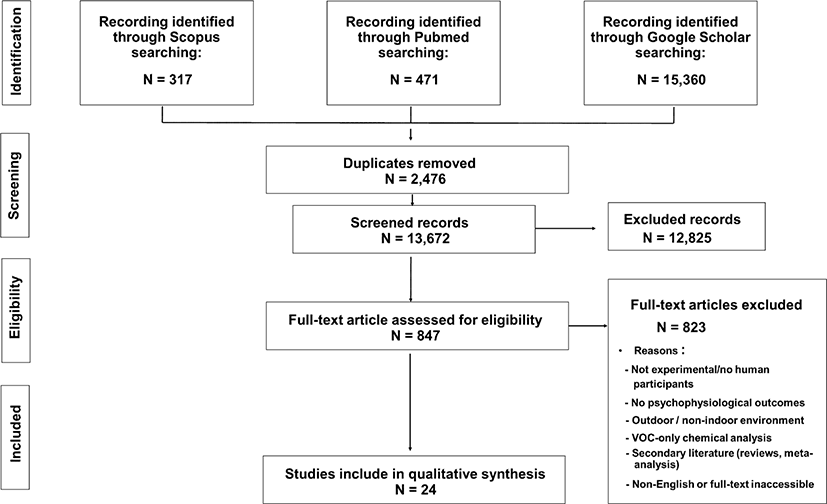
A total of 16,148 records were identified through the initial search. After removing duplicates (including both automatic and manual removal), 2,476 records were excluded. Screening of the titles and abstracts of the remaining 13,672 records resulted in the exclusion of 12,825 articles due to low relevance to the study topic.
Subsequently, the full texts of 847 articles were assessed for eligibility, and 823 were excluded for the following reasons: not experimental studies (n = 317), no psychophysiological indicators reported (n = 224), not conducted in indoor or simulated indoor environments (n = 155), and non-English language or inaccessible full text (n = 127).
Ultimately, 24 studies met the inclusion criteria and were included in the analysis. The overall study selection process is presented in Fig. 1 (PRISMA flow diagram).
The 24 selected studies were evaluated for study design and methodological validity using the Cochrane Risk of Bias 2.0 (RoB 2.0) tool and the JBI Critical Appraisal Checklist, depending on study design (Table 1).
Two studies employing randomized allocation or crossover designs (Burnard and Kutnar, 2020; Ojala et al., 2023) were assessed using the Cochrane Risk of Bias 2.0 (RoB 2.0) tool. In both studies, the comparative structure between conditions and the randomization procedures were relatively clearly reported, and thus they were not classified as having a high overall risk of bias. However, due to the nature of indoor materials and sensory stimuli, complete blinding of participants and researchers was practically difficult. In addition, in some physiological indicators, consistency of results was not sufficiently secured, or missing data were reported. Therefore, both studies were rated as having “some concerns.”
The remaining 22 non-randomized or quasi-experimental studies were evaluated using the JBI tool. Among them, five studies (22.7%) were classified as having high methodological quality (low risk), as exposure conditions were generally well controlled and outcome measurements were appropriate. In contrast, fourteen studies (63.6%) were rated as having “some concerns” due to limited sample sizes, short exposure durations, and difficulties in fully controlling environmental confounding factors in field-based experiments. The remaining three studies (13.6%) were classified as having low methodological quality (high risk), as they used very small sample sizes or lacked sufficient standardization of exposure intensity and experimental conditions, thereby limiting the generalizability of their findings (Azuma et al., 2016; Kishida et al., 2025; Sakuragawa et al., 2008).
Although these methodological limitations were considered, the purpose of this review was to comprehensively examine the patterns of indicator use and research trends regarding the potential psychological and physiological effects of wood environments on the human body. Therefore, rather than excluding all studies with limitations, all selected studies were included in the analysis, with risk of bias considered during interpretation.
Across the 24 studies, various indicators were used to examine the effects of indoor wood environments on participants’ psychological and physiological responses (Table 2). Most studies evaluated both psychological and physiological indicators in parallel.
| No. | Study | Participants | Stimulus | Measures | Indicators |
|---|---|---|---|---|---|
| 1 | Tsunetsugu et al. (2002) | 10M | Two wooden rooms | BP, Pulse, SD, POMS | Standard: Pulse↓, DBP↓; Designed: Pulse↑; POMS ns |
| 2 | Tsunetsugu et al. (2007) | 14M | Wood coverage (0%, 45%, 90%) | BP, Pulse, tHb, SD, POMS | 45%: comfort↑, DBP↓ 90%: tHb↓, Pulse↑ |
| 3 | Zhang et al. (2016) | 20 | Wood vs non-wood offices | POMS, Fatigue | Fatigue↓, TMD↓, comfort↑ |
| 4 | Nakamura et al. (2019) | 28 | Wood wall images | oxy-Hb, HRV, POMS2, SD | oxy-Hb↓, naturalness↑, negative mood↓, HRV ns |
| 5 | Li et al. (2021) | 28 | Images 0%–100% wood | Eye-tracking, VAS | 40%–60% best |
| 6 | Kim et al. (2023) | 26 | VR café wood levels | ST, SCL, EEG, TSV/VSV | Warmth↑, ST↑, SCL↑, EEG-θ↑ |
| 7 | Kim et al. (2024) | 30 | VR café wood × PMV | SCL, HRV, TSV/VSV | Warmth↑, coziness↑; SCL/HRV vary |
| 8 | Lee et al. (2025) | 26 | Real homes wood 0%–90% | HRV, RH | HRV↑ only at 45%; RH fluctuation↓ |
| 9 | Matsubara and Kawai (2014) | 16 | Cedar VOC | HRV, Cortisol, VAS | HF↑; cortisol↓ in women; pleasantness↑ |
| 10 | Azuma et al. (2016) | 10 | Low cedar odor | HRV, Cortisol, POMS | No significant changes |
| 11 | Matsubara and Kawai (2018) | 27 | Cedar VOC | SAA, Cortisol | SAA↓ (F > M); cortisol suppression in F |
| 12 | Skulberg et al. (2019) | 30 | Pine vs spruce VOC | Symptoms, SCL | No adverse effect |
| 13 | Sun et al. (2020) | 83 | Cedar vs printed sheet | BP, SAA, SCL | BP↓, SAA↓ |
| 14 | Nakashima (2023) | 18 | Cedar vs resin hut | ERP | ERP amplitude↑ |
| 15 | Kishida et al. (2025) | 8 | Hinoki VOC | EEG, POMS2, ECG | Parasympathetic↑, anger/confusion↓ |
| 16 | Sakuragawa et al. (2008) | 14 | Wood vs aluminum | BP, SD | Aluminum BP↑; wood stable, comfort↑ |
| 17 | Ikei et al. (2018) | 26 | Hinoki vs marble | oxy-Hb, HRV | Hinoki oxy-Hb↓, HF↑ |
| 18 | Fell (2010) | 119 | Wood vs non-wood offices | SCL, SCR | SCL↓, SCR↓, stress↓ |
| 19 | Burnard and Kutnar (2020) | 61 | Oak/walnut/control furniture | Cortisol, HR, WHO-5 | Cortisol↓ only with oak; walnut ns |
| 20 | Ojala et al. (2023) | 34 | Wood vs control room | HRV, SCL, anxiety | Anxiety↓; HRV/SCL ns |
| 21 | Kumpulainen et al. (2024) | 43 | Wood vs reference room | HRV, BR, mood | LF↑, BR↓, mood↑; HF ns |
| 22 | Kutvonen (2024) | 42 | VR wood + pine odor | HR, stress | Stress↓, HR↓ |
| 23 | Okamoto et al. (2023) | 13 | Cedar bedroom | Sleep depth | Sleep depth↑ (12/13) |
| 24 | Shima et al. (2025) | 30 | Walnut visual × Hinoki odor | EEG, POMS2 | Anger/confusion↓ |
BP: blood purse, DBP: diastolic blood press, SD: semantic differential, POMS: profile of mood states, tHb: total hemoglobin, TMD: total mood disturbance, oxy-Hb: oxygenated hemoglobin, HRV: heart rate variability, HF: high-frequency component of HRV (parasympathetic activity); VAS: visual analogue scale, ST: skin temperature, SCL: skin conductance level, EEG: electroencephalography, TSV: thermal sensation vote, VSV: visual sensation vote, EEG-θ: theta band activity of EEG, PMV: predicted mean vote, VOC: volatile organic compound, SAA: salivary α-amylase, M: men, F: female, ERP: event-related potential.
To observe changes in psychological responses, self-report questionnaires were commonly used. The most frequently employed measure was the POMS, POMS2, which assesses subscales such as tension–anxiety, depression–dejection, anger–hostility, vigor, fatigue, and confusion. In some studies, the total mood disturbance (TMD) score, which aggregates these subscales, was used to evaluate overall emotional state.
In addition, to assess subjective perception and sensory evaluation of indoor environments, the visual analogue scale (VAS) and the SD method were utilized. Emotional impressions such as comfort, stability, warmth, and naturalness were evaluated as individual items. These psychological indicators appear to have been used to capture the emotional responses of participants exposed to the environment.
In contrast, physiological responses were assessed using indicators reflecting autonomic nervous system activity, central nervous system activity, and endocrine responses. Autonomic nervous system responses reflect changes in sympathetic and parasympathetic activity and were evaluated using HRV, heart rate, blood pressure, and skin conductance level (SCL).
Central nervous system responses can be interpreted as indicators reflecting the effects of environmental exposure on cognitive processing levels and patterns of neural activation (Luck, 2014). Related measures included EEG and event-related potentials (ERP), which reflect electrical neural activity, as well as NIRS, which reflects metabolic changes based on cerebral blood flow. Additionally, some studies assessed stress responses using endocrine indicators such as salivary cortisol and α-amylase (salivary alpha-amylase, SAA).
The studies included in this review were categorized according to the type of sensory stimulus provided in the wood environment: visual, olfactory, tactile, and multisensory stimuli.
First, nine studies applied visual stimuli, either by presenting images of wood environments or by exposing participants to virtual or real spaces constructed with wood-based materials. In early research, Tsunetsugu et al. (2002) observed that partial application of wood alone might not clearly elicit autonomic nervous system relaxation responses. In subsequent studies where the proportion of wood application was gradually adjusted, a moderate level of application (approximately 45%) maximized psychological comfort, and physiological responses also showed relatively stable patterns (Tsunetsugu et al., 2007).
Similar trends were reported in field-based studies. Zhang et al. (2016) observed reduced fatigue and increased comfort when wooden wall panels were applied in office spaces. Lee et al. (2025) reported that, in real residential environments, a moderate level of wood application increased HRV-HF values, indicating enhanced parasympathetic nervous system activity and relaxation effects. In image-based experiments, Nakamura et al. (2019) reported decreased prefrontal oxygenated hemoglobin (oxy-Hb), a stress-related indicator, and increased positive emotions following exposure to images of wooden interior walls. Similarly, Li et al. (2021) found that visual exposure to wood in the range of 40%–60% resulted in the highest subjective comfort ratings. More recent VR-based studies suggested that visual wood stimuli increased perceptions of warmth and, depending on the condition, induced changes in SCL or HRV (Kim et al., 2023, 2024).
Overall, exposure to visual wood environments tended to induce positive psychological responses and physiological changes associated with bodily relaxation. These findings may be interpreted in light of Attention Restoration Theory and Stress Recovery Theory, which propose that exposure to natural environments reduces cognitive burden and promotes emotional recovery (Kaplan, 1995; Ulrich et al., 1991). However, the magnitude and direction of physiological responses varied depending on the proportion of wood application, with many studies reporting relatively greater relaxation responses within the moderate range of approximately 40%–60%.
Seven studies evaluated olfactory stimuli by exposing participants to volatile organic compounds (VOCs) derived from wood species such as cedar, cypress, pine, and spruce, and then observing psychological and physiological responses. Matsubara and Kawai (2014) reported increased HRV-HF and decreased salivary cortisol following exposure to cedar VOCs, and in a follow-up study, observed reductions in α-amylase and cortisol along with certain gender differences (Matsubara and Kawai, 2018). In contrast, Azuma et al. (2016) reported no significant changes in HRV or endocrine indicators under very low concentration exposure condition. Skulberg et al. (2019) found that exposure to pine and spruce VOCs did not induce negative physiological responses and instead elicited relatively neutral reactions. Sun et al. (2020) observed decreases in blood pressure and α-amylase following cedar scent exposure but also noted the influence of individual differences. Nakashima (2023) reported changes in central nervous system responses related to attention processing through increased ERP amplitudes (Okamoto et al., 2023), and Kishida et al. (2025) found reduced anger and confusion, as well as improved task performance, following exposure to cypress VOCs.
Two studies evaluated tactile stimuli, and relatively consistent relaxation responses were reported. Sakuragawa et al. (2008) observed no increase in blood pressure during contact with wood, whereas contact with metal materials resulted in elevated blood pressure. Ikei et al. (2018) reported decreased prefrontal oxy-Hb and increased HRV-HF following hand contact with uncoated cypress wood, suggesting the possibility of immediate physiological relaxation responses mediated through tactile pathways.
Seven studies assessed the effects of multisensory exposure, combining visual, olfactory, tactile, or environmental factors. In office environments incorporating wood, Fell (2010) reported reduced SCL, and Burnard and Kutnar (2020) observed decreased cortisol levels and reduced perceived stress. Ojala et al. (2023), in a randomized office experiment, reported reduced anxiety but only limited changes in HRV. Kumpulainen et al. (2024), in a crossover design study, reported improved mood and increased HRV-LF. In virtual environment studies, Kutvonen (2024) found reduced stress when combining visual wood stimuli with pine scent, while Okamoto et al. (2023) reported increased sleep depth in a cedar bedroom environment. Shima et al. (2025) reported that relaxation responses increased during rest conditions, whereas arousal responses increased during task performance, indicating that response patterns varied depending on experimental context.
Overall, wood environments suggest the potential to positively influence psychological and physiological responses. However, heterogeneity across studies was particularly pronounced in physiological indicators. Among studies using autonomic nervous system measures, some reported relaxation responses such as increased HRV-HF and decreased blood pressure (Ikei et al., 2017; Tsunetsugu et al., 2007), whereas others found no significant changes under low scent concentration conditions (Azuma et al., 2016). Furthermore, some studies observed reductions in psychological anxiety without consistent changes in physiological indicators such as HRV or SCL (Kim et al., 2023; Ojala et al., 2023). These differences appear to be attributable to variations in exposure duration, stimulus intensity, and the level of environmental control across studies.
Similar heterogeneity was observed in central nervous system indicators. In studies using NIRS, decreased prefrontal oxy-Hb was interpreted as an indicator of relaxation (Ikei et al., 2018; Nakamura et al., 2019). In contrast, VR-based studies reported increased EEG theta waves and elevated SCL, suggesting the possibility of concurrent arousal responses (Kim et al., 2023). ERP-based studies also reported increased brain activation, which may reflect changes in attention or information processing. These findings indicate that even similar “brain activation changes” may be interpreted differently depending on the research context (Okamoto et al., 2023).
Psychological indicators showed relatively more consistent trends than physiological indicators, although variability was still observed depending on the research setting. In laboratory or image-based studies, mood improvement and fatigue reduction were relatively clearly observed (Li et al., 2021; Nakamura et al., 2019). In contrast, field studies conducted in real office or residential environments showed greater inter-individual variability in responses (Fell, 2010; Sun et al., 2020; Zhang et al., 2016).
Through this review, it was confirmed that indoor wood environments influence participants’ psychological perceptions and physiological responses through visual, olfactory, and tactile stimuli. In particular, studies applying mood-state indicators such as POMS/POMS2 and TMD consistently observed enhanced positive emotional responses compared to non-wood environments, suggesting that these measures are useful indicators for evaluating the psychological effects of indoor wood environments. However, because such self-report psychological indicators are based on subjective judgment, they may have limitations in clearly demonstrating quantitative effects.
Therefore, to derive more explicit quantitative effects, it is necessary to apply physiological indicators in parallel with psychological measures. This review suggests that stress-related physiological indicators reflecting autonomic nervous system responses, such as HRV, SCL, and cortisol, have high potential for quantitatively evaluating the effects of indoor wood environments. However, existing studies have mainly been conducted under short-term exposure conditions or in controlled laboratory settings, which represents a limitation. Future research should therefore consider field-based studies reflecting real-life environments as well as long-term exposure conditions.
Central nervous system indicators (NIRS, EEG, ERP) are useful for capturing immediate neural responses to stimuli, but standardization of measurement conditions and analytical methods is required. Accordingly, future studies should adopt a complementary approach, selecting psychological and physiological indicators in combination and applying core indicators stepwise according to stimulus type and exposure conditions.
4. CONCLUSIONS
This review comprehensively examined 24 experimental studies published between 2000 and 2025 to analyze the effects of indoor wood environments on human psychological and physiological responses and to review the evaluation indicators used in these studies. The findings indicate that exposure to wood environments through visual, olfactory, and tactile stimuli tends to increase psychological stability and induce physiological relaxation responses in many studies. These results suggest that wood environments may positively contribute to emotional restoration and physiological stability in humans.
In terms of indicators, physiological measures reflecting autonomic nervous system changes and stress responses, such as HRV, cortisol, and SCL, as well as psychological measures such as POMS for assessing mood changes, were identified as key indicators applicable in future research design. Applying psychological and physiological indicators in combination rather than relying on a single indicator is considered advantageous for more quantitatively and objectively evaluating the effects of wood environments.
However, physiological indicators may be more sensitive than psychological indicators to experimental conditions such as exposure environment, exposure duration, and individual differences. Therefore, future studies should consider increasing sample sizes, apply randomized experimental designs, and incorporate long-term and field-based exposure conditions.
In conclusion, indicator-based research on the effects of wood environments provides a scientific and systematic foundation for evaluating the influence of wood on human psychological and physiological restoration and is expected to offer empirical evidence for health-oriented and biophilic architectural design.