1. INTRODUCTION
Wood is a renewable natural resource that has long been used in construction and landscaping. However, when exposed to moisture-rich environments, such as rainfall or soil contact, wood becomes vulnerable to biodeterioration caused by wood-decaying fungi and subterranean termites (Blanchette, 1991; Eaton and Hale, 1993; ISO, 2007). Such biological degradation leads to a loss of mechanical strength and functional performance of the construction material, thereby reducing its expected service life. Consequently, selecting the appropriate wood species or using preservative-treated wood in accordance with exposure conditions is essential to ensure the safety and durability of wooden structures.
The quantitative prediction of the service life of wood remains a major challenge because it is influenced by diverse environmental factors and the distribution of biological agents responsible for its deterioration (Brischke et al., 2024; Im and Han, 2024; Jung et al., 2025; Kim et al., 2024; Oh et al., 2023; Oregon State University, 2023). Numerous attempts have been made to estimate decay hazards by considering the geographical distribution of wood-decaying organisms. However, these efforts have had limited success. To date, the most common approach has been to classify decay hazards into low, moderate, and high categories using climatic parameters, such as temperature and precipitation (Larkin and Laks, 2008; Morris and Wang, 2008; Theodore, 1971).
According to these classifications, most regions of Korea, except Jeju Island, are categorized as moderate risk (Kim and Ra, 2013, 2014; Kim et al., 2011). However, variations in rainfall can cause areas within the same region to shift to higher risk categories. For example, Seoul, the capital of South Korea, recorded high-decay hazard levels over three separate years (2003, 2007, and 2010), from 2001 to 2010 (Kim et al., 2011). These findings indicate that climatic variability strongly influences the decay risk, highlighting the need to account for regional and temporal differences in durability assessments.
In Korea, wood used in construction and landscape applications that require high durability is typically classified into exterior above- (H3) and in-ground (H4) service conditions. The H3 category represents environments subjected to intermittent wetting, whereas H4 involves continuous contact with soil moisture or freshwater. Most domestically installed wooden decks are designed to avoid direct soil contact and thus fall under the H3 category. By contrast, in other countries, structural elements such as posts or joists installed near the ground are required to satisfy H4 durability standards for safety reasons (AWPA, 2017).
Preservative-treated wood has been widely used in Korea in environments exposed to rainfall or soil contact, with the demand rapidly increasing since the early 2000s alongside expansion of the wooden deck market. Copper-based preservatives with relatively low toxicities, such as ACQ, CUAZ, and CUHDO, are commonly used. However, premature decay failures, which undermine user confidence, have frequently been reported in treated materials (Ra et al., 2017).
Consequently, a significant portion of preservative-treated products has been replaced by wood–plastic composites or imported tropical hardwoods known for their natural durability. Although wood–plastic composites offer excellent weather resistance, the plastic content limits their environmental sustainability. Consequently, the use of imported hardwoods has steadily increased; however, many of these species have been adopted primarily based on their favorable reputations abroad, rather than on systematic evaluations under Korean conditions. Furthermore, comprehensive durability assessments that reflect local climatic and biological factors are scarce.
In this study, long-term outdoor exposure tests were conducted to evaluate the resistance and natural durability of representative imported decking woods that are currently used in Korea without preservative treatment. The results provide scientific evidence of their applicability under domestic climatic conditions and serve as fundamental data for the rational use of imported wood species as decking materials.
2. MATERIALS and METHODS
Five tropical hardwood species—Apitong (Dipterocarpus grandiflorus), Basralocus (Dicorynia guianensis), Ipe (Handroanthus serratifolius), Malas (Homalium foetidum), and Merbau (Intsia palembanica),—which are currently used in Korea as decking materials without preservative treatment, were purchased in the form of decking products from domestic suppliers. Among these species, Basralocus and Ipe originated from South America, whereas Malas, Merbau, and Apitong are representative of tropical hardwoods imported from Southeast Asia and Oceania. The timbers were cut into 500 mm-long specimens and air-dried indoors for approximately one year prior to installation at the outdoor exposure test site. The oven-dried specific gravities of Apitong, Basralocus, Ipe, Malas, and Merbau used in this study were 0.70, 0.71, 1.01, 0.73, and 0.82, respectively. Table 1 lists the general characteristics of the five species.
1) Durability class according to EN 350 (CEN, 2016).
From 2019 to 2024, ground-proximity and stake tests were conducted at an outdoor exposure site near Jinju (Fig. 1), Gyeongsangnam-do, Korea. This test field was established in 2009 and has been used in various experiments related to the resistance of wood to wood-decaying fungi and subterranean termites (Ra, 2023; Ra et al., 2017; Stirling et al., 2022; Wang et al., 2014). The site features soil with intermediate characteristics between clay and sandy loam, which provides good natural drainage. Moreover, this area has a high population density of subterranean termites, offering suitable environmental conditions for evaluating the natural weathering performance and biological durability of wood.
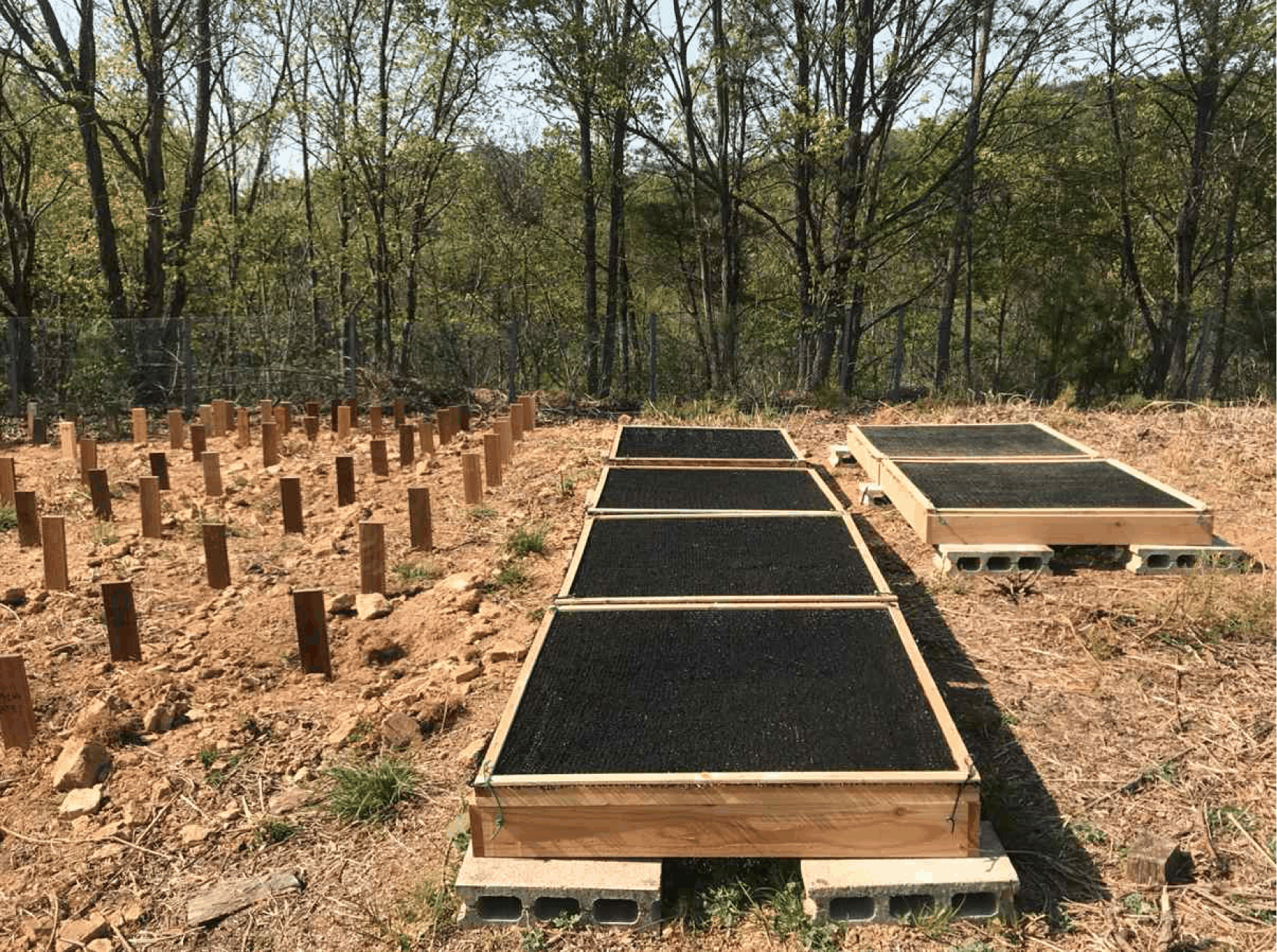
Ground-proximity tests were conducted in accordance with the AWPA E18 standard (AWPA, 2017). Two concrete blocks were placed approximately 50 cm apart and the ends of each wood specimen were supported on the blocks to prevent direct contact with the soil. Four specimens were placed on each pair of blocks to form one set, and the two sets were installed inside a box-type frame covered with shadecloth that provided 75% light transmittance.
Five specimens per species were used, and each specimen was randomly positioned within a box frame. This configuration was designed to create a relatively high-humidity environment around the specimens by limiting evaporation of the moisture supplied by rainfall. Such conditions effectively reproduce environments favorable for wood-decaying fungi and subterranean termite activity, establishing a setup suitable for evaluating the natural durability of wood under exterior above-ground (H3) conditions.
Stake tests were conducted according to the AWPA E7-09 standard (AWPA, 2017). Each specimen was installed with approximately 250 mm of its lower end embedded in the soil. Five specimens per species were used, spaced approximately 30 cm apart to avoid interference between the specimens. The test site contained naturally occurring populations of subterranean termites and maintained favorable conditions for their activity, including adequate soil moisture, temperature, and microbial presence. Consequently, this environment represents a high-risk condition (H4 exposure class) where wood decay and termite attacks can occur simultaneously, making it suitable for evaluating the durability of wood in contact with the ground.
After completing the outdoor exposure tests, the degree of attack by wood-decaying fungi and subterranean termites was evaluated using the AWPA E7 and E18 methods (AWPA, 2017). Each specimen was visually inspected, and a rating of 10 was assigned when no visible damage was observed, whereas a rating of 0 was assigned when the specimen was completely destroyed (Table 2).
Data from AWPA (2017).
The hardness of all samples before and after exposure was measured using a Shore D hardness tester in accordance with the ASTM D2240 standard. The indenter was pressed against the specimen surface until full contact was achieved and was maintained for 15 s before recording the hardness value. The initial (untreated) hardness was measured on the left side of each specimen and the post-treatment hardness was measured on the right side. The hardness-loss ratios were calculated based on these values.
3. RESULTS and DISCUSSION
According to the KMA (2025), Korea has a warm and humid temperate monsoon climate, with an annual mean temperature of approximately 13.7°C and an average annual precipitation of approximately 1,326 mm. More than half of the total rainfall occurs during the summer months (June–August). In particular, the relative humidity during summer frequently exceeds 70%–80%, allowing continuous moisture retention on and within the wood surfaces. Under these conditions, the risk of biological deterioration caused by wood-decaying fungi and subterranean termites increases significantly.
Previous studies have consistently demonstrated that proper temperature and adequate moisture availability enhance the abundance and activity of wood-decaying fungi and termites, resulting in increased rates of wood decay (Miller and Goodell, 1981; Viitanen et al., 2010; Zabel and Morrell, 2020). Most wood-decaying fungi cease or greatly slow their growth at temperatures < 10°C, whereas their activity is most vigorous within the 15°C–35°C range. A temperature range of 25°C–30°C is considered optimal for the growth of both brown- and white-rot fungi. When temperatures increase to > 40°C, mycelial growth is strongly inhibited, and prolonged exposure leads to spore inactivation. The average summer temperature in Korea (24°C–26°C) closely coincides with the optimal range for fungal growth. Consequently, during the rainy season, high temperatures and humidity maintain an elevated moisture content in the wood for extended periods, creating an environment that is highly favorable for spore germination and mycelial penetration.
The ecological activity of subterranean termites also strongly depends on temperature (Cao and Su, 2016). Most termite species show a sharp decrease in activity at temperatures < 15°C, while exhibiting the highest feeding and nesting behaviors between 25°C and 35°C. When temperatures are > 35°C, survival rates decrease, and exposure to temperatures > 40°C leads to high mortality. Therefore, the average summer temperature in Korea is favorable for termite activity. In the southern regions, where the Jinju outdoor exposure site is located, soil temperatures often remain > 10°C even during winter, allowing termite colonies to survive throughout the year.
The outdoor exposure site in Jinju, with an average annual temperature of approximately 13.4°C and an annual precipitation of approximately 1,540 mm, represents climatic conditions close to the national average. Although the interannual temperature variation is relatively minor, the annual precipitation fluctuates substantially. During the 2019–2024 exposure period, the lowest precipitation was recorded in 2022 (966 mm), whereas the highest was recorded in 2023 (2,305 mm). As wood-moisture content is a critical factor governing fungal growth, such variability in precipitation is expected to significantly affect the decay performance. The monthly climatic data from March 2019 to February 2024 are summarized in Table 3.
The decay hazard under above-ground exterior conditions was evaluated using the Scheffer Climate Index (Theodore, 1971). This index, based on temperature, precipitation, and the number of rainy days, provides a quantitative estimate of decay risk. Regions with index values ≤ 35 are classified as low hazard, whereas values °C 65 indicate high hazard. Most regions in Korea, except Jeju Island, fall within the moderate-hazard range (35–65).
In Jinju, the index value was 66.3 in 2020, when the annual precipitation reached 1,812.3 mm, corresponding to a high-hazard classification. In contrast, in 2022, when precipitation decreased to 966.2 mm, the index value decreased to 42.1, indicating a moderate hazard. Although precipitation strongly influences decay risk, the index is not directly proportional to the total rainfall because the number of rainy days is also a determining factor. Therefore, in years with high precipitation, the Jinju site may shift to a high-decay hazard category.
Assessment of decay hazards under ground-contact or freshwater exposure conditions is more complex because of regional differences in fungal and termite biodiversity, as well as soil and climatic variability. Since 2004, multiple stake and ground-proximity tests have been conducted at the Jinju site. Untreated hemlock and spruce specimens typically fail within two years owing to fungal decay and termite attacks (Ra, 2023; Ra et al., 2017). Given the high density and aggressive activity of termites at the site, severe deterioration frequently occurs within one year of exposure.
The results of the ground-proximity and stake tests conducted over a five-year period are listed in Table 4.
In the ground-proximity tests, all five species exhibited damage ratings > 9.5, indicating that almost no wood-decaying fungi or subterranean termite attacks occurred. A rating > 9.5 suggests that the specimens showed little to no visible deterioration, or only minor initial signs of attack, which were classified based on slight discoloration of the wood surface. However, in the stake tests, Basralocus, Ipe, and Merbau maintained decay resistance ratings > 9.0, demonstrating good performance under ground-contact conditions, whereas Merbau and Apitong showed severe decay caused by wood-decaying fungi.
These differences can be attributed to the combined effects of the heartwood extractive composition, chemical structure, and leaching characteristics (Eaton and Hale, 1993; Oh et al., 2023; Romagnoli et al., 2013; Scheffrahn, 1991). Ipe and Merbau contain high concentrations of biologically active extractives, particularly naphthoquinones (lapachol and deoxylapachol) in Ipe, and phenanthroquinones and coumarins in Merbau, which provide strong antifungal properties and ensure stable durability under both above- and in-ground exposure conditions (Hillis and Yazaki, 1973; Oh et al., 2023; Romagnoli et al., 2013). Basralocus contains substantial levels of phenolic extractives, primarily highly polymerized condensed tannins (catechin–epicatechin units), which inhibit fungal enzymatic activity and interact with proteins and metal ions, thereby providing relatively high resistance even under H4 exposure conditions.
In contrast, Malas and Apitong have relatively low total extractive contents (approximately 2–5 and 1%–4%, respectively), and the accumulation of highly active phenolic or quinone-type compounds is limited (Oh et al., 2023; Osborne, 1970). Moreover, the extractives occurring in these species contain higher proportions of low-molecular-weight phenolic and water-soluble constituents, making them more susceptible to leaching. In the ground-proximity tests (H3), the wood was not directly embedded in the soil; therefore, strong water flux or continuous saturation did not occur, and the leaching of extractives was minimal. Malas and Apitong maintained the protective effects of their initial extractives and showed high durability under H3 conditions. However, in the H4 stake tests, the wood remained in continuous contact with the soil, where repeated saturation–desaturation cycles (poor drainage–wetting cycles) and water accumulation in the microvoids promoted progressive extractive leaching. In such environments, water-soluble and low-molecular-weight extractives are rapidly depleted, resulting in loss of the phenolic compounds responsible for inhibiting fungal colonization. For Malas and Apitong, the deficiency of highly polymerized tannins or quinone-type compounds and the high proportion of easily leachable extractives indicates that once these materials are lost, the structural defense mechanisms are substantially weakened.
Termite attacks were minimal in all species except Malas, and when observed, the damage remained superficial. Morrell (2011) reported that Ipe and Merbau stakes exposed in Hawaii showed exceptionally high performance against termite attacks, with a rating of 9.7 according to the AWPA E9 standard. This trend is consistent with the results of the current study, in which Ipe and Merbau cultivars exhibited strong resistance to subterranean termites and fungal degradation.
Termite susceptibility may also be associated with the mechanical properties of wood, particularly its hardness (Table 5). In the ground-proximity tests, the hardness of all the species was > 60; however, a pronounced decrease in hardness was observed after the stake tests (Fig. 2). Following exposure, hardness decreased in the following order: Ipe, Basralocus, Merbau, Malas, and Apitong, with Apitong exhibiting the lowest values.
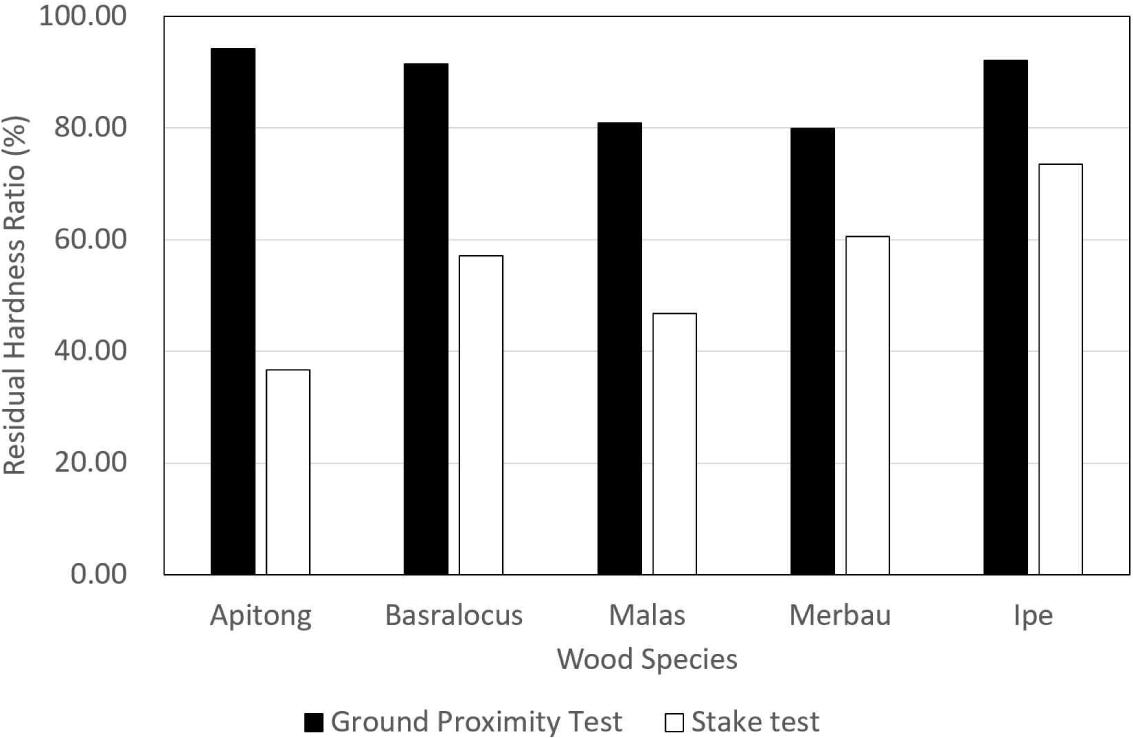
Despite this trend, termite damage occurred predominantly in Malas, whereas little to no termite attacks were observed in Apitong, which exhibited the lowest post-exposure hardness. This discrepancy suggests that termite resistance cannot be explained by mechanical properties alone but is also influenced by the presence of wood extractives with anti-termite activity (Zalsabila et al., 2024).
No termite attacks were observed in the ground-proximity tests, whereas termite damage was observed in the stake tests. This difference is likely attributable to both the substantial reduction in hardness and leaching of termite-deterrent extractives during prolonged ground contact under stake test conditions.
These findings indicate that Malas are not inherently preferred by subterranean termites; rather, limited termite attacks appear to be a secondary consequence of the decay-induced weakening of the wood surface. Combined, these results suggest that termite resistance in these tropical hardwoods is governed not only by extractive chemistry and biological activity but also by changes in mechanical performance, particularly a decrease in surface hardness under in-ground exposure conditions.
4. CONCLUSIONS
In the ground-proximity tests, all five species—Merbau, Malas, Basralocus, Apitong, and Ipe—showed excellent resistance to wood-decaying fungi and subterranean termite attacks. In the stake tests, Ipe, Basralocus, and Merbau exhibited high resistance to both decaying fungi and termite attacks, whereas Malas and Apitong were visibly affected by fungal decay and termite damage.
Based on these results, Merbau, Apitong, and Ipe demonstrated sufficient resistance under H4 (ground contact) conditions and can therefore be considered suitable for use as decking materials. In contrast, Malas and Apitong were likely to perform well under H3 (above-ground exposure) conditions; however, their decay risk increased significantly during long-term service, particularly under sustained moisture exposure.