1. INTRODUCTION
The primary issue with biomass-based construction products is their susceptibility to attack by microorganisms, including beetles (Ribeiro-Correia et al., 2024) and termites (Nurhaida et al., 2025). This problem also frequently occurs in rubberwood products (Yingprasert et al., 2023). Rubberwood is commonly utilized in the manufacture of furniture and is also well-suited as a raw material for wood-based composite panels, such as particleboard (Lee et al., 2023) and medium-density fiberboard (Chin et al., 2021). Chemically, rubberwood contains approximately 16%–22% lignin, 36%–43% alpha-cellulose, and 56%–74% holocellulose. Fresh rubberwood has relatively high levels of starch (around 8%–10%) and free sugars (1%–2%), but contains only a small amount of phenolic compounds (0.1%; Yingprasert et al., 2023). Consequently, its natural durability is low, making it susceptible to fungal and insect attacks (Yingprasert et al., 2023). This reduces the durability and long-term service life of rubberwood composite products.
Improving wood resistance to microbial degradation remains a major concern among researchers, who aim to develop environmentally friendly and non-toxic additives for use in wood manufacturing and for wood protection in carbon sequestration applications (Evans et al., 2022). Several studies have used liquid smoke (Oramahi et al., 2023; Suprianto et al., 2023) and plant extractives as additives for wood products (Arinana et al., 2025; Thomas Alamu et al., 2025). The acidic and phenolic compounds present in liquid smoke are effective in inhibiting fungal and termite activity in wood products (Oramahi et al., 2020, 2024). Other studies have also reported that tannin extractives are effective in inhibiting fungal growth and termite attacks in wood products (Kartikawati et al., 2025).
Extractives can be found in various types of biomass, with differing compositions and chemical characteristics (Kirker et al., 2024). Bandotan (Ageratum conyzoides) is one of the plants that produces extractives with potential for multiple applications (Agbafor et al., 2015). Bandotan is an invasive plant that can grow in tropical areas (Lima et al., 2025). Research has shown that bandotan contains extractives such as flavonoids, chromenes, chromones, benzofurans, coumarins, monoterpenes, sesquiterpenes, triterpenes, sterols, alkaloids, and miscellaneous compounds (Yadav et al., 2019). The extractives of bandotan exhibit antibacterial activity against several pathogens, including Clostridium perfringens, Staphylococcus aureus, Escherichia coli, Streptococcus pyogenes, Bacillus subtilis, Bacillus megaterium, Pseudomonas aeruginosa, Shigella dysenteriae, Vibrio cholerae, S. pyogenes, S. typhi, Shigella shigae, Clostridium diphtheriae and Salmonella typhi, and antifungal activity against Penicillium javanicum, Penicillium chrysogenum, Fusarium solani, Aspergillus flavus, and Didymella bryoniae (Yadav et al., 2019). Several other studies have also demonstrated that bandotan extract is effective as an antibacterial agent against Gram-negative bacteria (Boonman et al., 2023). Furthermore, bandotan extract has shown potential as an anti-termite agent against Macrotermes bellicosus (Rambur, Isoptera; Ano et al., 2025).
The alkaloid, flavonoid, and quinone extracts from bandotan leaves also exhibit direct toxic effects on M. bellicosus in an in vitro bioassay (Ano et al., 2025). However, the potential of bandotan extracts for direct application to wood products and other tropical termite species, such as Coptotermes curvignathus Holmgren species, remains to be explored. The termite genus Coptotermes is the most destructive structural pest worldwide (Chouvenc et al., 2015; Su et al., 2017). They are responsible for the largest share of economic losses each year. Differences in testing mechanisms between in vitro and in vivo bioassays provide distinct perspectives on the effectiveness of plant extractives (Diallo et al., 2014). Termite testing using both in vitro and in vivo bioassay methods can help illustrate the efficacy of anti-termite agents (Nurhaida et al., 2025). In addition, the concentration of the extractives and the method of application significantly affect their effectiveness as anti-termite agents (Yingprasert et al., 2023). Therefore, this study aims to analyze the effects of application method and extract concentration of bandotan leaf extractives on the termite C. curvignathus Holmgren using both in vitro and in vivo bioassay methods.
2. MATERIALS and METHODS
The chemicals used were ethanol (PA), AlCl3 reagent, FeCl3 reagent, Dragendorff reagent Liebermann-Burchard reagent and distilled water. Chemical instrumentation consisted of thin layer chromatography (TLC) using several prepared silica plates. Bandotan leaves (A. conyzoides) were collected from the Sylva arboretum, Tanjungpura University, Pontianak City, West Kalimantan, Indonesia. Subterranean termites C. curvignathus Holmgren were obtained from a secondary forest in Sungai Ambawang District, Kubu Raya Regency (Nurhaida et al., 2025). Rubberwood (Hevea brasiliensis) was sourced from traditional carpentry in Sungai Kakap District, Kubu Raya Regency, West Kalimantan, Indonesia.
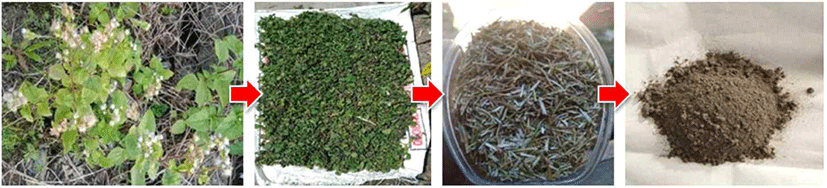
The bandotan plant was cleaned and air-dried for approximately 10 days. It was then ground into powder using a hammer mill. The leaf powder used had a particle size of 40–60 mesh (Pereira et al., 2024; Fig. 1). The bandotan leaves were extracted using the maceration method with ethanol at a solvent-to-solid ratio of 1:8 (Ojewale et al., 2020). The mixture was stirred for 6 hours, followed by an 18-hour resting period. It was then filtered and evaporated in a water bath at 60°C to obtain the extract.
The efficacy test of bandotan extract followed the procedure described by Oramahi et al. (2022). Whatman No 40 filter paper (3.5 cm in diameter) was first dried in an oven at 60°C for one hour, then placed in a desiccator and weighed to determine its initial weight. The bandotan extract used for the treatment consisted of five concentration levels: 1%, 2%, 3%, 4%, and 5%. The filter papers were soaked in the bandotan extract solutions for 15 minutes, drained for 24 hours, and subsequently oven-dried at 60°C for one hour. Finally, the treated filter papers were weighed to determine the retention of bandotan extract on the paper.
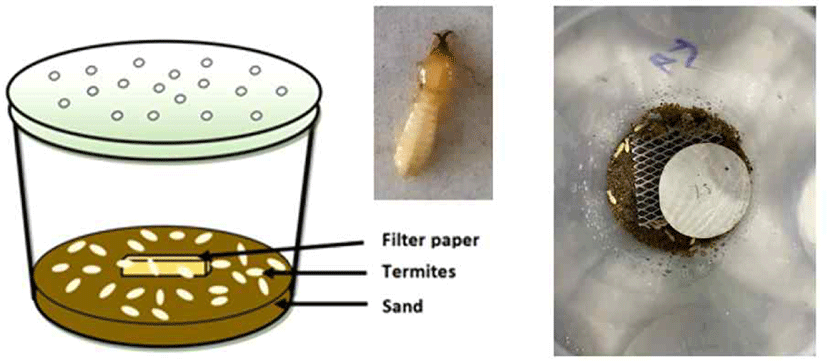
The efficacy test was conducted using a baiting method, as described by Suprianto et al. (2023). The testing medium consisted of a glass container measuring 7 cm in height and 8 cm in diameter. It was filled with 10 grams of sterilized sand, which had been autoclaved for one hour at 121°C and then moistened with 2 mL of water. The prepared filter paper, previously soaked in the bandotan extract, was placed on a plastic mesh inside the test container. A total of 50 C. curvignathus termites (45 workers and 5 soldiers) were introduced into the setup. The container was then sealed with a plastic lid, placed in a box with moist cotton, covered with black cloth, and kept in a dark place for 21 days (Fig. 2). The condition of the termites was checked every three days to remove dead termites, preventing fungal growth that could harm the surviving individuals and avoiding necrophagy (feeding on dead nestmates). After 21 days of testing, termite mortality and filter paper weight loss were calculated.
The wood preservation process followed SNI 7207:2014 with modified (BSN, 2014). Air-dried rubberwood sapwood was cut into pieces measuring 2 cm in length, 2 cm in width, and 1 cm in thickness. The rubberwood was then oven-dried at 60°C for three days. After drying, it is weighed to determine the initial weight before proceeding with the preservation process. Preservation was carried out using the hot soaking method, in which the wood was immersed in solution containing different concentrations of bandotan extract. The study involved two factors: the first was the bandotan extract concentration (5% and 10%), and the second was the duration of hot soaking (3 hours and 6 hours) at a temperature of 60°C–70°C using a water bath. Each concentration was tested in triplicate. After soaking, the rubberwood samples were drained for 24 hours, followed by oven drying at 60°C for another 24 hours. They were then placed in a desiccator for 15 minutes and weighed to determine their post-soaking weight. Finally, the retention of bandotan extract absorbed into the wood was calculated.
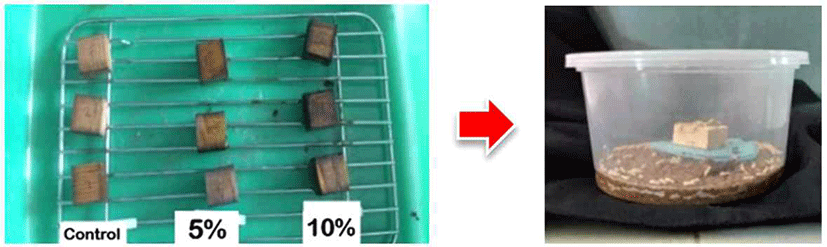
The efficacy test was conducted using the baiting method described by Oramahi et al. (2023). The testing medium consisted of a glass container measuring 7 cm in height and 8 cm in diameter. It was filled with 10 g of sterilized sand, which had been autoclaved for one hour at 121°C and then moistened with 2 mL of water. The prepared rubberwood samples, previously soaked in bandotan extract, were placed on a plastic mesh inside the test container. A total of 165 C. curvignathus termites (150 workers and 15 soldiers) were introduced into the setup. The container was then sealed with a plastic lid, placed in a large box with moist cotton, covered with a black cloth, and kept in a dark place for 21 days (Fig. 3). The condition of the termites was checked every three days to remove dead individuals, preventing fungal growth that could harm the surviving termites and avoiding necrophagy (feeding on dead nestmates). After 21 days of testing, termite mortality and rubberwood weight loss were calculated.
The yield of bandotan extract is calculated using the following Formula (1) (Ano et al., 2025):
Phytochemical testing using TLC was conducted to confirm the positive reactions obtained from preliminary phytochemical reagent tests for various compound groups. TLC identification was performed using several pre-coated silica plates. The bandotan extract was dissolved in chloroform and spotted onto the lower edge of the plate using a capillary tube, then placed in a developing chamber and allowed to saturate. The plate was eluted with an appropriate solvent up to the solvent front, removed, and air-dried. The developed spots were visualized under UV light at wavelengths of 254 nm and 366 nm. The plates were then sprayed with Dragendorff’s reagent for alkaloid, AlCl3 reagent for flavonoid, FeCl3 reagent for phenolic, and Liebermann-Burchard reagent for terpenoid and steroid (Ano et al., 2025).
Retention of bandotan extract on rubberwood was calculated using Formula (2) (Ganguly et al., 2025):
Where R is retention bandotan extract to rubberwood (kg/m3), G is mass of the bandotan extract absorbed by rubberwood block (kg); C is concentration of the bandotan extract and V is volume of the rubberwood block (m3).
Termite mortality was analyzed as the ratio between the number of dead termites and the initial number of termites [Formula (3)]. Similarly, sample weight loss was calculated as the ratio between the final weight and the initial weight of the sample [Formula (4); (Nurhaida et al., 2025].
The experimental design was used to evaluate the effect of bandotan extract on inhibiting subterranean termite (C. curvignathus) attacks. The parameters measured included termite mortality and filter paper weight loss. The in vitro bioassay followed a completely randomized design with a concentration factor consisting of five levels: 1%, 2%, 3%, 4%, and 5%. The in vivo bioassay utilized a factorial completely randomized design. The first factor was the bandotan extract concentration (5% and 10%), while the second factor was the duration of hot soaking (3 hours and 6 hours) at a temperature of 60°C–70°C. The means were separated using Duncan’s multiple range test (DMRT) at p = 0.05. All data were analyzed using SAS software (version 8.2, SAS Institute, Cary, NC, USA). Each treatment was replicated three times.
3. RESULTS and DISCUSSION
The yield of bandotan extract was 13.54% with a green colour. According to N’Guessan et al. (2023), wood extractive yield values greater than 4% fall into the category of high extractive content. The obtained yield indicates a significant amount of bioactive components present in the extract. The ethanol extract yield of bandotan extract in this study was lower than that reported by Vikasari et al. (2022) who obtained a yield of 15.17% but higher than that reported by Budiman and Aulifa (2020), who obtained a yield of 8.45%.
The chemical compound content of each plant is highly dependent on the plant species (Fernandes et al., 2024; Yeon et al., 2019), position on the plant (Arisandi et al., 2025), environmental conditions (Putri et al., 2025), and the chemical component extraction process (Oksari et al., 2025). Keruing wood has a higher extractive content (3.83%) compared to meranti wood (1.97%; Fernandes et al., 2024). While the extract content in Acacia hybrid wood near the bottom pit generally has higher total flavanol, flavonoid, and phenolic content than in the middle and top positions (Arisandi et al., 2025).
Phytochemical analysis revealed that the bandotan extract contains a various chemical compound, including steroids, sterols, terpenoids, phenols, saponins, flavonoids, and alkaloids. Nasori et al. (2025) stated the terpenoids are major metabolite compounds that function as antioxidants, antifungal, insecticidal, and antibacterial agents. In line with this, Noviyanto et al. (2025) stated that leaves contain numerous metabolite compounds such as alkaloids, terpenoids, and flavonoids, which have potential as antioxidants, anti-inflammatory and antimicrobial agents. The differences in chemical compounds in bandotan extract are also influenced by the solvent used. This research used ethanol because it is a polar solvent capable of extracting both polar and non-polar plant metabolites. Solihah et al. (2018) stated that the advantage of ethanol is that it is safe for uses in food and pharmaceuticals. Research conducted by Ano et al. (2025) demonstrated that compounds in bandotan extract obtained using the water maceration method consists only of flavonoids, quinones, and alkaloids. Phenolic, flavonoid and terpenoids compounds in wood extracts have a significant effect on the mortality of M. subhyalinus termites (Thomas Alamu et al., 2025). This shows that bandotan extract has potential as a wood preservative, particularly against termites. Ano et al. (2025) also reported that bandotan extract exhibits anti-termite properties against M. bellicosus compared to Croton hirtus leaf extract. Pereira et al. (2024) stated that the main metabolite compound of bandotan extract with antimicrobial activity is caryophllene. The phytochemical screening results of bandotan extract leaves in this study are presented in Table 1.
| Secondary metabolite | Distillate of Ageratum conyzoïdes | |
|---|---|---|
| Extraction with ethanol (this study) | Extraction with water (Ano et al., 2025) | |
| Steroids | + | * |
| Sterols | + | – |
| Terpenoids | + | * |
| Phenols | + | – |
| Saponins | + | * |
| Flavonoids | + | + |
| Alkaloids | + | + |
| Quinones | * | + |
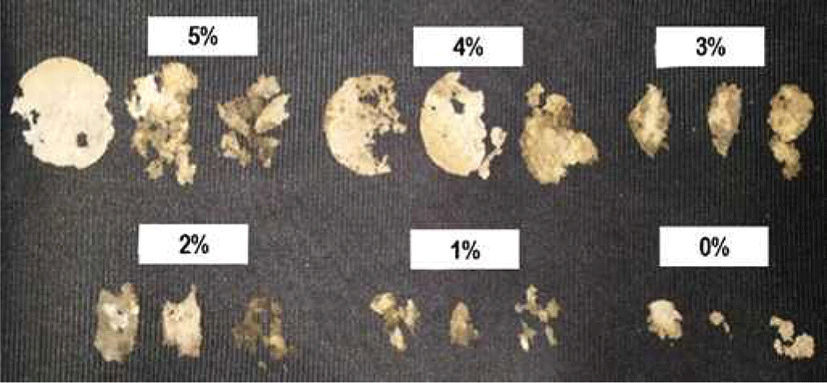
Bandotan extract inhibited the attack of subterranean termite C. curvignathusin vitro using filter paper as the test medium. A 4% concentration of extract killed up to 67.33% of termites, which falls within the category of strong anti-termite activity. Termite mortality was inversely proportional to the weight loss of the filter paper during testing (Table 2). This may be attributed to faster termite mortality with increasing extract concentration, thereby decreasing termite feeding activity. This finding align with Arinana et al. (2024), who reported that weight loss decreased as termite feeding activity declined with higher extract concentration.
Singh et al. (2013) reported that termite mortality may result from the elimination of protozoa within the termite gut or from neurotoxic effects caused by the extract. Protozoa play an essential role in the termite digestive system by breaking down cellulose, an otherwise indigestible component. Their death consequently leads to termite starvation after consuming treated bait. This finding suggests that active compounds in bandotan extract, especially alkaloids, flavonoids, phenols, and saponins, may effectively disrupt termite digestion or neural function, leading to the death of C. curvignathus. The condition of the filter paper after 21 days of testing is illustrated in Fig. 4.
The retention of bandotan extract in rubberwood (H. brasiliensis) ranges from 0.00 kg/m3 to 46.9874 kg/m3. The highest retention value was observed in the treatment with a 10% extract concentration and a hot soaking duration of 6 hours (Table 3).
| Concentration (%) | Hot soaking duration | |
|---|---|---|
| 3 hours | 6 hours | |
| 0 | 0 kg/m3 | 0 kg/m3 |
| 5 | 18.36 kg/m3 | 26.33 kg/m3 |
| 10 | 31.91 kg/m3 | 46.99 kg/m3 |
The parameters used to assess improvements in wood durability against termite attacks were the termite mortality rate and the wood weight loss. The duration of hot water soaking and the extract concentration significantly affected both parameters. Longer soaking durations and higher extract concentrations increased termite mortality while reducing wood weight loss. A 10% bandotan extract concentration increased termite mortality by up to 100% and reduced wood weight loss by 50% (Table 4). At the same extract concentration (5%), termite mortality in the in vivo test using rubberwood tended to be lower than in the in vitro test using filter paper. This difference was due to the retention capacity of bandotan extract in wood, which tends to be lower than in filter paper due to anatomical differences.
Symptoms observed in termites after feeding on treated wood included immobility, sluggish movement, and eventual death. These findings are consistent with Arsyad et al. (2020), who noted that when a test sample serves as an unsuitable food source, termites abandon feeding, weaken, and eventually die. The condition of rubberwood test samples after 21 days of exposure is shown in Fig. 5.
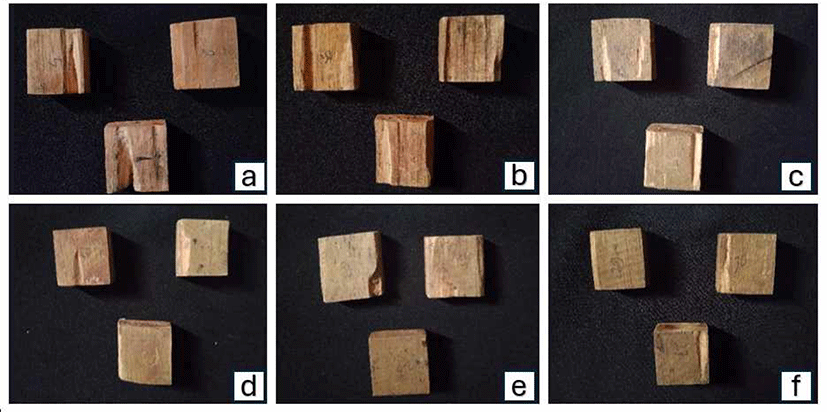
Feeding test using bandotan extract treated rubberwood demonstrated a significant reduction in weight loss, attributed to the extract’s antifeedants activity. Oso and Olaoye (2020) similarly suggested that plant-based treatments may exhibit toxic effects against termites. Arbiastutie et al. (2021) found that termites exposed to tobacco stem extract avoided feeding and subsequently died of starvation, likely due to the bitterness of saponins. After 21 days, termites that consumed bandotan extract treated rubberwood showed progressive symptoms of sluggish movement, immobility, and eventual death. These effects align with Chahal et al. (2021), who reported that unpalatable bait deters feeding, ultimately leading to termite starvation and colony decline.
4. CONCLUSIONS
This study reveals that bandotan leaves (A. conyzoides), extracted by maceration using ethanol as the solvent, contain several chemical components, including steroids, sterols, terpenoids, phenols, saponins, flavonoids, and alkaloids. The resulting extract yield was 13.54%. The presence of chemical components, such as phenolics, flavonoids, and terpenoids, contributes to the extract’s antitermites’ properties. In the in vitro test, a 5% bandotan extract killed up to 80% of termites and reduced filter paper weight loss. In the in vivo test, both the hot soaking duration and extract concentration affected termite mortality and wood weight loss. Hot soaking for 6 hours at a 10% extract concentration killed up to 100% of termites and reduced the rubberwood weight loss by approximately 40% compared to the control. These findings underscore the extract’s dual role in deterring termite infestation and enhancing wood durability. Bandotan extract offers a promising and eco-friendly alternative to conventional chemical preservatives for sustainable termite management and wood protection strategies.