1. INTRODUCTION
Nowadays the commonly utilized building material in the field of construction purposes is plywood’s, in which wood veneers are bonded together with the commonly available adhesive material called urea-formaldehyde as the base matrix. While fabricating the plywood, the veneers are arranged one over another and perpendicular to each other (Auriga et al., 2020). Likewise, different types of wood veneers have been tried out in formulating the final plywood products. In regular practices, plywood is commonly used in the applications of floor laying, weaving on roofing in domestic house construction, bracketing panels to block winds, internal body parts for commercial vehicles, package boxes for heavy product, and finally for fencing and hoardings (Borysiuk et al., 2012). Besides, it has some superior advantageous as compared to other types of wood based composite materials because of inherent properties, such as good shock absorption, ease of shaping to meet end-user requirements, and a better aesthetic appearance similar to natural wood. Although it has unique and enhanced characteristics, it still possesses some disadvantages, such as limited biological durability, restricted dimensions, difficulty in shaping intricate designs, moderate fire resistance, and, finally, somewhat lower physical performance (Zhao et al., 2023). Due to modern-day requirements, plywood construction materials need to be emphasized with high strength and durability and this has become a notable issue in construction industries. Correspondingly, advancements in the area of fiber reinforcement plastics have led to the exploration of reinforcing the plywood with synthetic fibers to form the hybrid composites (Yu et al., 2024). Numerous research efforts have been initiated to reinforce various types of fibers, such as glass, carbon and natural fibers, with the help of base matrix materials. These fibers have partially or completely enhanced the physical strengths of plywood manyfold depending upon their placements in the plywood fabrication process. Moreover this type of fiber reinforcement significantly increases the physical properties and durability of plywood while partially compromising other properties (Sun et al., 2024). Furthermore, this new set of synthetic fiber reinforcements in plywood has relatively become a newer type of hybrid composite materials, in which commonly available synthetic fibers are used as the strengthening agents along with particulates like waste rubber (WR). This combination leads to a massive impact and vibration absorption capacity, which the original plywood cannot replicate due to the absence of these extraordinary characteristics (Rezanezhad et al., 2024). In the past, a few researchers have made significant contributions to exploring the potential of WR as a useful compound, as improper disposal can harm the ecosystem by unnecessary dumping or spilling on bare ground. With the aim of utilizing its unique characteristics, such as vibration and shock absorption, WR pellets have been used in numerous investigations and applications, especially in wood-based composites like plywood (Aoudia et al., 2016). Also, WR is considered a superior base material for fabricating functional composite panels because it possesses extraordinary properties such as excellent energy absorption, sound insulation, elastic deformation capability, durability, and abrasion resistance (Ayrilmis et al., 2009a; Fehrmann et al., 2023). Moreover, composite materials can be effectively employed in various applications as functional products. Apart from their exclusive use in many industrial applications, researchers often explore unique characteristics, such as sound damping, by varying different types of fibers, filler materials, and matrix materials (Ayrilmis et al., 2009b). Generally, notable literature in recent years has shown that rubbery filler materials play a unique role in absorbing vibration and sound frequencies. Hence, to tap into this intangible property of rubber, it has been utilized as a filler material with reinforcement at optimized weight percentages. In order to fully exploit the use of WR, it has been combined with commonly used reinforcement agents in the composite industry, such as carbon fibers (CFs), which have been predominantly utilized in research (Gumowska et al., 2018). In this particular research, the main goal was to utilize CF with different lengths and randomly vary the filler material, such as WR, by introducing this set of formed layers as the core layer in the middle of the wood veneer geometry. In the matrix part, upon simultaneous polymerization, melamine-urea-formaldehyde resin (MUF) and PU create an interpenetrating polymer network (IPN), in which the flexible chains of PU blend alongside the stiff cross- linked structure of MUF to form a dual-phase network. When compared with single-phase adhesives, this improves mechanical strength, impact resistance, and moisture resilience. By improving stress distribution, the interlocking network lowers the chance of plywood adhesive failures. Furthermore, synergistic effects result in higher adhesion efficiency and thermal stability. Structural integrity and environmental resilience are maximized by this combination. Additionally, to fully understand the physical effects of introducing the carbon and WR combination as the middle layer, physical examinations such as modulus of rupture (MOR), water absorption (WA), thickness swelling (TS), and impact strength (IS) were studied by varying the fiber lengths and the weight percentage of WR (Kaushal and Dhakate, 2023).
2. MATERIALS and METHODS
At the initial stage, veneer sheets were cut using a rotary cutter to precise dimensions of 500 × 500 × 2 mm. The raw logs, with a diameter of 300 mm, were sourced from Trabzon, Turkey. The selected wood species exhibited a density of 1.87 g/cm3, fiber diameter of 8 μm, and a sizing content of 1% (Albert and Liew, 2025; Kalasee et al., 2025). During the cutting process, the horizontal opening was maintained at over 80% of the total veneer thickness, while the vertical opening was kept at 0.5 mm to ensure precise detachment. To regulate the veneer’s moisture content within 5%–6%, the sheets were air-dried in a climate-controlled room after production.
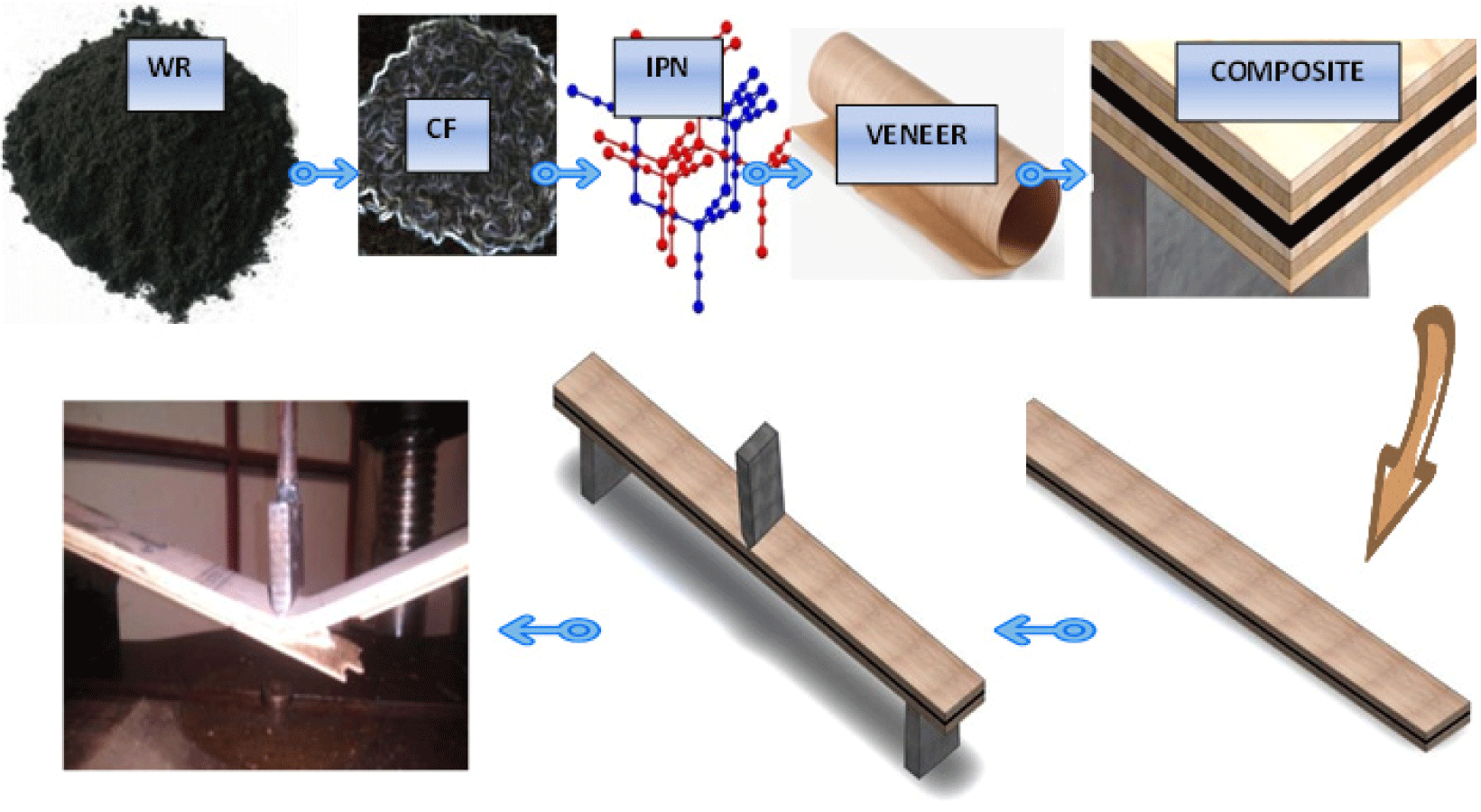
In addition to the veneer, unidirectional CF was utilized, featuring an aerial density of 1.76 GSM, fiber diameter of 7 μm, and a sizing content of 1%. The physical properties of the materials used in this study are summarized in Table 1. To enhance the mechanical strength of the plywood, two sets of chopped fiber strands were incorporated, with strand lengths of 14 cm and 20 cm (Suresh and Jayakumari, 2016). Similarly, WR was procured from Absolute Green Polymers Private Limited, India. The WR was ground into fine particles using an industrial crusher. After screening, particles passing through 130 and 140 mesh sieves were selected for further experimentation (Suresh and Jayakumari, 2015). Similarly, the schematic representation of the entire processes utilized in the study in mentioned in the Fig. 1.
Ever since MUF was extensively used as an adhesive in the plywood production industry, it was selected as the binding resin for this work (Mawardi et al., 2025). In this resin curing methodology, ammonium sulfate [(NH4)2SO4], the appropriate hardener, was used. Additionally, during the production processes, the formulation’s composition was 100:10 (Vezhavendhan et al., 2024). Furthermore, another suitable amount of polyurethane (PU), 30 wt.%, was chosen throughout the resin formulation process to cover the use of IPNs in the plywood industry. In the synthesis procedure, PU containing a shore hardness of 60 CG—which was obtained from Cross Link Technology in Canada, was used. The same firm also provided their matching hardener, MOCCA [methylene-bis(ortho-chloroaniline)], for treatment of the PU. Additionally, the chemical composition of the identical component was 100:7, with resin and hardener accounting for the corresponding parts. To fully ensure the moisture-free existence of the matrix materials, the blended matrix material was subsequently preserved in the degassing chamber after the necessary quantity of PU and MUF were taken in a different container. The necessary quantity of hardeners was then added to the matrix material before being applied during the plywood formation processes (Russel and Madhu, 2023).
To maintain a panel thickness of 10 mm, plywood panels consisting of seven plies were selected. Various panel configurations were fabricated by incorporating different proportions of CF and WR into the PU-modified MUF matrix, as detailed in Table 1.
During the fabrication process, a single surface of each veneer sheet was uniformly coated with the IPN resin blend, ensuring a glue spread rate of 150 g/m2. The coated veneers were then subjected to cold pressing for 10 minutes to enhance adhesion. After this, CF and WR impregnated with resin were carefully placed within a 300 × 300 mm2 molding frame, ensuring uniform distribution across the cavity. Subsequently, the filler-loaded composite layers underwent hot pressing at 160°C for 10 minutes to achieve effective bonding (Seo et al., 2024). To further reinforce adhesion, standard adhesive formulations were applied during the fabrication process. As outlined in Table 1, the core layer comprised varying proportions of fillers. Following assembly, all fabricated panels were processed using a ZUP-NYSA hydraulic press for 440 seconds at 120°C under a pressure of 1 MPa. Finally, the panels were fully conditioned under ambient conditions for at least a week to ensure optimal curing and stability (Chung et al., 2023; Russel and Madhu, 2023).
In order to obtain the values of MOR and modulus of elasticity (MOE), mechanical tests were performed according to EN-310. To do this procedure, the exact cut samples were placed on the three point loading fixtures, while doing so, span to depth was maintained as 20:1. Further, to perform this analysis, Instron type UTM machine was utilized, in which tangential load was applied on the sample with the feed rate of 2 mm/min till the sample fractures. Similarly, charp test was performed intact to avail the IS of the specimens. Furthermore, the averages of three samples were taken in to account on each combinations (Kim et al., 2024). As well, the physical properties of the samples were tested, such as WA, TS according to the standards of EN-323 and EN-317 respectively. All the specimens were thoroughly weighed before subjecting them to WA testing. Consecutively, after the specimens were taken out from the water bath, their surfaces were cleaned with neatness and kept in atmospheric temperatures and their corresponding weight was measured. The samples were kept in the water bath for the period of 4 and 48 hours. While weighing the specimens the nearest value of 0.01 g was maintained as the standard. Similarly, for the TS measurement, a standard of 0.001 mm was observed. Five samples were subjected for each test with all the formed plywood composite panels (Bozkurt, 2024; Liu et al., 2019).
Statistical analysis was performed by using the IBM SPSS Statistics. With the help of the software two-way analysis of variance (ANOVA) was conducted on the obtained data to define significant differences in order to achieve 95% confidence level. Additionally, the obtained data were refined in order to identify the significant difference between group means through ANOVA [Duncan’s Multiple Range Test (DMRT)]. It is the specifically designed tool to compare multiple pairs of means after finding a statistically significant result through ANOVA (Divya et al., 2021).
3. RESULTS and DISCUSSION
The Fig. 2(a) and (b) illustrate the effect of CF loading on MOR, MOE and IS on IPN plywood panels. During this investigation, it was distinctly seen that the CF loading on the core layer significantly plays a noteworthy role in enhancing the MOR, MOE and IS values. As evidence for this, the initial composition of X1 showed values of 45.34 MPa, 2.75 GPa and 43.04 kJ/m2 for MOR, MOE and IS, respectively. In this particular study, the found value was least amongst all. This drastic negative surge was due to the unloading of CF from the system, because CF normally acts as the stress transfer medium and tends to provide an appropriate strengthening effect to the entire fabricated part. However, in this combination, there was no CF incorporation; instead, WR was loaded around 40% of the total volume. Due to this phenomenon, rubber powder might act as the stress-weakening layer because of its moderate to poor interaction with the wood veneers. However, in the subsequent combination of X2, it predominantly proves that the incorporation of CF plays an important role in strengthening the entire sample in appropriate way. In this connection, this observed values were 58.79 MPa, 4.86 GPa and 71.77 kJ/m2 for MOR, MOE, and IS, respectively (Li et al., 2024; Liu et al., 2019). The positive increase in the MORs was mainly because of the loading of CF into the system. By increasing 1% of CF, the interfacial bonding and interaction with the wood veneer were enhanced, appropriately taking and transferring the load before failure. Substantially, the value obtained in the IS was nearly 66.75% higher than the X1 combinations, proving that the CF and its geometrical attributes played a crucial role in significantly increasing the sample strength (Liu et al., 2023). Similarly, the increased content of CF also creates a unique environment that increases the strength of the samples. As the addition of CF into the system simultaneously increases the strength of the test samples in a robust way, the observed values were 74.87 MPa, 6.13 GPa, and 83.79 kJ/m2 for MOR, MOE, and IS, respectively.
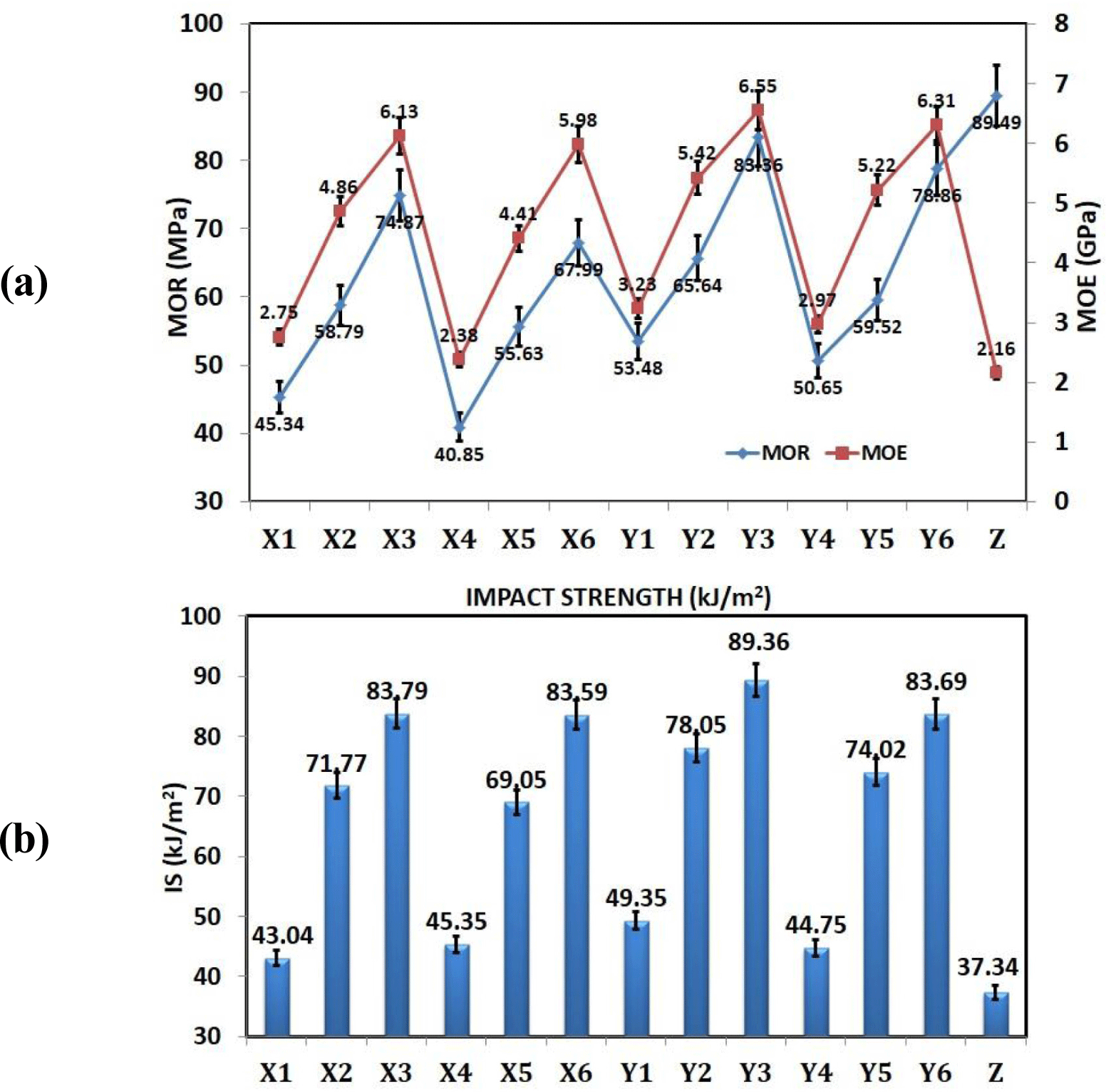
In all the findings, test values received from all the studies demonstrated that, addition of CF acted as the maximum load absorber and created better interfacial strength with the wood veneer along with substituted matrix materials. Adversely, the absence of CF shows a negative trend in all the values obtained from all the studies. Similarly, WR also exhibits better shock-absorbing properties. This unique characteristics of the WR can be easily seen from the studies conducted on the sample X4. In this particular combination, the content of WR was 50%. As such, the increase in WR into the system increases the IS strength appropriately, while significantly reducing the values in MOR and MOE. Though the WR particles were meant to be better shock absorbing materials than the CF, inclusion of WR into the system subsequently lessens the other parameters because of its lack of interfacial strength with the veneer products (Mandal et al., 2024). Additionally, the aspect ratio of the CF unquestionably shows better stress transfer and strengthening properties from the observed parameters. As evidence of this, the combination of Y3 shows the values of 83.36 MPa, 6.55 GPa, and 89.36 kJ/m2 for MOR, MOE, and IS, respectively. The combination of Y3 substitutions emerged as the better stress transfer reagent among all combinations. The high aspect ratio of 20 cm CF length played a pivotal role in increasing the strength of the MOR and MOE. Because it primarily enhances better load transfer efficiency and holds the fiber alignment stability. The usage of longer fibers as well provides good stress bridging thus the way reduces crack propagation and improves MOR and MOE values. Also evident that, long fibers align more effectively along the side of principal stress directions. Additionally, the substitution of WR also contributes as the better shock-absorbing sample among all the samples (Manjulaiah et al., 2023). As well, CF typically have had the high surface energy, this enhances wettability and adhesion while it was incorporated into the MUF formulations, also the presence of polar functional groups present in the matrixes aids in better hydrogen bonding in turn creates the vanderwaals interactions thus the way it improves the good fiber matrix interactions. Similarly, CF acts as the reinforcement phase, it efficiently transfers subjected stresses through the matrix, so shear stress distribution between CF and the adjoining wood veneer better load bearing capacity which impacts better MOR and MOE values. Since the blends forms synergistic network, creates a strong interphase with CF which inturn reduces micro-crack initiation and subsequent propagation in the laminates. Hence it would be concluded that, MOR and MOE was primarily attributed towards load transfer and stress bridging which in turn have an limited impact from fiber pull-out resistance in the system (Park et al., 2023).
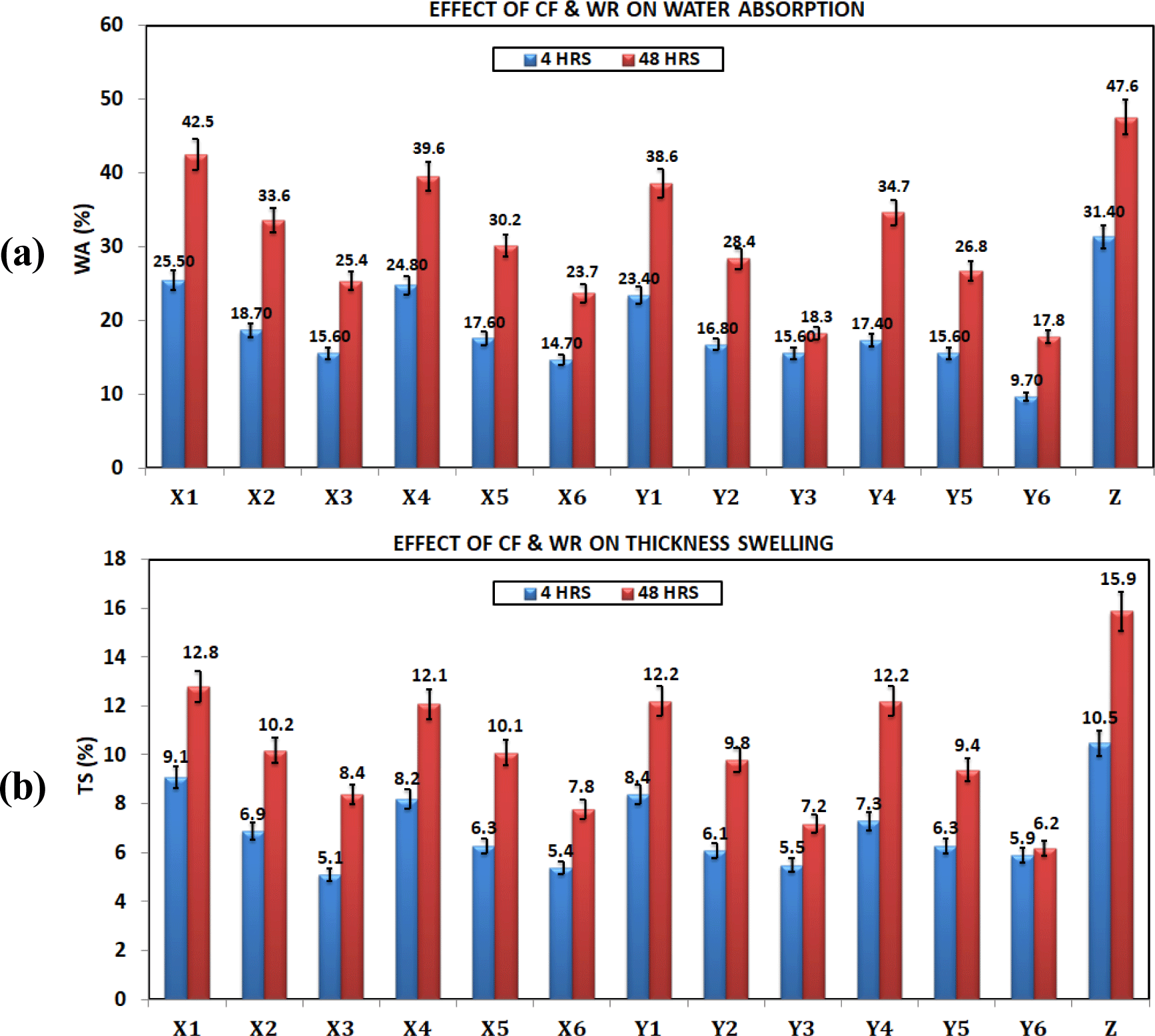
Fig. 3(a) and (b) illustrate the WA and TS behavior of the IPN plywood composites subjected to varying compositions of CF and WR. According to the findings from the obtained results, the WA rate of the plywood decreases as the amount of CF increases. This can be observed from the sample specimen X2, where even a small incremental increase of around 1% in CF drastically reduced the moisture absorption rate by 22 to 35%. Among all the samples, the specimens X5 and X6 showed the lowest absorption rates, 17.60% and 30.2% for 4 hours and 48 hours, respectively. As the amount of CF increases, the moisture absorption rate significantly decreases compared with other combinations due to its hydrophobic nature. Similarly, during the TS analysis, it was observed that specimens X6 and Y6 showed the lowest TS rates compared to other combinations. It was also observed that as more CF was added to the system, the TS decreased and moisture absorption was reduced. Thus, TS was inversely proportional to CF loading, which helped maintain the dimensional stability of the samples. Also it was concluded that, WR increases the IS through forming the protective interphase inturn improves the stress distribution across the matrix. Besides, the hydrophobic natures further reduces water uptake by limiting the water diffusion in to the venner pores. As well, WR-matrix interaction prominently relies on adhesion mechanisms which ensures better load transfer mechanism, thus the way, the strong interfacial bond subsequently reduces delamination, improves durability (Jung et al., 2022; Liu et al., 2023).
As shown in Fig. 2(a) and (b), the small incremental addition of WR into the system resulted in a dramatic change in the fabricated samples. In actuality, wood veneers and rubber have different sets of physical strength characteristics and elastic moduli. Moreover, compared to WR, wood veneers have a higher MOR but a lower impact modulus. Nevertheless, geometrically, rubber powders are typically round particles, and their subsequent aspect ratio is comparatively low compared to that of the wood veneers (Mohamed et al., 2024). Moreover, wood veneers possess poor moisture absorption resistance compared to synthetic particulates and fibers. Alternatively, the incorporation of WR into the system subsequently alters the overall rigidity of the plywood composites toward elasticity. This elastic property, in turn, expressively reduces the MOR and MOE of the IPN plywood panels (Lee et al., 2023). However, there was no solid evidence or significant difference in the flexural property with the varying proportion of WR loading into the system because it possesses anisotropic properties. Nonetheless, the IPN plywood consisting of 50% WR showed a remarkable (without CF) MOR compared to the other sets of values. The obtained values were 53.48 MPa and 3.23 GPa for MOR and MOE, respectively (Alshahrani and Arun Prakash, 2024). These values suggest that the WR has better compatibility with the veneer and provides the least elasticity. Despite the lower value observed during the flexural strength analysis, it still holds a higher value in terms of IS tests. To elucidate this, IPN panels that contained the highest level of WR remarkably exhibited a higher level of impact resistance compared to the CF incorporations. The combination of WR and a higher level of CF significantly improved the IS values. In support of this, the sample Y3 showed better IS values compared to other combinations. The observed values were 83.36 MPa, 6.55 GPa, and 89.39 kJ/m2 for MOR, MOE, and IS, respectively (Yoon et al., 2022).
From the entire analysis, the optimized value obtained from the combination Y3 showed better results, so it was firmly believed that the level of 40% of WR was a notable level of content in deriving the better results compared to other sets of combinations. Although the combination of Y6 shows positive signs compared to Y3, as it shows the values of 78.86 MPa, 6.31 GPa, and 83.69 kJ/m2 for MOR, MOE, and IS, respectively, it still could not attain the level of Y3, as the difference of 6.3% was seen due to the addition of a small incremental value of 10% of WR content into the system.
The volumetric change behavior, water uptake, and their corresponding dimensional stability of IPN plywood with respect to varying time periods are shown in Fig. 3(a) and (b). The WA value starts from a range of 9% to 31.4% and 17.8% to 47.6% for 4 hrs and 48 hrs, respectively. Similarly, the TS value ranges from 5.1% to 10.5% and 6.2% to 15.9% for 4 hrs and 48 hrs, respectively. However, the above results indicate that increasing WR content in the system appreciably induces a negative effect on WA and TS values. The neat combination of WR into the system, moreover, shows a low absorption rate and TS due to its hydrophobic nature. Overall, polymeric compounds normally tend to absorb slight moisture, which profoundly indicates that the presence of cellulosic compounds moderately absorbs moisture (Pothan et al., 2003). Conversely, with the slight increase in WR content into the system, it moderately shows resistance in WA and TS. The elimination of WR normally contributes to sustainability in lines with recycling and repurposing thus the minimizes environmental impact (Leong et al., 2022).
In conclusion, WA of IPN plywood panels was predominantly due to hydrogen bonds forming between water molecules and the free hydroxyl groups in the cellulosic cell wall materials. Furthermore, water molecules diffuse deeply into the interface between the wood veneer and waste tire rubber (Robles et al., 2016).
From the Table 2, the observed test results clearly indicated that observations obtained from all the analyses diligently exhibited both mechanical and physical values, which were significance for three variable parameters. Similarly, ANOVA revealed that, the variations in the mean values of the MOE, MOR, WA, TS and IS were within the range, and the differences amongst the varied groups were significant at the 99% confidence level. In actuality, the appropriate usage of WR and CF filler contents had substantially shown the significant improvement in MOE, IS, TS and WA physical properties. However, on the contrary, the MOR of IPN plywood composite board panels showed negative surge with the incorporation of WR. The plywood panel type Y3 had been prepared with slightly higher content of WR and CF; in fact, it showed the highest physical value as compared with other sets of combinations. It was surprising to see, however, that the water resistance of the IPN plywood boards improved when the WR particulate was predominantly increased from 40 to 50% (Kumar et al., 2024).
4. CONCLUSIONS
In this particular study, experimental analyses were carried out by meticulously changing three sets of variable parameters, namely CF, CF length, and WR, on the formed IPN plywood. Simultaneously, upon conducting the physical characterization, compelling facts were observed. Interestingly, the incorporation of CF significantly enhances the mechanical properties of the formed plywood samples in noticeable ways, such as by incorporating 1.5% of CF content and maintaining the CF length at 20 cm in the IPN core system. It was also found that WR did not contribute to enhancing the MOR and MOE of the sample specimens. On the contrary, the impact resistance of the IPN system showed significant improvement upon incorporating WR into the core layer. However, long-term durability assessments, including cyclic humidity exposure and mechanical aging, were not conducted in this study, highlighting a key limitation. Notably, the water resistance of the system showed a marked improvement by incorporating 40% and 50% of WR into the system. In conclusion, the findings demonstrated that WR could be effectively utilized as an impact resistance enhancer in IPN plywood. Future investigations should explore biodegradability aspects, prolonged environmental exposure, and mechanical response under cyclic loading conditions to ensure long-term applicability in structural applications.