

1. INTRODUCTION
Research in the field of nanotechnology has attracted considerable scientific interest because of its potential applications in many industries, including the wood industry (Khan et al., 2022). Nanotechnology involves the use of nanomaterials for technological development. Widely studied nanomaterials include nanoparticles (NP), which range from 1 to 100 nanometers (nm) and have a high surface area. NP can be synthesized using top-down and bottom-up methods. Top-down methods reduce bulk materials to smaller particles through techniques such as grinding, lithography, or ablation. Bottom-up methods assemble atoms, molecules, or small clusters through interactions such as van der Waals, electrostatic, and chemical bonds (Husain et al., 2023). NP have been studied extensively for improving wood quality, including the use of SiO2 to improve the dimensional stability of wood (Prihatini et al., 2024), TiO2 to increase wood resistance to weathering (Rahayu et al., 2022), and Fe3O4 to improve wood functionality so that it has magnetic properties (Laksono et al., 2023).
Silica (SiO2) can be synthesized from biomass waste, including bamboo leaves (Prihatini et al., 2024), corn husks (Prempeh et al., 2022), and palm kernel shells (Imoisili et al., 2020). SiO2 NP can be synthesized by acid extraction, reflux, and sol–gel methods. A previous study (Prihatini et al., 2024) reported that the sol–gel method offers advantages including low synthesis temperatures and high yields and produced an 80% yield of SiO2 NP from bamboo leaves. SiO2 NP synthesized by the sol–gel method can function effectively as nanoadsorbents (Elizondo-Villarreal et al., 2024) because of their large surface area and porosity, although they also have high surface energy (Simpen et al., 2023). In addition, SiO2 NP have good thermal insulation properties with low thermal conductivity and high thermal resistance (Sulfianty et al., 2020).
Boron nitride (BN) is a compound of boron and nitrogen that occurs in crystalline and amorphous forms. BN NP can be synthesized using hydrothermal (Ma et al., 2019) and microwave (Mahdizadeh et al., 2017) methods. The microwave method is rapid and uses electromagnetic waves, whereas the hydrothermal method is more time-consuming. BN NP synthesized at high temperatures have good thermal stability (Kainthola et al., 2020). In addition, BN NP have passive radiation cooling capabilities (Pan et al., 2025) but can leach readily when used to impregnate wood (Malik et al., 2022).
Previous studies have focused on individual NP such as SiO2 NP and BN NP. Therefore, this study investigated SiO2/BN nanocomposites (SiO2/BN NCP). The combination of SiO2 NP and BN NP to mitigate the limitations of each material while combining their advantages produced SiO2/BN NCP (Anjum et al., 2024). This combination involves a solvothermal process in a closed system to control the size and morphology of the resulting NCP. SiO2/BN NCP have been used as fire-resistant materials and demonstrate dual thermal management capabilities in improving the material's resistance to high temperatures. In addition, SiO2/BN NCP exhibit enhanced high-temperature stability that supports fire-resistant performance (Pan et al., 2025).
The performance of NCPs for wood modification is strongly influenced by synthesis routes that ensure homogeneous dispersion, stable interfacial contact, and compatibility with porous lignocellulosic substrates. In this study, a solvothermal method was selected to combine SiO2 NP and BN NP because it promotes uniform dispersion, suppresses particle agglomeration, and enhances interfacial contact under controlled temperature and pressure conditions (Akhter et al., 2022). These characteristics are particularly important for impregnation-based wood treatments, where NCP homogeneity governs penetration behavior, lumen filling, and improvements in dimensional stability. Compared with simple physical mixing or ambient sol–gel routes, solvothermal processing facilitates improved BN distribution within the SiO2 matrix, resulting in a more stable NCP system compatible with the wood microstructure (Yapa and Munaweera, 2025). Therefore, this method is well suited for preparing SiO2/BN NCPs intended to enhance the thermal and dimensional performance of wood. A microwave-assisted step was employed to accelerate reaction kinetics and reduce synthesis time at the laboratory scale. Microwave heating enables rapid and volumetric energy transfer, promoting efficient nucleation and controlled particle formation (Qu et al., 2019). However, it is acknowledged that microwave-based methods may be limited by equipment cost and scalability when compared with conventional hydrothermal approaches. Therefore, the microwave step is applied here to demonstrate synthesis feasibility, while large-scale production may favor hydrothermal or hybrid methods (Afolabi and Ndou, 2024).
Jabon wood has low inherent quality and therefore requires modification to improve its physical properties and impart flame-retardant properties. Wood modification improves wood quality, including density. Impregnation is classified as passive modification because it changes wood characteristics without altering its chemical composition and involves introducing impregnation agents into the wood (Laksono et al., 2023). A previous study (Bi et al., 2021) found that nanoparticle impregnation can improve the physical properties of wood. Previous research on the impregnation of jabon wood with SiO2 NP (Prihatini et al., 2024) demonstrated improvements in density and dimensional stability.
Fast-growing jabon wood has low inherent quality and therefore requires modification. Accordingly, this study aimed to characterize the combination of SiO2 NP and BN NP and to evaluate the effects of SiO2/BN NCP impregnation on the physical properties of jabon wood.
2. MATERIALS and METHODS
Samples of jabon wood (Neolamarckia cadamba) and betung bamboo leaves were collected and prepared for subsequent synthesis and impregnation. The chemicals used were 37% HCl (Merck, Darmstadt, Germany), NaOH (Merck), Na2B4O7·10H2O (Merck), NH4Cl (Merck), 96% ethanol (Merck), copper(II) oxide, and demineralized water.
The equipment included an oven (Memmert 400, Memmert, Schwabach, Germany), a furnace, a microwave oven (Sharp, Osaka, Japan), a solvothermal reactor, a sonicator (Vevor, Shanghai, China), an impregnation tube, a Fourier transform infrared spectrometer (PerkinElmer Spectrum One, Shelton, CT, USA), an X-ray diffractometer (PANalytical Empyrean, Malvern Panalytical, Almelo, The Netherlands), a particle size analyzer (SZ-100, Malvern Panalytical), and a thermogravimetric analyzer (PerkinElmer 4000, PerkinElmer, Shelton, CA, USA).
100 grams of bamboo leaves were cleaned with running water, then dried in an oven at 105°C for 3 hours and burned in a furnace at 550°C for 2 hours to form charcoal (Nzereogu et al., 2023). The bamboo leaf charcoal was ground and filtered using a 100-mesh sieve. Next, 50 grams of charcoal was heated in a furnace at 900°C for 6 hours until it turned completely to ash (Sankar et al., 2018). The resulting ash was synthesized using the sol–gel method.
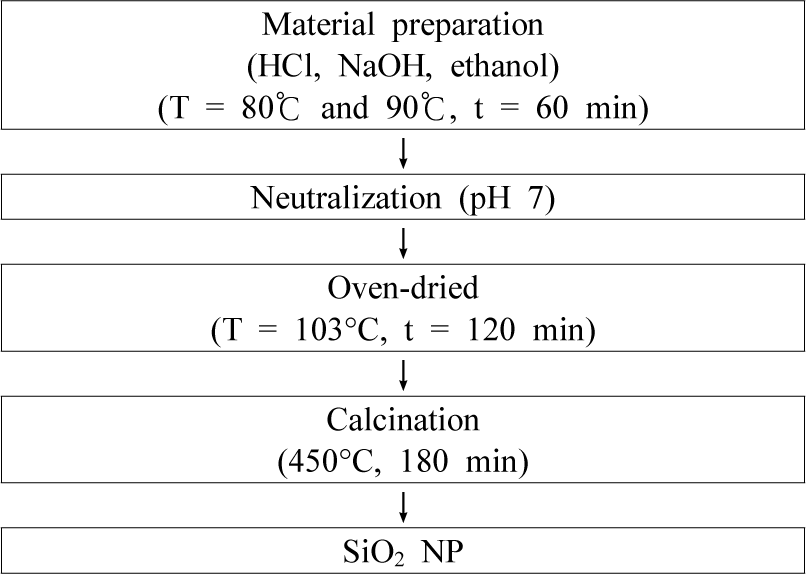
1 gram of bamboo leaf ash was added to 40 mL of 3 M HCl. The mixture was stirred and heated at 80°C for 1 hour. After this process, the mixture was allowed to cool, then filtered and the precipitate was collected. The resulting precipitate was added to 40 mL of 3 M NaOH, stirred and heated at 90°C for 1 hour (Cahyani et al., 2022). After that, the mixture was allowed to cool, filtered and the filtrate was collected. The filtrate was added to 40 mL of demineralized water and 20 mL of 96% ethanol, stirred until homogeneous, and slowly added to 3 M HCl until it reached pH 7 and a white precipitate forms (Lu et al., 2017). The white precipitate formed was filtered and dried at 105°C for 2 hours and calcined at 450°C for 3 hours (Manchanda et al., 2017). The synthesis of SiO2 NP is summarized in Fig. 1.
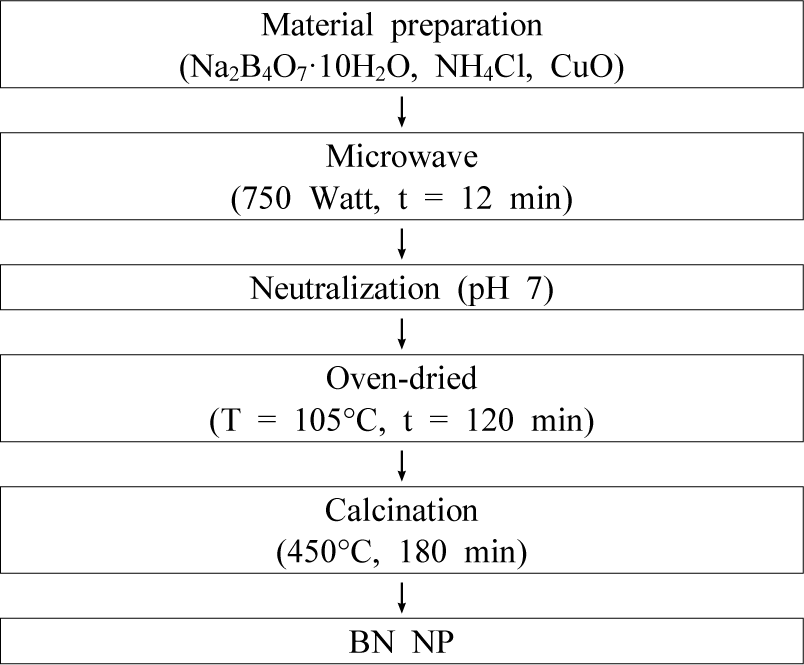
Weighing of Na2B4O7·10H2O and NH4Cl based on a molar ratio of 1:4. 38.142 grams of Na2B4O7·10H2O was dissolved in 100 mL of demineralized water, stirred, and heated to 60°C. 21.4 grams of NH4Cl was dissolved in 100 mL of demineralized water. The two solutions were mixed, stirred, and 0.01% CuO was added. The mixture was irradiated using a 750-watt microwave for 12 minutes. The mixture was cooled to room temperature. After this process, the mixture was rinsed using 0.1 M HCl until it reached pH 7 and 100 mL of hot demineralized water (Mahdizadeh et al., 2017). The resulting mixture was dried at 105°C for 2 hours and calcined at 450°C for 3 hours (Manchanda et al., 2017). The synthesis of BN NP is summarized in Fig. 2.
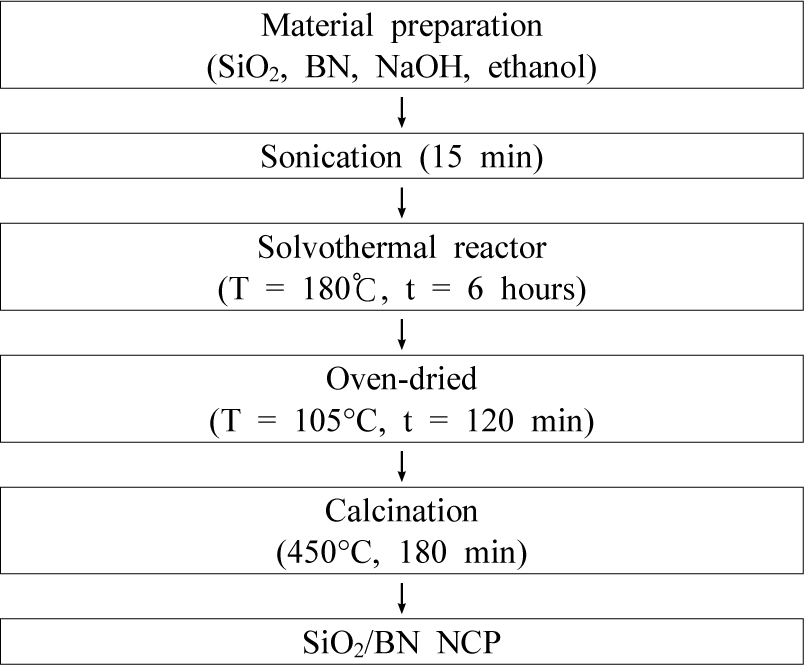
Weighing of SiO2 NP and BN NP based on a 1:1 molar ratio. SiO2 NP were weighed at 1.5 grams and added to 15 mL of 0.1 M NaOH, then stirred. BN NP were weighed at 0.62 grams and added to 60 mL of 96% ethanol, then stirred. The two solutions were mixed and stirred. The mixture was sonicated for 15 minutes (Anjum et al., 2024). The mixture was placed in a solvothermal reactor and heated at 180°C for 6 hours (Patil et al., 2016). The mixture was rinsed with demineralized water until the pH was neutral. The resulting mixture was dried at 105°C for 2 hours and calcined at 450°C for 3 hours (Manchanda et al., 2017). The synthesis of SiO2/BN NCP is summarized in Fig. 3.
Wood samples were impregnated with SiO2 NP, BN NP, and SiO2/BN NCP at a concentration of 0.75% in demineralized water as impregnation solutions. The impregnating agent was poured into a container holding the wood, which was secured with nylon wire that was chemically inert to the solutions. The container was placed in an impregnation tube, and impregnation was performed under a vacuum of –0.5 bar for 30 minutes and a pressure of 2 bar for 2 hours. After impregnation, the wood was rinsed with demineralized water to remove residual solution, then wrapped in aluminum foil and heated at 65°C for 12 hours, dried at 105°C for 2 days to constant weight (Rahayu et al., 2024).
Weight percent gain (WPG) was calculated using the following equation:
W0 is the oven-dry weight of the sample before impregnation, and W1 is the oven-dry weight after impregnation.
Anti-swelling efficiency (ASE) was evaluated after repeated water immersion and calculated using the following equation:
Su is the volume shrinkage of the untreated sample after immersion in water at room temperature for 24 hours, and St is the volume shrinkage of the impregnated sample.
Water uptake (WU) was measured after the samples had been immersed in water for 24 hours and was calculated using the following equation:
W1 is the weight of the sample after impregnation, and W2 is the weight after immersion in water for 24 hours.
The bulking effect (BE) was calculated using the following equation:
V0 is the oven-dry volume before impregnation, and V1 is the oven-dry volume after impregnation.
Density (ρ) was calculated before and after treatment using the following equation:
where ρ is the wood density (g/cm3), B is the sample weight after impregnation (g), and V is the sample volume after impregnation (cm3).
Color changes in the test samples were analyzed using the CIELAB method in Adobe Photoshop CS6 (version 13.1.2). All samples were scanned, and measurements were obtained at five points on each scanned image. The L, a, and b parameters were used to quantify color changes. The total color difference (ΔE) was calculated using Equations (6) to (9):
where ΔL is the difference in lightness, Δa is the difference along the red–green axis, and Δb is the difference along the yellow–blue axis. Lu, au, and bu are the L, a, and b values before treatment, whereas Lt, at, and bt are the corresponding values after treatment. ΔE is the total color difference. The degree of wood color change was classified according to the criteria in Table 1.
| Color change | Effect |
|---|---|
| ΔE < 0.2 | Not visible |
| 0.2 ≤ ΔE < 1.0 | Very low |
| 1.0 ≤ ΔE < 3.0 | Low |
| 3.0 ≤ ΔE < 6.0 | Moderate |
| ΔE > 6.0 | High |
10 mg of SiO2 NP, BN NP, and SiO2/BN NCP were weighed in 100 mL of demineralized water and stirred for 15 minutes with a sonicator (Gerasimov et al., 2021). The solution containing 100 ppm of SiO2 NP was analyzed using particle size analysis (PSA).
SiO2 NP, BN NP, and SiO2/BN NCP were incorporated into potassium bromide (KBr) pellets at a ratio of 1:100. Fourier transform infrared spectroscopy (FTIR) spectra were recorded over 4,000–400 cm–1 at a resolution of 4 cm–1 using 32 scans.
SiO2 NP, BN NP, and SiO2/BN NCP were sieved using a 100 mesh sieve. The degree of crystallinity was analyzed using X-ray diffraction (XRD). The instrument settings were Cu Kα radiation with a graphite monochromator, voltage of 40 kV, current of 30 mA, and a scan range of 2θ between 5 and 90° at a scanning rate of 2°/minute. Crystal size was calculated using the Scherrer equation [Equation (10)], where λ is the X-ray wavelength and θ is the diffraction angle. The value of the constant K depends on the crystal form factor, the diffraction plane (hkl), and the interpretation of the quantity β. Here, β represents either the full width at half maximum (FWHM) or the integral width of the half peak (Hargreaves, 2016).
SiO2 NP, BN NP, and SiO2/BN NCP were sieved using a 100 mesh sieve. Measurements were performed from 25°C–1,200°C at a rate of 5°C/min in a nitrogen (N2) atmosphere (Yaseen et al., 2024).
FTIR spectroscopy was employed to examine the chemical structure of jabon wood and to identify possible interactions between the wood constituents and the impregnated nanomaterials. Prior to analysis, all samples were oven-dried at 60°C for 24 h to remove residual moisture, then ground into fine powder. Approximately 1–2 mg of each powdered sample was homogeneously mixed with spectroscopic-grade potassium bromide (KBr) and pressed into transparent pellets using a hydraulic press. FTIR spectra were recorded using an FTIR spectrometer in the range of 4,000–400 cm–1 at a resolution of 4 cm–1 with 32 scans per sample. The spectra were baseline-corrected and normalized to allow comparison among untreated and impregnated samples. The KBr pellet method is widely used for bulk chemical characterization of modified wood materials and NCPs (Xu et al., 2020; Zhang et al., 2019a).
XRD analysis was conducted to evaluate the effect of impregnation on the crystalline structure of jabon wood. Diffraction patterns were obtained using an X-ray diffractometer with Cu Kα radiation (λ = 1.5406 Å), operated at 40 kV and 30 mA. The measurements were performed over a 2θ range of 5°–40° with a step size of 0.02° and a scanning rate of 1°–2° min–1. The diffraction peaks corresponding to cellulose I, typically located at approximately 2θ ≈ 16° and 22°, were analyzed to assess potential changes in cellulose crystallinity caused by impregnation. The presence of broad amorphous features associated with SiO2 and the characteristic BN reflection near 2θ ≈ 26° were also examined. The crystallinity index (CrI) was calculated using the Segal method to quantify changes in the relative crystalline and amorphous fractions of cellulose (Rahayu et al., 2022; Xu et al., 2020).
Scanning electron microscopy (SEM) was used to observe the morphological characteristics and distribution of impregnated nanomaterials within the jabon wood structure. Wood samples were cut into small blocks (approximately 5 × 5 × 5 mm3), air-dried, and sputter-coated with a thin gold layer to improve surface conductivity. SEM observations were carried out at an accelerating voltage of 10–15 kV. Transverse sections were examined to evaluate nanomaterial penetration, localization in cell lumens, adhesion to cell walls, and the presence of particle aggregation. SEM micrographs were used to compare the anatomical features of untreated wood with those of wood impregnated with SiO2 NP, BN NP, and SiO2/BN NCP. This technique provided direct visual evidence of impregnation efficiency and nanomaterial dispersion within the wood microstructure and is widely used in wood modification studies (Laksono et al., 2023).
Thermogravimetric analysis (TGA) was performed to evaluate the thermal stability and degradation behavior of impregnated jabon wood. Approximately 5–10 mg of oven-dried sample was placed in an alumina crucible and heated from room temperature to 600°C at a heating rate of 10°C min–1 under a nitrogen atmosphere to prevent oxidative degradation. Thermogravimetric (TG) and derivative thermogravimetric (DTG) curves were analyzed to identify characteristic thermal degradation stages, including moisture evaporation (< 150°C), hemicellulose decomposition (200°C–300°C), cellulose degradation (300°C–400°C), and lignin decomposition (> 400°C). The onset degradation temperature, maximum degradation temperature, and residual char yield were used as indicators of thermal stability. Enhanced char residue and delayed degradation temperatures in impregnated samples were interpreted as evidence of improved thermal resistance due to the presence of inorganic nanomaterials, particularly SiO2 NP acting as a thermal barrier (Albert and Liew, 2025).
3. RESULTS and DISCUSSION
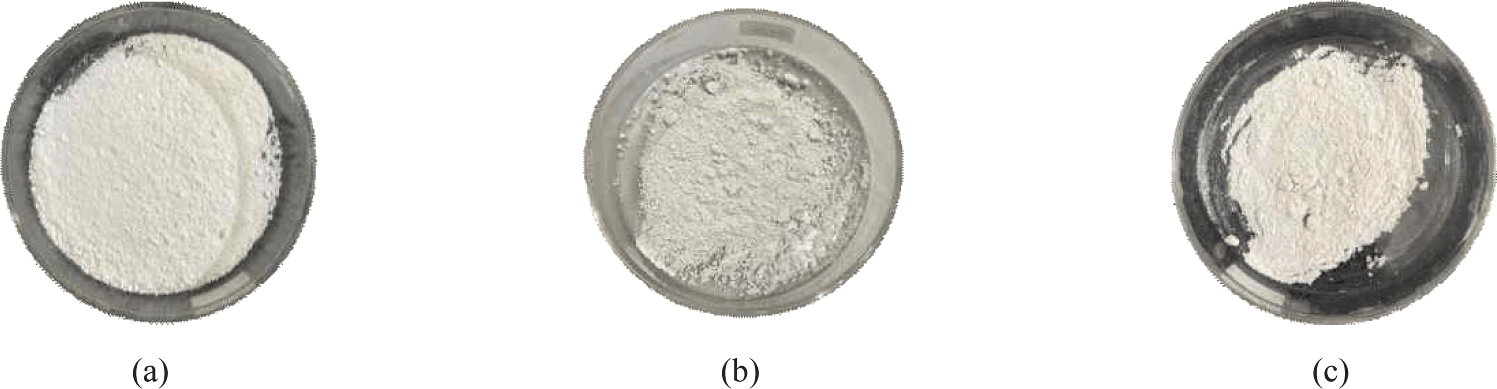
SiO2/BN NCP was synthesized using the solvothermal method by combining SiO2 NP prepared by the sol–gel method with BN NP prepared by the microwave method, producing a fine white powder (Fig. 4). The yields of SiO2 NP, BN NP, and SiO2/BN NCP were 80%, 17.21%, and 43.74%, respectively.
Bamboo leaves were converted to ash at 900°C to remove organic compounds and form metal oxides. The ash was treated with dilute HCl to dissolve metal oxides other than silica, such as CaO and MgO. The precipitate was then treated with NaOH to dissolve silica as sodium silicate. The sodium silicate was mixed with demineralized water and ethanol and acidified to neutral pH. The resulting protonation of silicate ions formed silicic acid, which underwent condensation and released water to form siloxane (Si–O–Si) bonds. The silica synthesis reactions were as follows:
The SiO2 NP synthesized using the sol–gel method had a yield of 83.02%, compared with the 80% yield reported previously (Prihatini et al., 2024). The method produced a white silica powder resembling commercial silica and used NaOH, HCl, and temperatures below 100°C. The SiO2 yield may vary depending on the chemicals and heating conditions used during synthesis (Prihatini et al., 2024).
BN NP synthesis by the microwave method involved a reaction between borax, the boron source, and ammonium chloride, the nitrogen source. Borax was dissolved in demineralized water at 70°C, and ammonium chloride was dissolved separately in demineralized water. The solutions were combined, and copper oxide was added as a catalyst. Microwave irradiation supplied electromagnetic energy that accelerated the reaction between boron and nitrogen to form BN. The product was washed with dilute HCl to remove impurities. The reaction between borax and ammonium chloride was as follows:
The BN NP synthesized using the microwave method had a yield of 17.21%. A sonication-based study (Llenas et al., 2022) reported a lower yield of 11.3% but high crystallinity, whereas a nozzle-reactor method produced a relatively high yield of 70% but low crystallinity (Kim et al., 2014).
Solvothermal synthesis of the SiO2/BN NCP combines SiO2 NP and BN NP. This combination does not involve a chemical reaction but instead relies on physical interactions, including van der Waals forces (Anjum et al., 2024). Silica NP are dissolved in NaOH to form silicate ions, whereas BN NP are dispersed in ethanol. The two solutions are combined, sonicated, and placed in a solvothermal reactor for crystal growth. The product is washed with demineralized water to remove impurities. The resulting SiO2/BN NCP yield was 43.74%. A ball-milling study (Tang et al., 2023) involving silane-modified BN reported a yield of 38%.
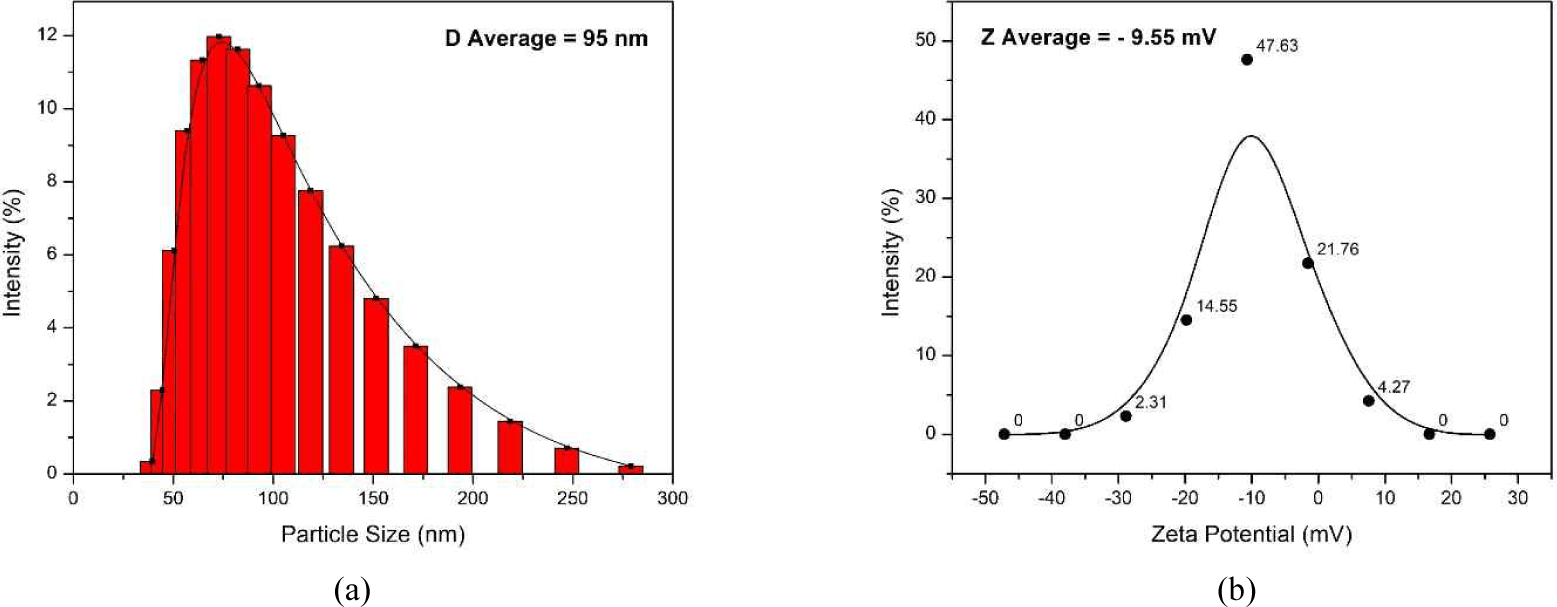
The PSA curve for SiO2 NP (Fig. 5) showed a particle size range of 39–279 nm. The greatest and lowest intensities occurred at particle sizes of 72 nm (11.9%) and 279 nm (0.2%), respectively, and the mean particle size (D average) was 95 nm. The zeta-potential distribution ranged from –47 to 25 mV, with the greatest intensity at –10 mV (47.6%) and the lowest at –28 mV (2.3%). The mean zeta potential (Z average) was –9.55 mV. The particle size was smaller than the 207 nm reported previously (Prihatini et al., 2024). The mean zeta potential of the sol–gel-derived SiO2 NP was –9.40 mV (Fig. 5), consistent with the value of –9.56 mV reported previously (Prihatini et al., 2024). The negative zeta potential results from dissociation of Si-O groups on the silica surface, which imparts a negative charge to siloxane (Si-O-Si) groups.
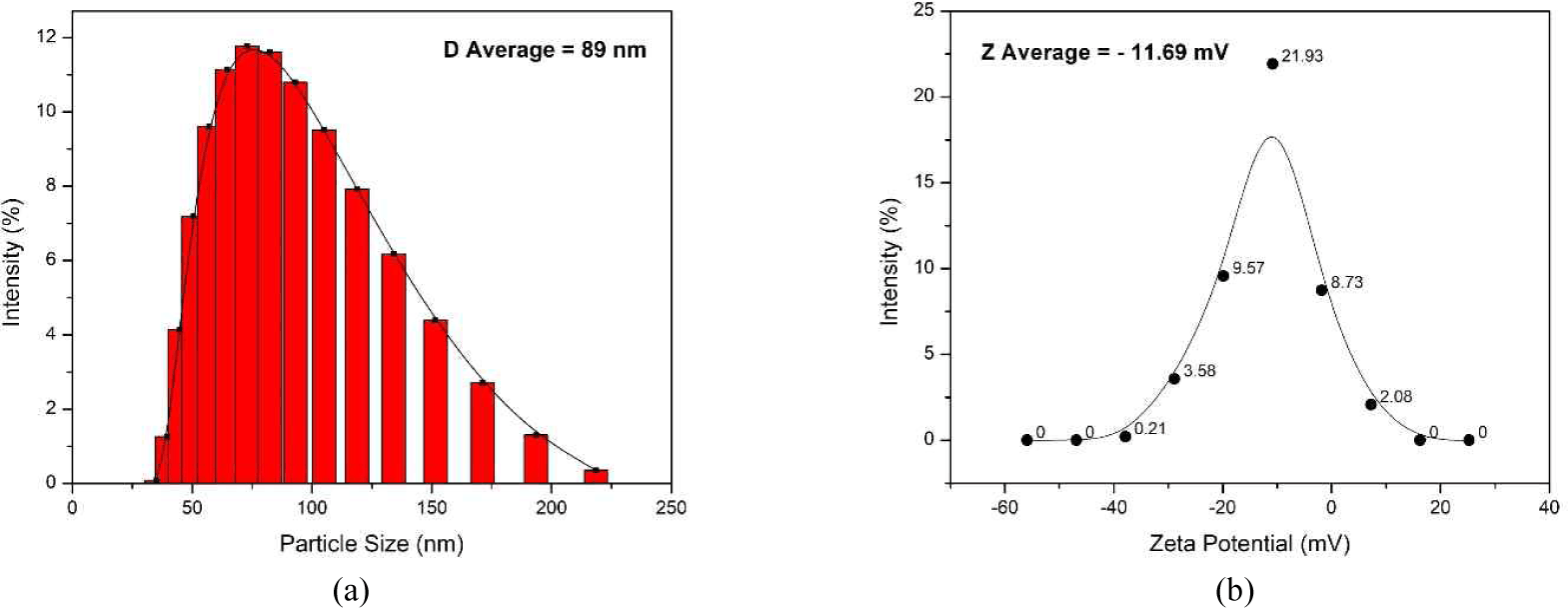
The PSA curve for BN NP (Fig. 6) showed a particle size range of 35–218 nm. The greatest and lowest intensities occurred at particle sizes of 72 nm (11.7%) and 35 nm (0.08%), respectively, and the mean particle size (D average) was 89 nm. The zeta-potential distribution ranged from –55 to 25 mV, with the greatest intensity at –10 mV (21.8%) and the lowest at 7 mV (2.0%). The mean zeta potential (Z average) was –11.69 mV. This negative value was attributed to surface boron reacting with water to form hydroxyl groups (B-OH) and release protons, leaving a negative surface charge (B-O; Mahdizadeh et al., 2017).
The PSA curve for SiO2/BN NCP (Fig. 7) showed a particle size range of 39–171 nm. The greatest and lowest intensities occurred at particle sizes of 72 nm (14.4%) and 171 nm (0.2%), respectively, and the mean particle size (D average) was 79 nm. The zeta-potential distribution ranged from –51 to 38 mV, with the greatest intensity at –6.6 mV (82%) and the lowest at 20 mV (0.04%). The mean zeta potential (Z average) of SiO2/BN NCP was –10.84 mV. A zeta potential of –10.84 mV indicates moderate colloidal stability and possible partial agglomeration; however, this does not limit impregnation efficiency in porous wood, where particle transport is governed by capillary forces and pressure-driven flow rather than Brownian motion. Both primary NP and small agglomerates can therefore penetrate lumens and pit structures, with lumen filling and pit blocking serving as the primary modification mechanisms (Shrestha et al., 2020). SEM evidence of particle accumulation in these regions is consistent with the improved dimensional stability despite the moderate zeta potential.
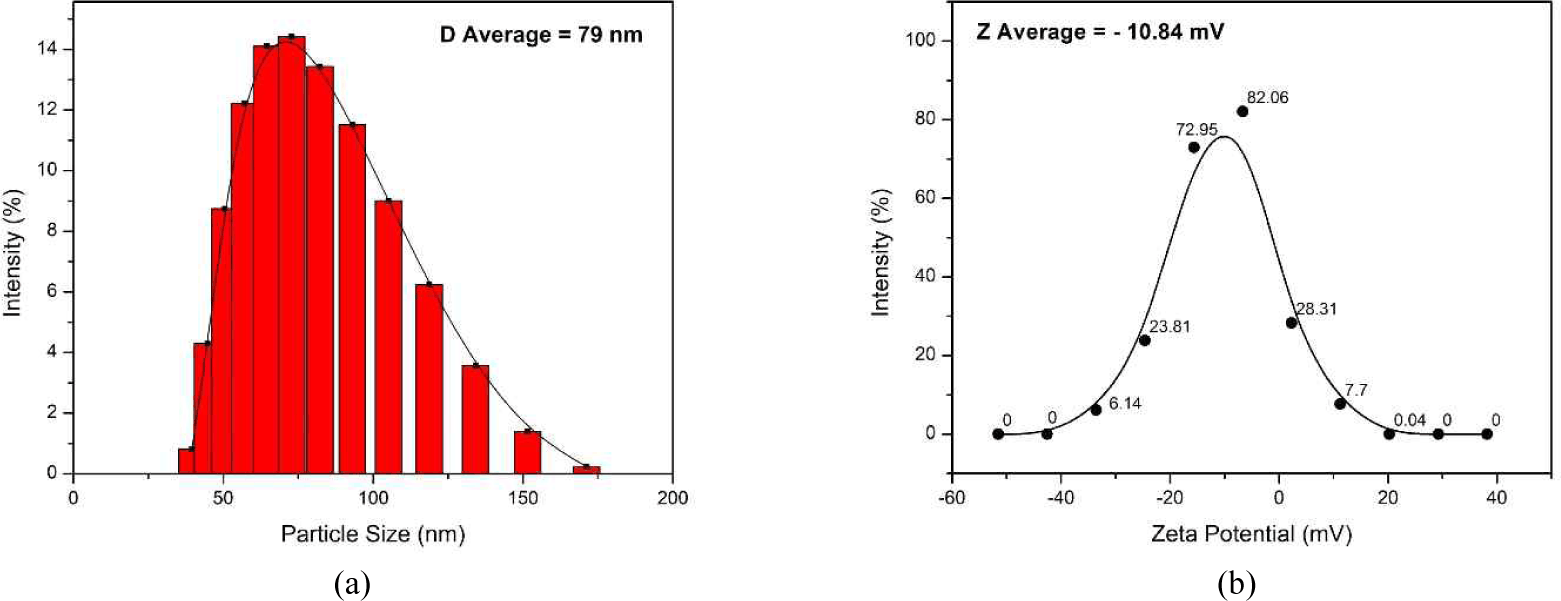
The smallest mean particle size was observed for the SiO2/BN NCP, at 79 nm, followed by BN NP at 89 nm, while SiO2 NP had the largest particle size at 95 nm. The smaller particle size of SiO2/BN NCP indicates successful synthesis, with a finer particle distribution and reduced agglomeration. The zeta potentials of the three samples ranged from –9.40 to –11.30 mV, indicating negative surface charges and low colloidal stability governed by van der Waals forces in the range of ± 10 mV. The greater magnitude of the zeta potential of SiO2/BN NCP indicates improved colloidal stability. However, this negative charge still helps prevent complete particle agglomeration, thereby maintaining a sufficiently stable suspension (Mohammadi-Jam et al., 2022).
FTIR identifies functional groups and chemical structures through the interaction of infrared radiation with molecules. The 4,000–400 cm–1 spectral range encompasses characteristic bond vibrations such as Si-O and B-N (Pasieczna-Patkowska et al., 2025). The SiO2 NP spectrum (Fig. 8) showed a Si-O-Si band at 1,094 cm–1 and Si-O bands at 791, 622, and 470 cm–1. These findings agree with a previous report (Prihatini et al., 2024) that identified a Si-O-Si band at 1106 cm–1 and Si-O bands at 786 and 624 cm–1 in silica obtained by sol–gel extraction. Another study (Rizky et al., 2023) reported a Si-O-Si band at 1097 cm–1, supported by a Si-O band at 468 cm–1. The Si-O band at 800 cm–1 arises from deformation of the Si-O bond in SiO4. These characteristic siloxane (Si-O-Si) and Si-O bands confirm that the material synthesized from bamboo leaves by the sol–gel method was silica.
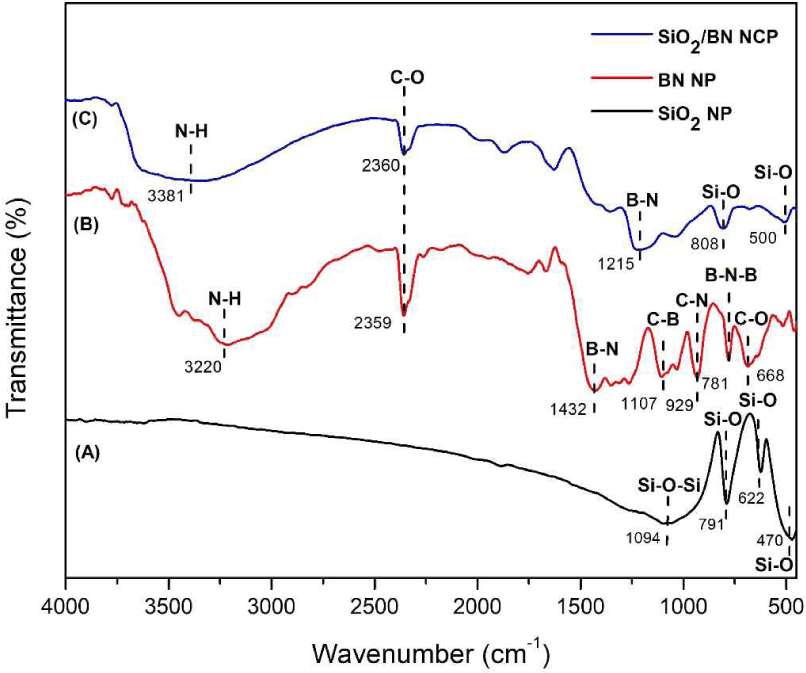
The BN NP spectrum (Fig. 8) showed an N-H band at 3,220 cm–1; C-O bands at 2,359 and 668 cm–1; B-N, C-B, and C-N bands at 1,432, 1,107, and 929 cm–1, respectively; and a B-N-B band at 781 cm–1. These findings agree with a previous report (Mahdizadeh et al., 2017) that identified a B-N band at 1,396 cm–1, a B-N-B band at 805 cm–1, and an N-H band at 3,420 cm–1 in BN synthesized by the microwave method. Another study (Shen et al., 2019) reported C-N and C-B bands at 910 and 1,100 cm–1, respectively. The signals at 668 and 2,360 cm–1 originate from residual CO2 adsorbed on the surface and from the FTIR system (Mo et al., 2018). These characteristic B-N and B-N-B bands confirm that the compound synthesized by the microwave method was BN.
The SiO2/BN NCP spectrum (Fig. 8) showed N-H and C-O bands at 3,381 and 2,360 cm–1, respectively; a B-N band at 1,215 cm–1; and Si-O bands at 808 and 500 cm–1. A previous study (Magaletti et al., 2024) identified an N-H band at 3,470 cm–1. The band at 2,360 cm–1 has been attributed to residual CO2 adsorbed on the surface and to the FTIR system (Dantas et al., 2012). A B-N band has also been reported at 1,396 cm–1 (Mahdizadeh et al., 2017), and another study (Rizky et al., 2023) identified Si-O bands at 800 and 468 cm–1. Thus, the characteristic Si-O and B-N bands confirm that the material synthesized by the solvothermal method was SiO2/BN NCP.
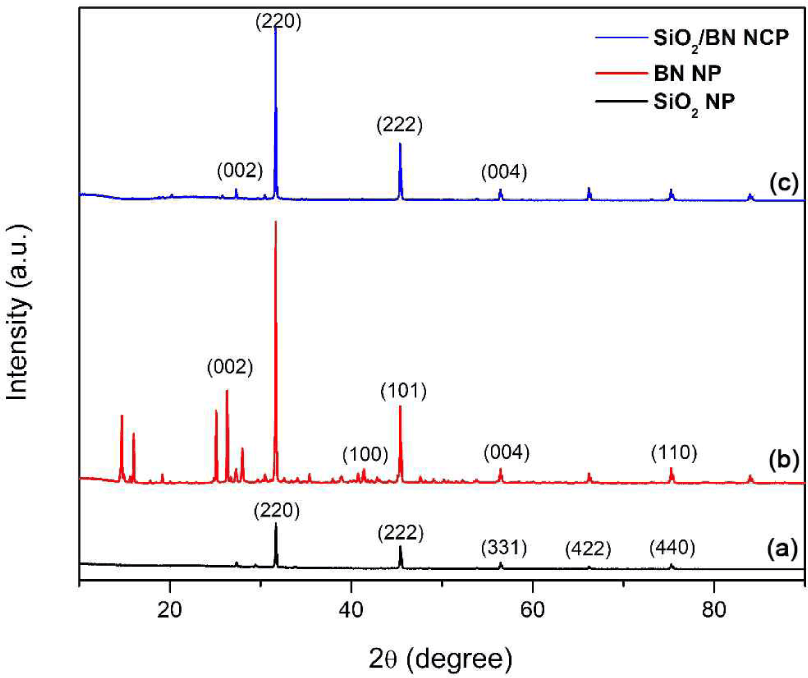
The diffractograms of SiO2 NP, BN NP, and SiO2/BN NCP (Fig. 9) were analyzed to determine phase, crystallite size, and degree of crystallinity (Table 2). The SiO2 NP diffractogram showed peaks at 2θ values of 27.35°, 29.44°, 31.70°, 45.43°, 56.41°, 66.20°, and 75.26°. Comparison with the SiO2 standard JCPDS No. 04-008-7642 reported previously (Prihatini et al., 2024) indicated that these peaks corresponded to successfully synthesized cristobalite-phase SiO2 NP. The crystallite size calculated using the Scherrer equation was 47 nm, and the degree of crystallinity was 33%.
| No. | Nanoparticles | Crystal phase | Crystal size (nm) | Degree of crystallinity (%) |
|---|---|---|---|---|
| 1 | SiO2 NP | Cristobalite | 47 | 33 |
| 2 | BN NP | Hexagonal | 75 | 62 |
| 3 | SiO2/BN NCP | No new phase appears | 69 | 49 |
The BN NP diffractogram showed peaks at 2θ values of 14.71°, 16.04°, 19.18°, 25.11°, 26.31°, 27.99°, 31.68°, 45.40°, 56.39°, 66.18°, 75.31°, and 83.91°. Comparison with the BN standard JCPDS No. 34-0421 reported previously (Mahdizadeh et al., 2017) indicated that these peaks corresponded to successfully synthesized hexagonal-phase BN NP. The crystallite size calculated using the Scherrer equation was 75 nm, and the degree of crystallinity was 62%. The SiO2/BN NCP diffractogram showed peaks at 2θ values of 27.31°, 31.65°, 45.39°, 56.43°, 66.22°, 75.21°, and 83.96°. The reduced intensity indicated an interaction between SiO2 NP and BN NP. No new peaks appeared, indicating that no new phase formed during solvothermal synthesis of the SiO2/ BN NCP (Zhai et al., 2007). The calculated crystallite size of the SiO2/BN NCP was 69 nm, and the degree of crystallinity was 49%.
SiO2 NP shows the lowest degree of crystallinity compared to BN NP and SiO2/BN NCP. This finding is consistent with the general characteristics of silica, which is amorphous or semi-crystalline, characterized by broad diffraction peaks (Awadh and Yaseen, 2019). BN NP exhibits a higher degree of crystallinity compared to SiO2 NP. This reflects the formation of a more regular hexagonal BN (h-BN) phase, resulting in sharper diffraction peaks (Kumar et al., 2021). In SiO2/BN NCP, the degree of crystallinity is moderate at 49%. These values indicate that the combination of SiO2 NP and BN NP produces a material with a higher degree of crystalline regularity than SiO2 NP and lower than BN NP.
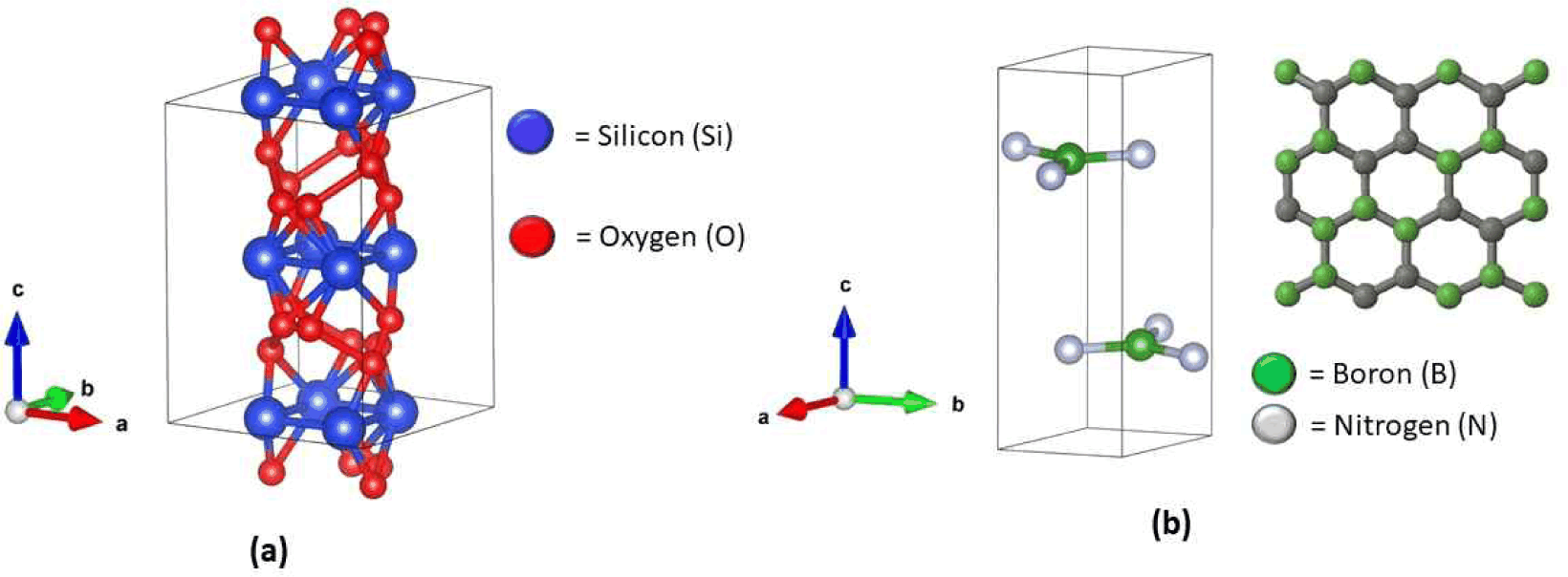
The crystal structures of SiO2 NP and BN NP were determined by interpreting the diffractograms using QualX software (Altomare et al., 2015), followed by visualization in VESTA (Fig. 10). The analysis showed that SiO2 NP had a cristobalite phase and BN NP had a hexagonal phase. Cristobalite is a high-temperature polymorph of SiO2 characterized by a three-dimensional framework of corner-sharing SiO4 tetrahedra, in which each silicon atom is tetrahedrally coordinated by oxygen atoms that bridge neighboring tetrahedra. Under ambient conditions, cristobalite most commonly occurs as metastable α-cristobalite with tetragonal symmetry, typically described by the space groups P41212 or P43212, whereas the high-temperature β-cristobalite phase has cubic symmetry (Fd3̅m). The α↔β phase transition proceeds through cooperative rotations and distortions of rigid SiO4 tetrahedral units without cleavage of Si-O bonds, resulting in pronounced anisotropic thermal expansion and dynamic disorder that strongly influence diffraction behavior and thermomechanical properties (Borisov et al., 2019; Shelton et al., 2018). In contrast, h-BN crystallizes in a layered hexagonal structure belonging to the space group P63/mmc. It comprises planar honeycomb sheets of alternating boron and nitrogen atoms bonded through strong in-plane sp2 covalent B-N interactions. Each atom is threefold coordinated within the basal plane, whereas adjacent layers are stacked along the crystallographic c-axis through weak van der Waals forces in an energetically favorable AA′ configuration, in which boron atoms in one layer align above nitrogen atoms in adjacent layers. This pronounced structural anisotropy produces characteristic (002) basal reflections in XRD and underlies the excellent thermal stability, high in-plane thermal conductivity, and electrical insulation of h-BN (Abdul Karim et al., 2023; Maestre et al., 2021).
TGA was performed to determine the thermal stability and decomposition behavior of SiO2 NP, BN NP, and SiO2/BN NCP under controlled heat conditions. This information is important for developing, evaluating, and assuring the quality of prospective fire-resistant materials (Bachtiar et al., 2019). TGA quantifies changes in material mass as temperature changes. These data can be used to determine the temperature at which the material begins to degrade, which is a key indicator of its fire resistance properties (Ahmed et al., 2017). More stable materials require higher temperatures for combustion or decomposition (Çakal et al., 2011). TGA enabled rapid comparison of the fire-resistance properties of SiO2/BN NCP with those of its constituent materials, namely SiO2 NP and BN NP. This comparison identifies which constituent most effectively delays thermal degradation.
As shown in Fig. 11(a), the thermogram shows the relationship between temperature and retained mass over 20°C–1,000°C. The thermogram was evaluated at 500°C, 750°C, and 1,000°C. Thermogram analysis at 500°C showed that SiO2 NP, BN NP, and SiO2/BN NCP retained 84.10%, 95.56%, and 99.93%, respectively. At 500°C, organic compounds bound to the material begin to decompose (Gadipelli and Guo, 2014), and mineral dehydroxylation also occurs, involving the loss of structural water and causing structural transformation (Grabowska et al., 2023). Furthermore, inorganic complexes and hydrates produced during synthesis can remain stable up to 400°C. However, at 500°C, these compounds begin to degrade and volatilize, a process that continues at higher temperatures (Ng et al., 2018). The thermogram indicated that SiO2 NP experienced the greatest mass loss within the temperature range of 20°C to 500°C, amounting to 15.90%. This finding may be attributed to its hygroscopic nature (Bermeo et al., 2020) and the presence of organic residues from the bamboo leaf biomass used as the silica precursor (Prihatini et al., 2024). This causes the loss of absorbed water and organic residue during the heating process, leading to a substantial reduction in the mass of the SiO2 NP material.
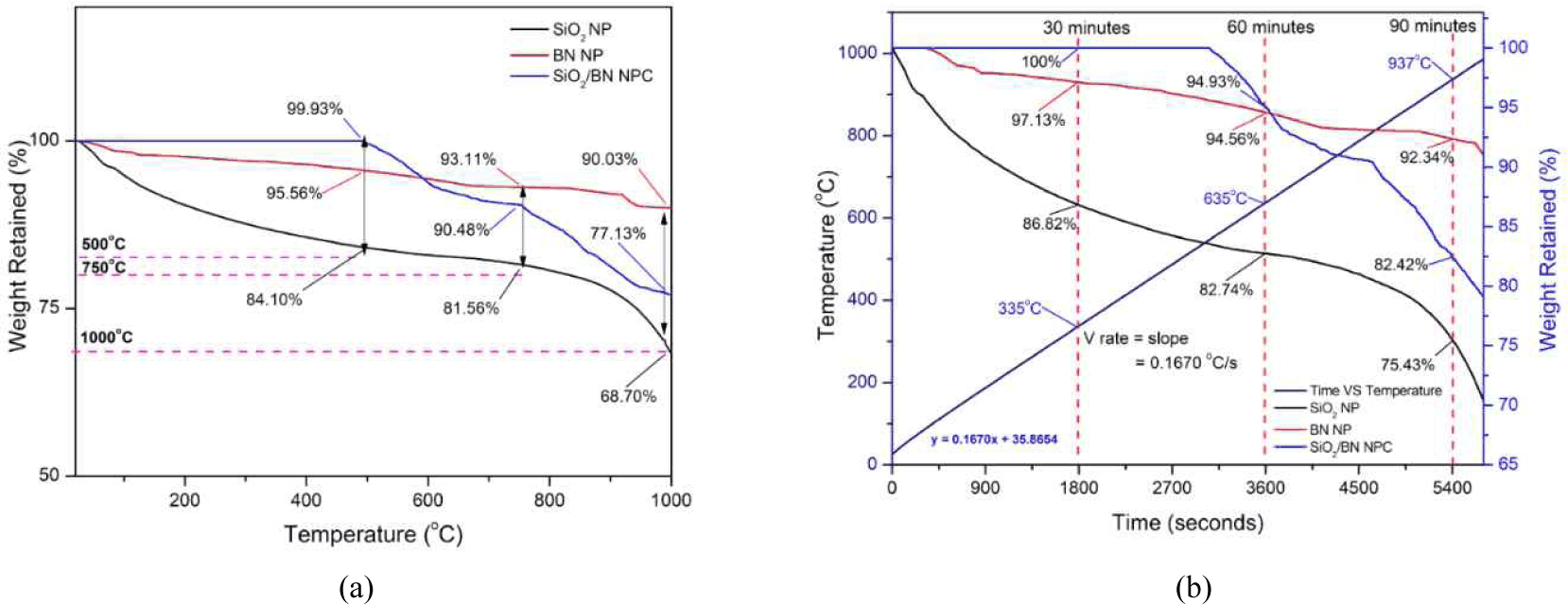
Thermogram analysis at 750°C showed that SiO2 NP, BN NP, and SiO2/BN NCP retained 81.56%, 93.11%, and 90.48%, respectively. At 750°C, the dehydration of structural water and the decomposition of amorphous carbon from organic compound residues continue (Ezz et al., 2018). As stated by Mohamed et al. (2016), the inorganic carbonate lattice of the precursor material decomposes, releasing carbon dioxide. This process causes material mass loss. The thermogram indicated that SiO2/BN NCP underwent the greatest mass loss at temperatures ranging from 500°C to 750°C, amounting to 9.45%. This phenomenon can be attributed to the composite nature of SiO2/BN NCP, which contains more carbonate-lattice residue than the individual SiO2 NP and BN NP.
Thermogram analysis at 1,000°C showed that SiO2 NP, BN NP, and SiO2/BN NCP retained 68.70%, 90.03%, and 77.13%, respectively. At 1,000°C, the amorphous carbon in the organic residue undergoes complete conversion to CO2. This process causes a substantial weight reduction (Sembiring et al., 2019). When BN NP and SiO2/BN NCP materials are exposed to air and subsequently heated to elevated temperatures (800°C–900°C), BN can undergo oxidation into boron oxide (B2O3), which may evaporate or form a glassy layer at high temperatures. The oxidation and volatilization of boron oxide products result in a decrease in mass, although BN itself does not decompose into its constituent elements at 1,000°C (Davis et al., 2024). The thermogram indicated that SiO2 NP and SiO2/BN NCP underwent similar mass losses; however, SiO2/BN NCP had a mass loss (12.86%) at temperatures ranging from 750°C to 1,000°C, compared with SiO2 NP (13.35%). This finding may be attributed to complex reactions involving the silicon nitride system, arising from side reactions during NCP synthesis, and amorphous carbon, derived from organic residues in the SiO2 NP biomass precursor. This precursor may undergo decomposition at 1,000°C. Furthermore, the decomposition process of inorganic carbonate lattices can persist up to 850°C or higher, allowing complete conversion to CO2 gas (Kemp et al., 2022).
Fig. 11(b) shows the relationship between analysis time from 0 seconds to 5,700 seconds, or 95 minutes, and changes in temperature and retained mass during the analysis process. The analysis ended when the sample mass no longer changed (Losic et al., 2024). The relationship between analysis time and temperature change is represented by a linear regression equation, from which the heating rate was calculated. The average heating rate (V rate) was calculated from the slope of the linear regression equation. The slope value is defined as the ratio between the value on the y-axis (temperature) and the x-axis (time). This corresponds to the average temperature-increase rate, y/x (Zhang, 2021). The regression analysis yielded a linear equation of y = 0.1670x + 35.8654, indicating a V rate of 0.1670°C/s for the TGA instrument employed in this study, equivalent to 10.02°C/min. This heating rate is consistent with the commonly used rate of approximately 10°C/min (Zlateva et al., 2024). This value is suitable for observing the different stages of thermal decomposition in the samples because an excessively high heating rate can accelerate the experiment but can also shift the decomposition events to higher temperatures, leading to errors in the interpretation of the material composition (Abbas and Saber, 2018).
The analysis used three observation times: 30 minutes, 60 minutes, and 90 minutes. The average mass-loss rate at each observation time point was calculated by dividing the percentage change in mass (ΔW) by the change in time (Δt), resulting in the equation ΔW/Δt (Arjmand et al., 2024). Thermogram analysis at the 30-minute observation point showed that the instrument temperature reached 335°C and that SiO2 NP, BN NP, and SiO2/BN NCP retained 86.82%, 97.13%, and 100%, respectively. The thermogram showed that SiO2 NP experienced the highest mass-loss rate during 0–30 minutes: 0.4393%/min (Fig. 12). Thermogram analysis at the 60-minute observation point showed that the device temperature reached 635°C, and SiO2 NP, BN NP, and SiO2/BN NCP retained 82.74%, 94.56%, and 94.93%, respectively. The thermogram showed that SiO2/BN NCP experienced the highest mass-loss rate during 30–60 minutes: 0.1690%/min. Thermogram analysis at the 90-minute observation point showed that the instrument temperature reached 937°C, and SiO2 NP, BN NP, and SiO2/BN NCP retained 75.43%, 92.34%, and 82.42%, respectively. The thermogram showed that SiO2/BN NCP experienced the highest mass-loss rate during 60–90 minutes: 0.4170%/min.
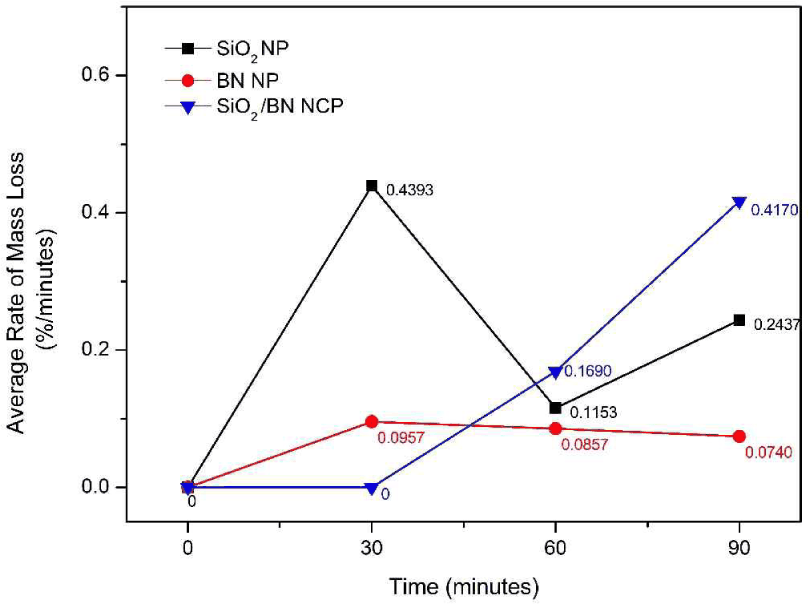
These findings suggest that SiO2/BN NCP has a higher decomposition rate over time and with increasing temperature than either individual material. This behavior may reflect the ability of NCP materials to establish chemically active interfaces (Gonzalez et al., 2021). At high temperatures and during prolonged exposure, diffusion can also occur between constituent particles (Gam et al., 2012). This process may cause interphase reactions between SiO2 NP-BN NP and phase transformations, which can accelerate the decomposition rate (Song et al., 2023). Furthermore, slow decomposition of NCPs at moderate temperatures may cause substantial damage during prolonged heat exposure (Yin et al., 2024). Overall, the thermograms indicate that the SiO2/BN NCP material has greater thermal resistance than the SiO2 NP form, which is a bionanosilica form. The presence of BN NP in the SiO2/BN NCP substantially affects the NCP’s thermal behavior, supporting its use as an impregnating agent for fast-growing wood. Such use may improve the wood's physical properties and fire resistance.
The color test results in Fig. 13 show that the L* value decreased in all treatments. The greatest decrease occurred in the BN NP, from 78.33 to 64.00, indicating that the wood surface became darker after impregnation. The L* value in the SiO2 NP treatment also decreased from 80.00 to 70.00. Meanwhile, in the SiO2/BN NCP treatment, the L* value decreased slightly from 72.00 to 71.00, indicating a less noticeable color change compared to the BN NP and SiO2 NP treatments. This is likely because boron itself tends to cause a darker color due to its reaction with lignin and wood extractives (Hosseini et al., 2014), while silica is bright and can distribute active ingredients evenly throughout the wood matrix (Hosseini et al., 2014). This combination results in a brighter and more uniform visual appearance (Hosseini et al., 2014). The a* value (redness) increased in all treatments. The highest value occurred in the BN NP treatment, rising from 8.00 to 12.22. This indicates a significant increase in red color change, while the b* value (yellowness) also increased across all treatments, with the SiO2/BN NCP treatment decreasing from 20.00 to 19.33. Overall, these color changes indicate that impregnation affects the visual appearance of the wood, both in terms of brightness and the direction of color change. These changes are influenced by chemical reactions between the NP and the compounds that make up the wood cell walls, particularly lignin and extractive compounds, which can produce new colors following the impregnation and drying processes (Hosseini et al., 2014).
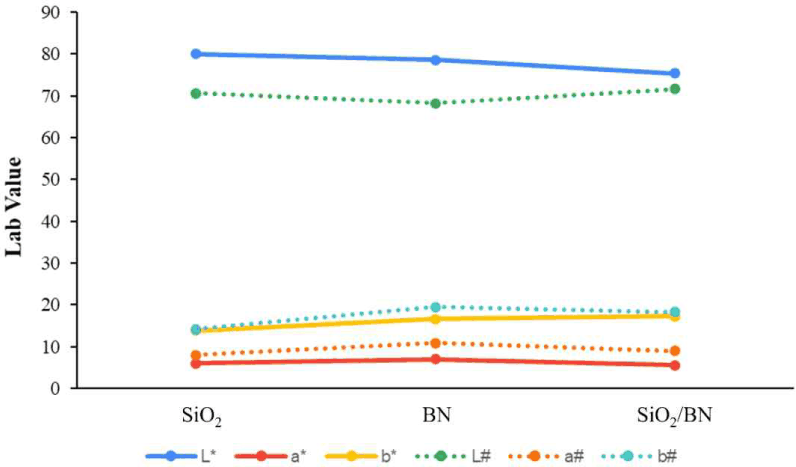
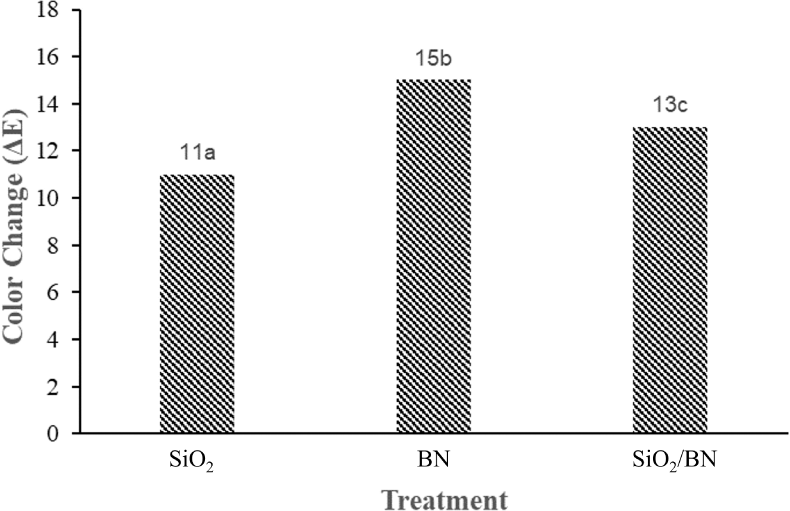
Fig. 14 shows the highest color change value in the BN NP treatment (15), followed by the SiO2/BN NCP treatment (13). The color changes observed in the SiO2 NP, BN NP, and SiO2/BN NCP treatments reached a value of 6. This suggests that the treatments caused significant color changes. Based on the results of the ANOVA (α = 0.05), the treatment factors had a significant effect at the 95% significance level on the color change values of jabon. Duncan’s post hoc test indicated that all impregnation treatments applied to jabon wood differed significantly.
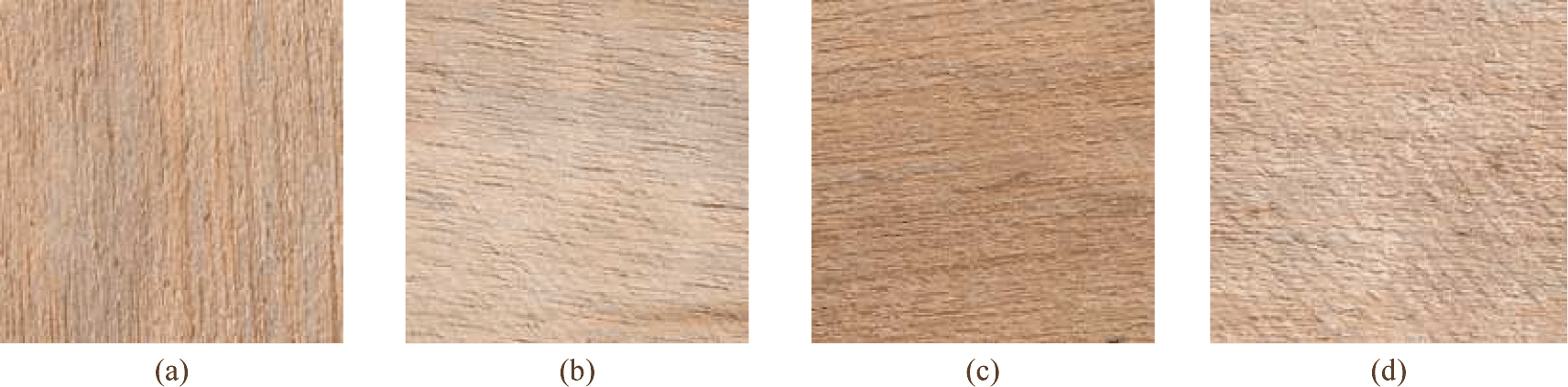
This pattern is visible in Fig. 15. The color of the wood tends to become lighter when treated with SiO2 NP. This change is caused by the presence of SiO2 NP distributed on the surface and within the wood cell cavities (Dong et al., 2014; Fu et al., 2018a, 2018b). This finding agrees with Mitani et al. (2024), who reported that combining SiO2 NP with Paraloid B72 on oak surfaces produced a low ΔE* during artificial exposure, indicating minimal color change. However, a previous study (Bak et al., 2018) reported initial color changes, although these were much smaller than changes in other physical properties. In contrast, BN NP-impregnated wood tends to darken. This pattern suggests that BN NP strongly affect surface color regardless of differences in wood characteristics. Chemical interactions of BN NP with lignin and wood extractives may produce a more intense or darker color and thereby increase the color-difference value (Hosseini et al., 2014). This finding agrees with Aydemir et al. (2016), who reported that wood impregnated with h-BN NP had the greatest total color change (ΔE*), reaching 32.5%. The surface becomes darker as nanoparticle concentration and distribution within the wood tissue increase.
Jabon wood (Neolamarckia cadamba) is classified as a fast-growing tropical hardwood with inherently low density and high porosity (Table 3). The density of untreated jabon wood in this study (0.26 ± 0.03 g/cm3) is at the lower end of values reported in the literature, which typically range from 0.29 to 0.43 g/cm3 depending on provenance, age, and environmental conditions (Hadiyane et al., 2018; Suhaya et al., 2024). This low density reflects a large lumen fraction and thin secondary cell walls, characteristics that favor easy impregnation but also contribute to poor dimensional stability and high hygroscopicity. The high WU observed in untreated samples (64.43%) is consistent with previous findings indicating that jabon wood contains a high proportion of accessible hydroxyl groups in cellulose and hemicellulose (Lemaire-Paul and Foruzanmehr, 2023). From a materials-engineering perspective, untreated jabon behaves as a lightweight bio-based cellular solid with limited resistance to moisture-induced swelling. This limitation underscores the need for modification strategies that target cell wall chemistry and pore structure without excessively increasing density.
Impregnation with SiO2 NP measurably improved all evaluated physical parameters. The increase in WPG (1.18%) and density (0.31 g/cm3) indicate successful penetration and deposition of SiO2 NP within the wood structure. SiO2 NP impregnation significantly increased ASE to 18.53%, accompanied by a reduction in WU to below 58%. These improvements are attributed to the formation of Si–O–C linkages between silica and wood polymers, as well as partial pore filling and lumen coating, which reduce the accessibility of water molecules (Lemaire-Paul et al., 2023; Xu et al., 2020). Similar improvements in dimensional stability following SiO2 NP impregnation have been reported for other fast-growing woods, confirming the general effectiveness of silica as an inorganic reinforcing phase in wood matrices. However, while SiO2 NP provides rigidity and moisture resistance, its reinforcing mechanism is primarily structural and chemical. Therefore, further gains in swelling resistance may be limited by the absence of an effective diffusion-barrier component at the nanoscale.
Wood treated with BN NP exhibited moderate improvements compared with untreated samples, with ASE reaching 12.50% and WU decreasing to 59.70%. BN NP is known for its lamellar morphology, chemical inertness, and excellent barrier properties, particularly against heat and moisture diffusion (Rasul et al., 2021; Wadhwa et al., 2024). Nevertheless, the relatively lower improvement achieved by BN NP suggests limited interfacial compatibility and bonding efficiency between BN NP and the lignocellulosic matrix. Unlike SiO2 NP, BN NP lacks reactive surface hydroxyl groups capable of forming covalent bonds with wood polymers, which may restrict its effectiveness when used as a single modifier. This observation aligns with previous NCP studies emphasizing the importance of interfacial chemistry in achieving optimal property enhancement. The combined SiO2/BN NCP treatment exhibited superior performance across all physical-property indicators, demonstrating a clear synergistic effect. The highest values of WPG (1.34%) and BE (3.80%) were accompanied by the greatest ASE (21.39%) and the lowest WU (56.88%). Importantly, these improvements were achieved without excessive increases in density, which remained at 0.31 g/cm3. The enhanced performance of the NCP system can be explained by complementary mechanisms. SiO2 NP provides strong interfacial bonding and structural reinforcement through Si–O–C linkages, while BN NP sheets act as two-dimensional diffusion barriers, extending moisture transport pathways and reducing capillary water movement.
Although BN NP can be susceptible to leaching under aqueous conditions, in this study BN NP was incorporated within a SiO2/BN NCP, which significantly reduces its mobility compared to standalone BN NP. The post-impregnation rinsing with demineralized water was designed to remove only loosely adhered surface particles, whereas NCP particles within the wood structure were largely retained. BN NP loss is limited by physical entrapment of the SiO2/BN NCP within wood lumens, pits, and microvoids, partial encapsulation of BN by the SiO2 matrix, and enhanced interfacial compatibility achieved through solvothermal synthesis. The preservation of improved dimensional stability and thermal performance after rinsing confirms effective NCP retention, indicating that the reported properties arise from stable, internally retained SiO2/BN NCP rather than transient surface deposits (Salman et al., 2014).
Recent studies of hybrid NCPs indicate that such multiscale reinforcement architectures are more effective than single-filler systems in improving dimensional stability and durability (Wang et al., 2026). From a materials-design perspective, the SiO2/BN NCP-treated jabon wood represents a hierarchically engineered bionanocomposite, in which chemical stabilization, physical pore blocking, and diffusion resistance operate simultaneously. This hybrid approach is particularly well suited for low-density, fast-growing wood species, which require property enhancement without compromising lightweight characteristics. These findings demonstrate that SiO2/BN NCP impregnation was the most effective treatment among those evaluated for improving the physical performance of jabon wood. By significantly enhancing dimensional stability and reducing WU, this treatment expands the potential applications of jabon wood from low-value, non-structural uses to higher-value products requiring improved moisture resistance.
The SEM micrograph of the untreated jabon wood [Fig. 16(a)] shows a well-preserved anatomical structure, characterized by open cell lumens, intact cell walls, and clearly defined pit features. No particulate deposits or surface coatings are observed within the lumens or on the cell walls, confirming the absence of foreign materials and indicating that the wood microstructure remains unmodified prior to impregnation. This image provides a baseline for evaluating the penetration and distribution behavior of the impregnated nanomaterials. In the SiO2 NP impregnated sample [Fig. 16(b)], substantial material deposition is observed within the cell lumens as well as along the inner surfaces of the cell walls. The SiO2 NP appear to form a thin, continuous layer that conforms closely to the cellular contours, indicating effective penetration through the lumen–pit network of the wood. The homogeneous distribution suggests that SiO2 NP are capable of accessing micro and mesoporous regions of the wood structure. This behavior is attributed to the small particle size, spherical morphology, and high surface polarity of SiO2 NP, which promote good dispersion and favorable interfacial interactions with hydroxyl-rich wood polymers. Similar penetration behavior and uniform distribution of SiO2 NP in wood substrates have been reported previously (Rahayu et al., 2021; Wang et al., 2026), supporting the effectiveness of SiO2 NP as a wood-impregnating agent.
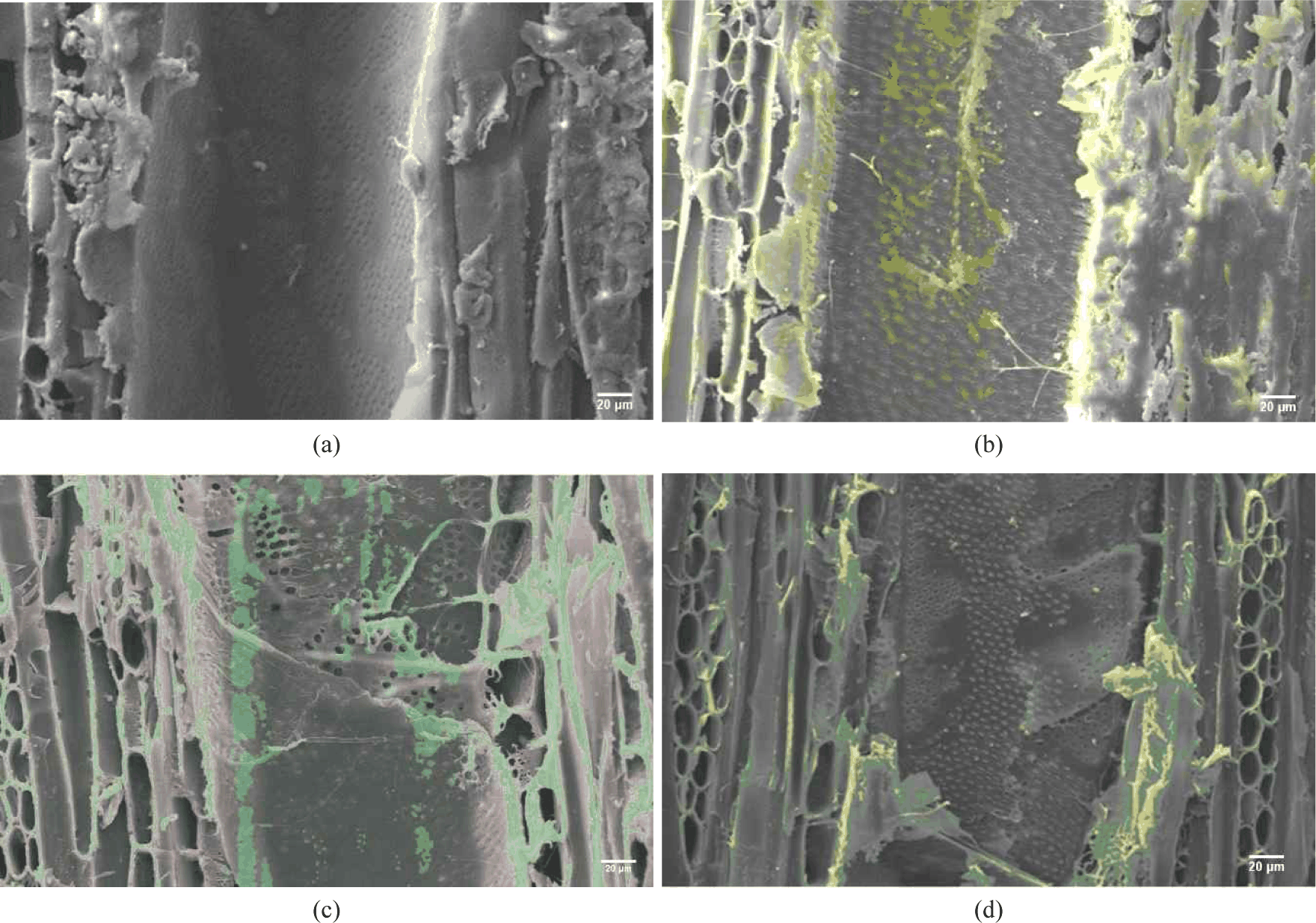
In contrast, the BN NP impregnated sample [Fig. 16(c)] exhibits a more limited and heterogeneous distribution of material. BN NP are primarily localized on the cell wall surfaces and as distinct agglomerates within the cell lumen, while several regions remain unfilled. The presence of aggregates indicates insufficient dispersion during impregnation, which restricts particle transport through narrow pit apertures. This behavior can be attributed to the platelet-like morphology and relatively low surface polarity of BN NP, which increase the effective particle size and promote particle–particle interactions rather than particle–wood interactions (Aydemir et al., 2016). As a result, BN NP penetration into the wood microstructure is significantly reduced. Similar observations have been reported in previous studies, which demonstrated that aggregated NP are unable to pass through bordered pits and are therefore confined to lumen and pith regions (Kızılırmak et al., 2018; Shi et al., 2022).
The wood sample impregnated with the SiO2/BN NCP [Fig. 16(d)] shows a notably improved material distribution compared to the BN NP-only sample. Deposits are observed within the cell lumens and partially along the cell wall surfaces, with fewer large agglomerates and a more uniform dispersion pattern. The presence of SiO2 NP appears to enhance BN NP dispersion by mitigating BN NP aggregation, allowing the composite particles to penetrate more effectively into the wood structure. This improvement is likely attributable to steric stabilization provided by SiO2 NP, which reduces BN NP interactions and enhances interfacial compatibility with the wood matrix. Similar effects have been reported by Li et al. (2025), who showed that SiO2 NP significantly improves BN NP dispersion in composite systems. Overall, the SEM observations indicate that SiO2 NP exhibits superior penetration capability compared to BN NP, resulting in a more homogeneous distribution within the wood microstructure. Although BN NP alone shows limited and uneven deposition, its distribution is markedly improved when incorporated into a SiO2/BN NCP. These results demonstrate a synergistic effect of SiO2 NP in enhancing BN NP dispersion and impregnation efficiency, highlighting the potential of SiO2/BN NCP for achieving more uniform modification of wood substrates.
FTIR analysis was used to assess interactions between the nanomaterials and the wood samples and to determine whether impregnation was effective. Untreated jabon wood, which served as the control, exhibited bands at 552, 1,044, 1,735, 2,887, and 3,631 cm–1, assigned to aromatic C-H, C-O, C = C, C-H, and O-H groups, respectively. The functional-group analysis (Fig. 17) associated C-H stretching with cellulose and hemicellulose and aromatic C-H and C = C stretching with the lignin framework (Emmanuel et al., 2015), whereas O-H and C-O stretching were associated with cellulose and hemicellulose, respectively (Hazarika and Maji, 2014). All functional groups identified in untreated wood corresponded to its constituent organic compounds, including cellulose, hemicellulose, and lignin. The same groups were identified in samples impregnated with SiO2 NP, BN NP, and SiO2/BN NCP, indicating that impregnation did not significantly alter the fundamental structure of jabon wood.
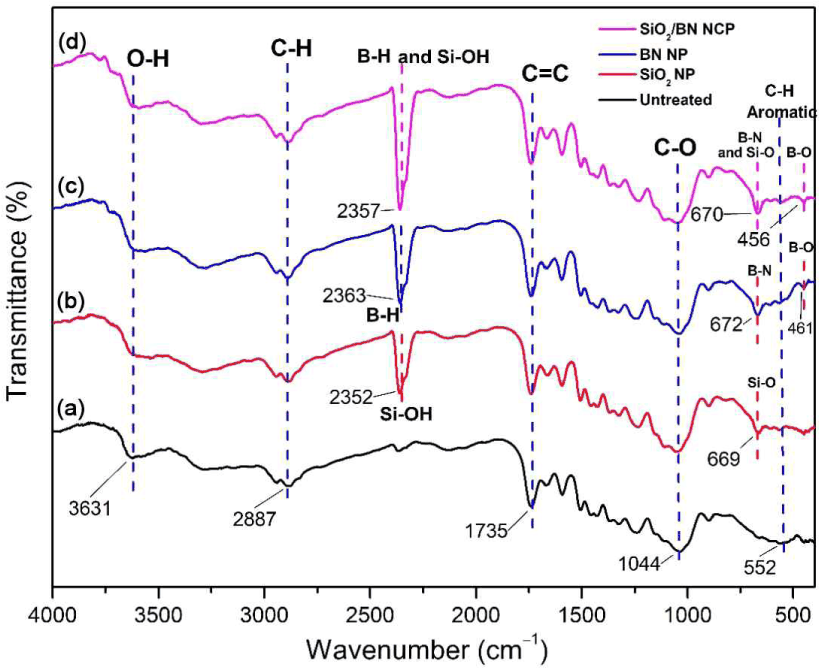
Treatment of wood with SiO2 NP impregnation produced absorption peaks at specific wavelengths. The first peak, at 669 cm–1, corresponded to the bending vibration of the Si-O functional group within the SiO2 compound framework. The second peak, at 2,352 cm–1, was attributed to the strain vibration of the Si-OH functional group, arising from the interaction between silica and the phenolic group of the aromatic chain of lignin in wood, along with water molecules trapped on the wood surface (Palakurthy et al., 2024). Treatment of wood with BN NP impregnation produced absorption peaks at specific wavelengths. These wavelengths correspond to the bending vibration of the B-O functional group at 461 cm–1, the bending vibration of the B-N functional group at 672 cm–1, and the stretching vibration of the B-H functional group at 2,363 cm–1 (Harrison et al., 2019). The B-O band may result from the oxidation reaction of BN material due to high-temperature heating (Nayak, 2009), interaction with oxygen exposure (Han et al., 2022), or residues from borax precursors (Gautam et al., 2012). The B-N band is characteristic of the BN framework and indicates successful synthesis (Doğan et al., 2021).
The B–H band may arise from byproducts formed during the synthesis of hydrogen-passivated BN (Kim et al., 2021) under high-temperature treatment (Kovalskii et al., 2024). The B-H group is formed from excessive heat during synthesis, which can alter the double bond with sp2 hybridization in the B-N functional group into a single bond with sp3 hybridization. This change increases reactivity with hydrogen and promotes covalent-bond formation (Wang et al., 2016). Wood treated with SiO2/BN NCP impregnation exhibited absorption peaks at a wavenumber of 456 cm–1, which corresponds to the bending vibration of the B-O functional group; a wavenumber of 670 cm–1, which corresponds to the bending vibration of the B-N and Si-O functional groups; and a wavenumber of 2,357 cm–1, which corresponds to the stretching vibration of the B-H and Si-OH functional groups. The absorption peaks at 670 cm–1 and 2,357 cm–1 may be more pronounced because they comprise two functional groups, each with its own unique absorption characteristics across adjacent wavenumber ranges (Pasieczna-Patkowska et al., 2025). These bands combine the functional-group signals also identified in wood impregnated separately with SiO2 NP and BN NP. These findings confirm the effectiveness of the SiO2/BN NCP impregnation process on jabon wood.
FTIR analysis reveals surface hydroxyl (–OH) groups associated with SiO2 NP and characteristic B–N bonds from BN NP, without evidence of new covalent bonding with wood polymers, indicating that physical and secondary interactions dominate the nanoparticle–wood interface. Hydrogen bonding between SiO2 –OH groups and hydroxyl groups in cellulose and hemicellulose, together with van der Waals interactions, enhances interfacial adhesion and limits moisture accessibility, while the presence of rigid inorganic phases restricts polymer chain mobility and reduces swelling and shrinkage. These interactions explain the improved dimensional stability and thermal behavior while preserving the chemical integrity of the wood, as reflected by minimal color change (Farahani et al., 2023).
Impregnation did not alter the basic anatomical or chemical structure of the wood, as evidenced by unchanged FTIR backbone signals and minimal color variation. The observed property improvements are therefore attributed to physical modification mechanisms, including lumen bulking by SiO2/BN NCP that mechanically constrain swelling, partial pit and pore blocking that reduces moisture diffusion, and barrier effects that create tortuous pathways for heat and mass transfer. These mechanisms collectively enhance dimensional and thermal stability without disrupting the intrinsic structural framework of the wood (Paul et al., 2025).
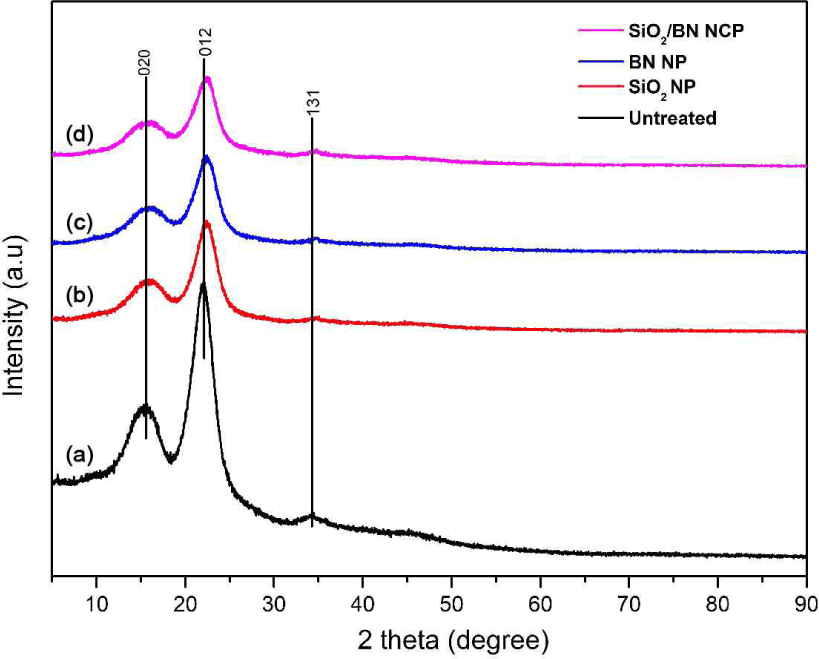
XRD analysis of impregnated wood samples (Fig. 18) was used to identify their characteristics before and after impregnation through analysis of the crystal phase of impregnated NP and the degree of cellulose crystallinity in wood. The untreated-wood diffractogram contained three peaks at 2θ values of 15.44°, 22.49°, and 34.19°. The presence of these three peaks was also detected in jabon wood samples treated with SiO2 NP, BN NP, and SiO2/BN NCP impregnation, albeit with varying degrees of intensity. Comparison with the cellulose diffraction pattern standard, JCPDS No. 03-0226 (Osman et al., 2019), indicated that these three peaks correspond to the cellulose crystal lattice. These findings suggest that the impregnation treatment did not induce any alterations in the fundamental crystal phase structure of cellulose, which constitutes the primary component of wood. The calculated cellulose crystallinity was significantly lower after impregnation than in untreated wood (Table 4). The impregnation treatments of wood with SiO2 NP, BN NP, and SiO2/BN NCP, respectively, resulted in a 26.71%, 37.11%, and 35.64% decrease in the crystallinity index. This reduction in crystallinity may be attributed to the physical impregnation of NP and NCPs into the wood matrix. These impregnated particles may become interspersed between the cellulose microfibrils and polymer chains, thereby disrupting the ordered assembly of cellulose into crystalline regions (Isogai, 2013). Furthermore, the nanoparticle and NCP materials dispersed in the wood act as physical barriers, thereby limiting the movement and alignment of the cellulose polymer chains (Hernández-Varela et al., 2020). This may hinder chain assembly into highly ordered crystalline structures, leading to an increase in the amorphous region (Mahmoud et al., 2024). The increase in apparent wood density is primarily attributed to physical filling of lumens and voids by the SiO2/BN NCP rather than to changes in the crystalline cellulose fraction. The observed decrease in crystallinity arises from partial disruption of ordered cellulose domains due to impregnation-induced swelling, increased contribution of amorphous inorganic phases, and overlap of NCP signals in XRD patterns. Thus, density increase and crystallinity decrease reflect different structural scales, with density governed by macro and microvoid filling and crystallinity representing molecular-level ordering within the cell wall (Nagraik et al., 2023).
| No. | Treatment | Degree of crystallinity (%) | Decrease (%) |
|---|---|---|---|
| 1 | Untreated | 78.20 | - |
| 2 | SiO2 | 57.31 | 26.71 |
| 3 | BN | 49.18 | 37.11 |
| 4 | SiO2/BN | 50.33 | 35.64 |
The large surface area and high reactivity of NP may promote chemical interactions with the cellulose structure, thereby affecting the forces that maintain crystallinity (Chandran et al., 2022). Interactions between NP and polymer matrices in wood often occur at the interface and involve the formation of hydrogen bonds between the NP and cellulose hydroxyl groups. These interactions can disrupt the extensive hydrogen bond network that maintains the integrity of the cellulose crystalline structure. In wood-based materials, the primary effect of impregnation and nanoparticle interaction is the disruption of the natural cellulose crystalline structure, particularly at low nanoparticle concentrations of approximately 1 wt% (Zhang et al., 2019b). This outcome is consistent with the minimal presence of NCP material in jabon wood following impregnation treatment, as evidenced by the WPG value of 1.34% derived from the physical property analysis. Therefore, the crystal phase of SiO2 NP, BN NP, and SiO2/BN NCP materials became undetectable within the impregnated jabon wood, preventing analysis of their crystallite size after impregnation. The low concentration of impregnation material relative to the cellulose phase may have prevented its detection by XRD (Siddiqui et al., 2015). The nanoparticle signal was too weak to be accurately detected above the strong background signal from the wood itself (Annanya et al., 2024).
The TGA curve of untreated jabon wood exhibits the characteristic multistage thermal degradation behavior of lignocellulosic materials (Fig. 19). An initial mass loss below approximately 120°C corresponds to the evaporation of physically absorbed and bound moisture. The primary degradation zone occurs between 200 and 350°C and is mainly attributed to hemicellulose depolymerization followed by rapid cellulose decomposition, while lignin degrades slowly over a broader temperature range up to higher temperatures. At 200°C, untreated jabon wood retains approximately 84.73?% of its initial mass, indicating the onset of structural degradation. This is followed by a sharp decline in mass, with only about 54.13% remaining at around 300°C. Near-complete decomposition occurs by approximately 360°C, leaving minimal char residue. Such behavior is typical of fast-growing tropical hardwoods, which contain a high proportion of thermally labile hemicellulose and inherently low char-forming ability. Comparable degradation profiles have been reported for untreated wood species across multiple recent TGA studies (Abdo et al., 2024).
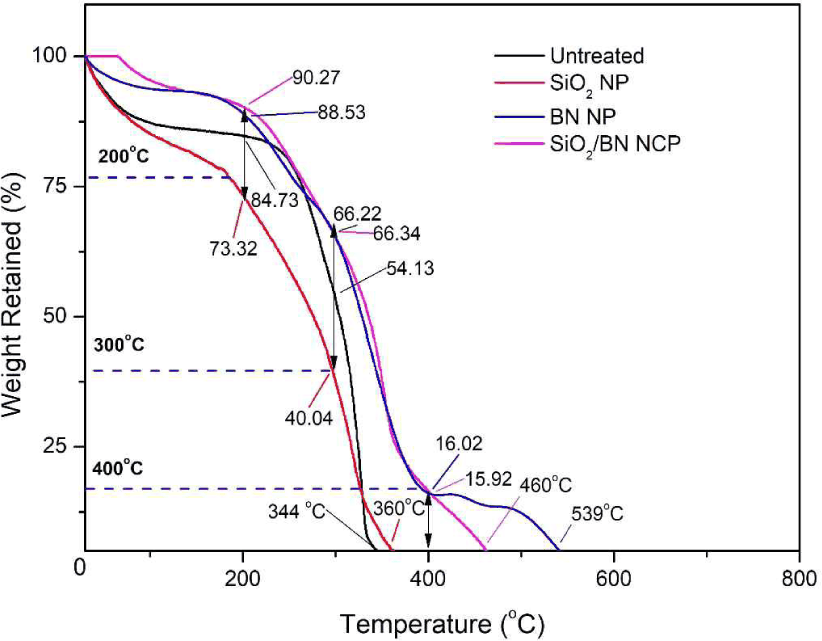
SiO2 NP impregnation leads to a noticeable improvement in the thermal stability of jabon wood. At 200°C, SiO2-treated wood retains approximately 88%–89% of its original mass, demonstrating delayed onset of pyrolysis relative to untreated wood. Although the main decomposition region remains within the 250°C–350°C range, the mass-loss rate is reduced and the primary degradation peak shifts toward higher temperatures (~360°C). The enhanced thermal performance is attributed to the formation of inorganic silica networks within the wood cell wall and lumen, which act as thermal barriers and reduce oxygen diffusion. In addition, silica promotes the formation of a reinforced siliceous–carbonaceous char that stabilizes the wood structure during pyrolysis. Similar improvements in thermal resistance and char yield have been widely reported in recent studies on silica-treated and mineralized wood systems (Li et al., 2023; Yurttaş et al., 2025).
BN NP impregnation provided the greatest improvement in high-temperature thermal stability among the single-component treatments. At 200°C, BN NP-treated jabon wood retains approximately 88.53% of its mass. At approximately 300 and 400°C, the retained mass was approximately 66.22% and 16.02%, far exceeding that of both untreated and SiO2 NP-treated wood. A stable residual mass persisted up to approximately 539°C, indicating strong suppression of char oxidation and volatile release. This performance was attributed to the exceptional thermal stability and chemical inertness of h-BN. BN NP form thermally conductive yet oxidation-resistant layers that dissipate heat and act as effective physical barriers. Recent studies have demonstrated that BN-modified wood exhibits higher ignition temperatures, reduced mass-loss rates, and improved fire resistance compared with untreated wood (Gan et al., 2020; Maqsood et al., 2025).
The SiO2/BN NCP-impregnated jabon wood exhibited synergistic improvement of thermal stability across both low- and high-temperature regimes. At 200°C, the SiO2/ BN NCP-treated sample showed the greatest mass retention (90.27%), indicating superior early-stage thermal protection. At approximately 300°C and 400°C, the retained mass (66.34?% and 15.92%) closely matched that of BN NP-treated wood while maintaining a more gradual degradation profile. Char stability was maintained up to approximately 460°C, suggesting improved structural integrity of the residual carbonaceous layer. This synergy arises from the complementary functions of the two nanomaterials: silica reinforces the char structure by forming a rigid ceramic-like framework, while BN NP improves heat dissipation and resists oxidative degradation. Comparable synergistic effects have been reported for ceramic–boron hybrid flame retardant systems in recent literature (Liu et al., 2020; Zhao et al., 2026).
Thermogravimetric indicators such as delayed degradation onset, reduced mass-loss rates in the ignition-critical 250°C–350°C region, and increased char yield are closely associated with improved fire resistance in wood materials. All treated jabon samples outperformed untreated wood according to these indicators, with BN NP and SiO2/BN NCP-modified samples showing the most substantial improvements. Higher residual mass and improved char stability suggest lower emissions of flammable volatiles and improved insulation against heat and oxygen during thermal exposure. These features correlate strongly with reduced heat release rates and delayed ignition, which are key performance criteria for fire-retardant wood materials (Albert and Liew, 2025).
Overall, impregnation of jabon wood with inorganic NP significantly enhances its thermal stability. SiO2 NP provided moderate improvement primarily through barrier and char reinforcement effects, whereas BN NP markedly improved high-temperature resistance and residual char stability. The SiO2/BN NCP treatment combines these advantages, yielding the most balanced and effective enhancement. Based on the thermogravimetric evidence, BN NP- and SiO2/BN NCP-impregnated jabon wood show strong potential as a fire-resistant wood materials. These findings demonstrate that nanoparticle impregnation is an effective strategy for upgrading fast-growing tropical woods for applications requiring enhanced fire safety.
4. CONCLUSIONS
Impregnation of jabon wood with a SiO2/BN NCP improved its physical and thermal performance while preserving the wood’s fundamental structure. The solvothermally synthesized SiO2/BN NCP had a smaller particle size, moderate crystallinity, and greater thermal stability than the individual SiO2 and BN NP, which contributed to improved dispersion and penetration within the wood. Among the treatments evaluated, SiO2/ BN NCP impregnation produced the greatest ASE and BE and the lowest WU without substantially increasing density. The improved dimensional stability was attributed to the complementary effects of SiO2 NP, which promoted interfacial interactions and pore filling, and BN NP, which served as a diffusion and thermal barrier. SEM observations confirmed that SiO2 NP improved the distribution of BN NP, resulting in more homogeneous deposition within cell lumens and on cell walls. TGA showed that wood impregnated with the SiO2/BN NCP underwent delayed thermal degradation and produced more char than untreated wood and wood treated with an individual nanoparticle. These findings indicate improved resistance to thermal decomposition and potential flame-retardant performance. Overall, SiO2/BN NCP impregnation is a promising strategy for converting fast-growing, low-density wood into dimensionally stable and thermally resistant materials for advanced wood applications.


