

1. INTRODUCTION
The continued increase in global energy demand has caused severe environmental issues, including greenhouse gas emissions and environmental degradation. Abdin and Al-Sumaiti (2021), Suhasman et al., (2024), and Yoga et al. (2025) have made the research and development of renewable energy sources a global priority. Biomass is an environmentally friendly renewable energy resource with high potential (Cahyani et al., 2023; Mignogna et al., 2024; Sutapa and Hidyatullah, 2023; Yan et al., 2023). However, the burning of biomass debris, such as leaves, twigs, grasses, and straws, in residential areas or crop fields and unintentional and uncontrolled combustion, such as forest fires, are major sources of PM 2.5, carbon monoxide, and other air pollutants. When leaf litter is heated, terpenes are released as fuel vapor, which can rapidly ignite and stimulate the remaining leaf litter to ignite quicker and sustain or intensify combustion. The remaining terpenes in leaf litter serve as important drivers of ignition, particularly in increasing flame spread rate, which directly affects the intensity and characteristics of forest fires, including the content of carcinogenic polycyclic hydrocarbons, such as benzo(a)pyrene (Curtis, 2024; Ormeño et al., 2009). Domestic leaf burning has been associated with substantial deterioration in urban and suburban air quality, respiratory illness and death, and severe fire injuries and property damage. The accumulation of fallen leaves occasionally poses substantial environmental challenges and often leads to disposal methods such as burning, which contribute to air pollution. The use of leaves as fuel is a promising approach to waste reduction and renewable energy generation (Tin et al., 2024). This approach is consistent with the increasing global emphasis on shifting to bioenergy sources to mitigate the impact of our dependence on fossil fuels. Charcoal and charcoal briquettes are widely used in cooking, particularly for barbecues, wherein meat is cooked by charcoal fire and is consumed indoors and outdoors (Ju et al., 2020). Although wood and charcoal are widely used, leaves are readily available resources; however, they are often underutilized, especially when sourced from fast-growing commercial trees. When wood is used, by-products, such as Eucalyptus leaves and Acacia leaves, are excluded from the production process. Bamboo sawdust is a leftover found in bamboo furniture handicraft centers and factories. These types of biomass are composed of cellulose, hemicellulose, and lignin, which can be converted to energy via various thermal and biological processes, but are unsuitable for use as raw biomass. Fuel quality is affected by several limitations, such as high moisture content (MC) and low calorific value, which result in low energy density (ED) and difficulty in compacting and forming for industrial applications (Bhavsar et al., 2018; Racero-Galaraga et al., 2024). Eucalyptus and Acacia auriculiformis leaves contain abundant volatile organic compounds (VOCs) and are high in terpenes (Younes et al., 2024). Moreover, Guerrero et al. (2021) found that Eucalyptus leaves and plants in the Acacia family (E. gloulus and A. dealbata) had high calorific values and were highly flammable. However, although these volatile compounds help increase the flammability properties of biomass, improper combustion conditions or insufficient oxygen will result in incomplete combustion and produce black smoke owing to incomplete burned carbon particles floating into the air (Curtis, 2024). Conversely, incomplete combustion due to high MC results in energy loss and the release of harmful pollutants, such as carbon monoxide and other organic compounds that are toxic to respiratory health. To solve these issues and improve biomass combustion efficiency, we investigated the processing of raw biomass through a certain thermal process to reduce the amount of volatile substances and improve properties for suitable use as fuel. Torrefaction permanently removes moisture and some volatile substances from biomass, resulting in a marked increase in heating value due to the removal of non-energy components. This process involves drying biomass at temperatures of 200°C–300°C in the absence of oxygen (Lee et al., 2020; Sutapa et al., 2024; Tumuluru et al., 2021), which can markedly improve biomass properties (Gucho et al., 2015; Ivanovski et al., 2021; Mudryk et al., 2021). The increased product calorific value, 14–30 MJ·kg–1, is almost comparable to that of coal, which has a calorific value of approximately 25–35 MJ·kg–1 (Mignogna et al., 2024). Additionally, a weight reduction of approximately 20%–30% and an ED increase of approximately 30% is conferred (Tumuluru et al., 2021). The product possesses increased hydrophobic properties because it facilitates storage and reduces moisture absorption from the environment (Martins et al., 2023). Torrefaction also improves biomass physical structure, which is brittle and easy to grind, thereby reducing the energy consumed for grinding (Lee et al., 2016; Waheed et al., 2022). When used as fuel, torrefied biomass burns easily and is more flammable than raw biomass or material. Torrefaction increases fixed carbon (FC) content and reduces excessive volatile matter (VM) content, rendering combustion more stable, easier to ignite, and more efficient in torrefied biomass than in raw biomass owing to the higher flame temperature (Çetinkaya et al., 2024; Khairy et al., 2024; Lee et al., 2016). The process also helps disinfection, allowing the finished product to be sterile and burn cleanly without smoke (Orisaleye et al., 2022). Previous research has confirmed the effectiveness of torrefaction in improving the fuel properties of various biomass, such as pellets (Çetinkaya et al., 2024), and assessing the fuel potential of residual biomass in forests (Dyjakon and Noszczyk, 2020; Matyjewicz et al., 2020; Świechowski et al., 2019), which are important foundations for developing biomass fuels of superior quality that are suitable for various applications.
The selection of locally available, fast-growing, woody biomass feedstocks with simple preparation processes is essential for sustainability of the industry. This study focuses on three types of biomass: bamboo sawdust, Eucalyptus leaves, and Acacia leaves. Bamboo is a fast-growing economic crop with a high biomass waste from the processing industry. Although research on the utilization of bamboo sawdust as fuel is limited, its overall potential as an alternative energy source is high, as it has suitable properties for biomass after quality improvement (Tin et al., 2024). Eucalyptus is a fast-growing plant that is widely cultivated for the timber industry. Younes et al. (2024) found that Eucalyptus leaves were high in volatile compounds and terpenes. This property, if not properly managed in the combustion process, may lead to incomplete combustion and black smoke. Acacia is another fast-growing legume that adapts well to the environment. Previous studies on the fuel properties of Acacia leaves have found that it can potentially be used as biomass fuel. It possesses an appropriate calorific value, high elemental composition, and high VM content (Ahmed et al., 2021; Nyakuma, 2018).
We aimed to compare changes in the chemical composition, calorific value, mass yield (MY), and fuel value index of raw and torrefied biomass feedstocks to provide basic information for the characteristics and types of biomass feedstocks from three economic fast-growing trees, namely bamboo sawdust, Eucalyptus camaldulensis Dehnh. leaves, and Acacia mangium Willd. leaves, which are locally available and use simple raw material preparation processes to produce raw feedstocks, for further application in the charcoal briquette industry.
2. MATERIALS and METHODS
The selected biomass raw feedstocks consisted of bamboo sawdust (RBS) from Bambusanana and Dendrocalamus bamboo, which are waste feedstocks from the bamboo furniture production sources, E.camaldulensis Dehnh. leaves (REuL), and A. mangium Willd. leaves (RAcL). All three biomass raw feedstocks were collected from Nakhon Phanom Province in the upper north-eastern region of Thailand. Bamboo sawdust raw materials were received from the Bamboo Furniture Handicraft Center; the leaves were harvested from dried and fallen eucalyptus and acacia leaves, which were then dried at the base of the trees. All raw materials were air-dried in the storage house shade to reduce their MCs to lower than 10% (wb). They were ground with a mini grinder extruder machine, sieved through a 4 mesh (5 mm) sieve, and stored in zip-lock bags as raw biomass feedstocks before studying the approximate fuel properties and initial calorific value to be used as information for comparison with the raw feedstocks that had undergone property improvement by torrefaction (as in Section 2.2).
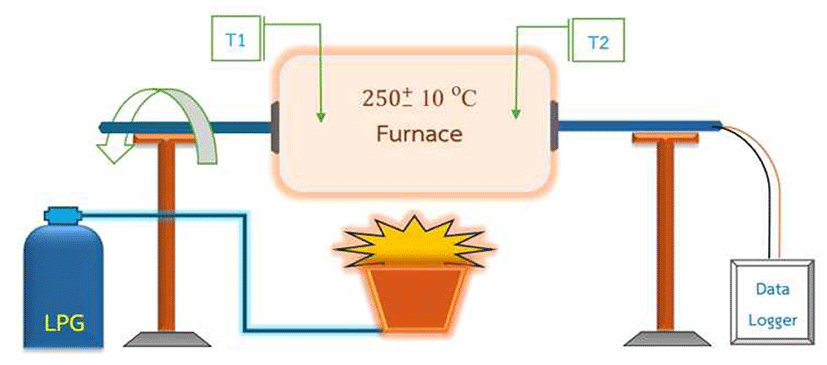
Raw feedstocks that had not been ground were processed to improve their properties by torrefaction; torrefaction is also known as mild pyrolysis. Previous research was mostly conducted with laboratory-scale reactors. Prototype or industrial torrefaction reactors are large, complex, and often use inert gas, increasing the cost and complexity of use. They are not suitable for household or small community use (Soponpongpipat et al., 2020). In the present study, we used the traditional torrefaction method and designed a simple reactor similar to the roasting principle and the method introduced by Lee et al. (2016). This method is a dry torrefaction process conducted in a ductile iron vessel and heats biomass in an oxygen-limited environment; it is known as oxidative torrefaction. No inert gas (blowing gas) is used in industrial combustion processes. Oxygen will still leak into the reactor either because of air gaps in the equipment, or gaps between biomass particles inside the reactor (Cao et al., 2023). Therefore, in this study, a large amount of raw materials were packed tightly to reduce oxygen contamination, resulting in an almost static atmosphere, which results from the limited mass transfer of gases (Martins et al., 2023). Additionally, oxidative torrefaction can greatly reduce operating costs. Roasting temperature used was 250 ± 10°C, holding time was approximately 5 ± 1 min, and heating rate did not exceed 20°C/min. The whole process transpired in about 50–60 min. The barrel can be rotated by hand when internal temperature changes every 10°C, rotating in the same direction (counterclockwise) 90° at a time. LPG gas was used as a heat source, as shown in Fig. 1. Subsequently, the raw materials were left to cool down, ground with a mini electric dry grinder machine, sieved through a 4 mesh (5-mm) sieve, and stored in a zip-lock bag as torrefied biomass feedstock, torrefied bamboo sawdust (TBS), torrefied Eucalyptus leaves (TEuL), and torrefied A. mangium Willd. leaves (TAcL) before studying certain fuel properties, namely approximate heating value, MY, and energy yield (EY; fuel value index).
Approximate property analysis to determine MC, ash content (AC), VM content, and FC content of the biomass sample was performed to compare fuel characteristics (Ju et al., 2020). We referred to the methods used by De Conti et al. (2022), López et al. (2013), and Tumuluru (2015).
For MC, samples were placed in a crucible and weighed; the value was recorded as W1. They were baked at a temperature of 105°C–110°C for 1 h (ASTM D 3173) and cooled in a desiccant for 20 min. They were subsequently weighed and recorded as W2. The value obtained was used to calculate the percentage of MC, as described in Equation (1).
For VM, samples were taken from a crucible with a lid; dry samples were weighed and recorded as W3. They were subsequently burned at 950 ± 20°C for 7 min (ASTM D 3175). Next, they were cooled in a desiccant for 15 min before being weighed and recorded as W4. The value obtained was used to calculate the percentage of VM content, as described in Equation (2).
For AC, a crucible was baked at 105°C for 15 min and cooled in a desiccator for 15 min; 1 g of the samples was placed in the crucible and recorded as W5. Samples were then baked at 750°C for 30 min (ASTM D 3174) and cooled in a desiccator for 20 min. They were weighed with the crucible and recorded as W6. The value obtained was used to calculate the percentage of AC, as described in Equation (3).
For FC, the combustibility of biomass fuel was measured after removing moisture, VM, and ash (ASTM D 3172). The obtained MC, AC, and VM content were used to calculate FC content, as described in Equation (4).
The energy of biomass feedstocks is the amount of energy stored in a unit of biomass sample and is usually measured as the heat of combustion, which is the total energy released as heat when completely combusted with oxygen under standard conditions (Cai et al., 2017; Hwangdee et al., 2023). It is expressed as gross calorific value or higher heating value (HHV) by the PARR bomb calorimeter model 1341 according to ASTM D5865 and the experimental conditions obtained after preparing the sample. It is a value calculated from the analysis of a prepared sample with the same MC as when tested.
Mass loss is attributed to the moisture loss and thermal decomposition of biomass. Mass loss (ML) was determined for each batch of experiments. ML was calculated using Equation (5), as reported by Orisaleye et al. (2022):
where, mraw is the mass of fuel before torrefaction (g) and mtorrefied is the mass of fuel after torrefaction (g).
MY is the ratio of torrefaction biomass to raw biomass; it represents the final product obtained from the process by weight of biomass. MY is calculated using Equation (6) as follows (Orisaleye et al., 2022):
ED is the ratio of heat energy between torrefaction biomass and raw biomass. ED is calculated using Equation (7) as follows (Orisaleye et al., 2022):
EY is the product of mass output and energy gain. EY is calculated using Equation (8) as follows (Orisaleye et al., 2022):
Data obtained from the study of chemical properties by proximate analysis, heat values, and fuel value index were used to calculate various components, including MY and EY data. Means and SDs were assessed using analysis of variance; differences between the means were compared using Duncan’s multiple range test (DMRT).
3. RESULTS and DISCUSSION
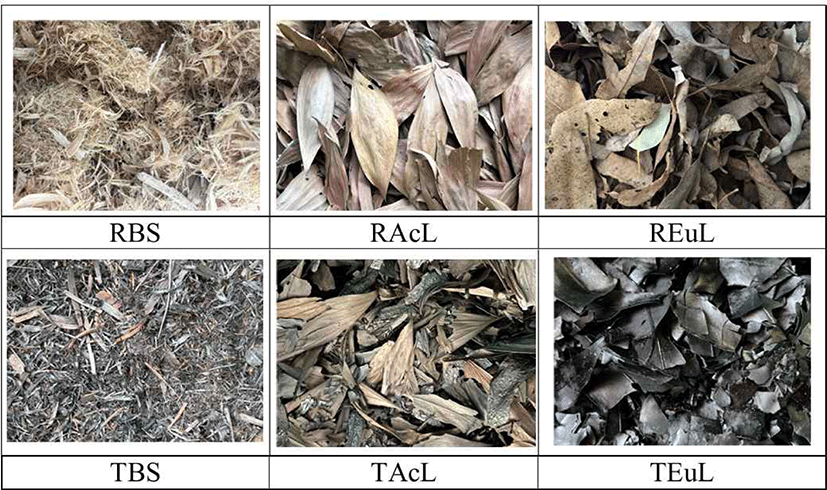
The results, as shown in Fig. 2, showed that torrefaction resulted in a color change from light brown to dark brown and black, indicating that hemicellulose in the biomass was decomposed and heat, alongside volatile substances, was released, resulting in an increased FC concentration (Gucho et al., 2015).
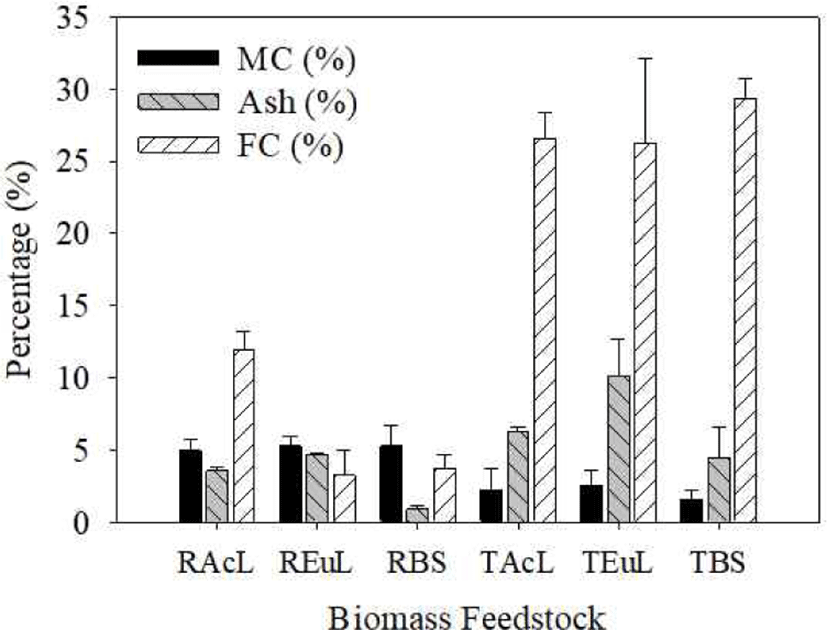
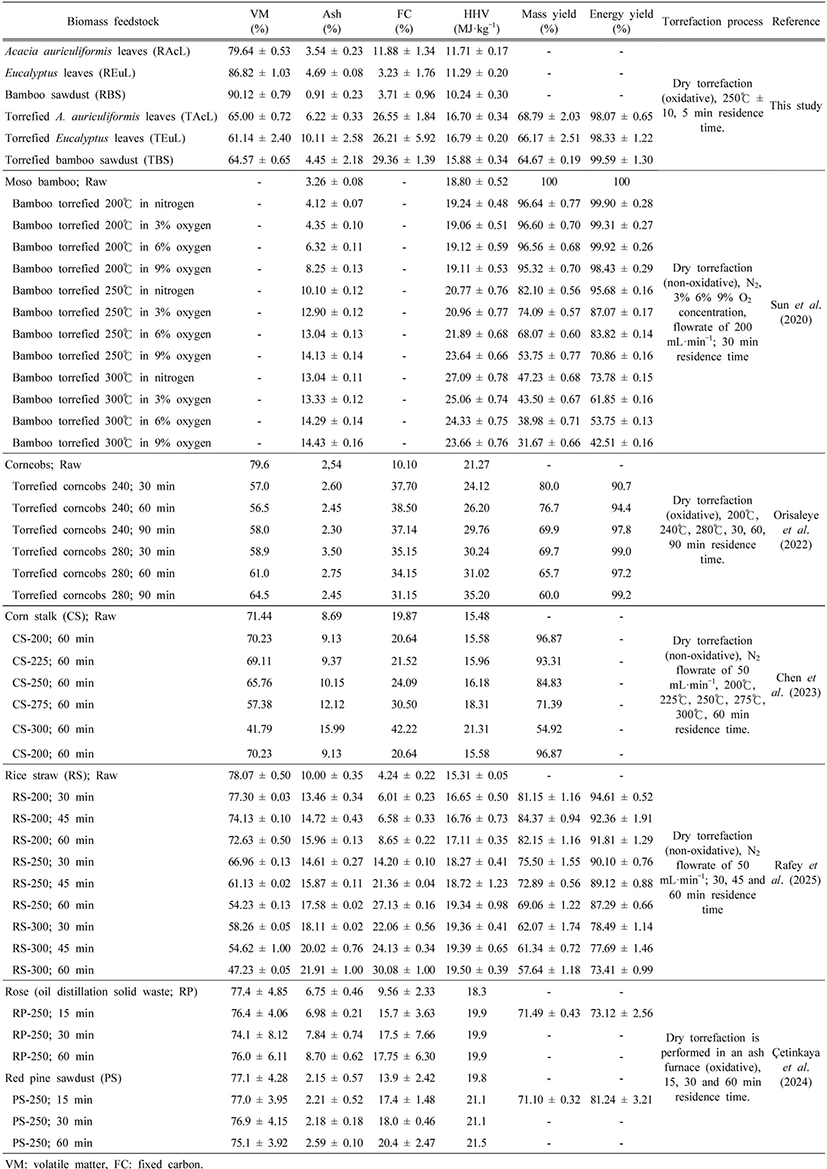
By analyzing the MC of biomass raw feedstocks before and after torrefaction, it was found that the average MC (wet basis) ranged 1.62%–5.26%. As shown in Table 1 and Fig. 3, RAcL, REuL, and RBS had average MCs of 4.93%, 5.26%, and 5.26%, respectively. After undergoing torrefaction to improve their properties, it was found that all biomass feedstocks had reduced MC compared with raw biomass feedstocks, with residual MCs of 1.62% for TBS, 2.23% for TAcL, and 2.53% for TEuL owing to reduced hygroscopy, which is an important outcome of torrefaction. This finding is consistent with that of Martins et al. (2023). The MC of raw and torrefied biomass feedstock before and after torrefaction were compared and found to be significantly different (p < 0.01). When comparing the mean values by DMRT (p < 0.05), it was found that RAcL, REuL, and RBS did not differ in MC; their averages were similar to those of TBS, TAcL, and TEuL. MC was reduced until the final value was not different. MC refers to the amount of water in biomass fuel to the weight ratio of biomass raw material; it is the unburnable component of fuel (Cai et al., 2017; Racero-Galaraga et al., 2024). If a fuel has high MC, some of its heat energy will be lost during combustion to evaporate the moisture.
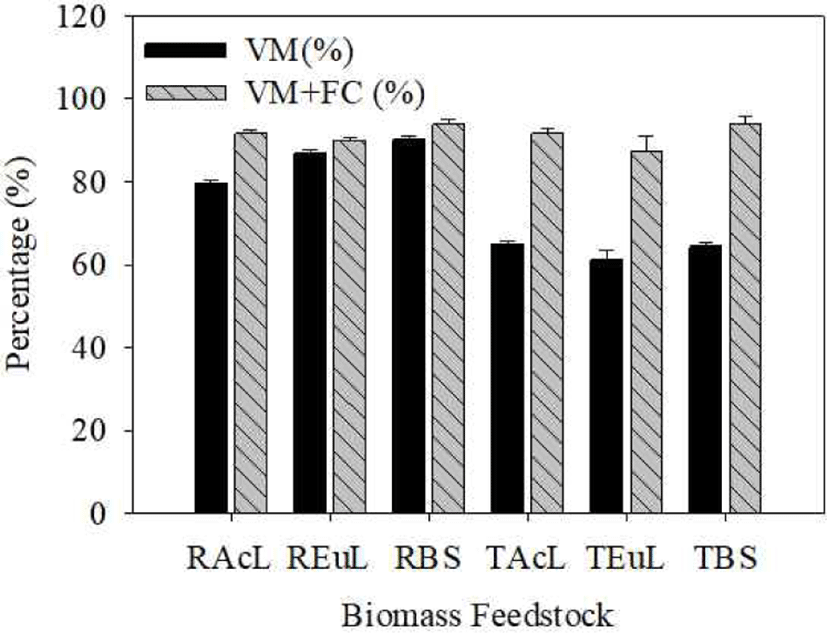
The proximate analysis of biomass feedstocks for use as feedstocks for energy utilization in solid form, as shown in Table 1 and Fig. 4, revealed that the combustible components (VM + FC) of raw and torrefied biomass feedstocks were significantly different (p < 0.05). The combustible components of RBS, REuL, and RAcL were significantly different (p < 0.05). The average combustible fraction of TBS, TEuL, and TAcL was 90.05%–93.83% of combustible fraction. When the properties were improved by torrefaction, the average combustible fraction remained at 87.35%–93.93%, which were comparable to AC of the biomass raw feedstocks. Biomass raw feedstocks with a high combustible fraction will possess low AC. This study showed that torrefaction resulted in a slight reduction in combustible fraction. Torrefaction decreased VM in the raw biomass feedstock and increased FC. When comparing the mean amount of combustible fraction by DMRT (p < 0.05), TEuL had the lowest value. RAcL had a high combustible fraction equivalent to RBS. TAcL and TBS had high combustible fractions after roasting. In conclusion, the roasted biomass reduced smoke from incomplete combustion, reduced volatile substances, and helped realize cleaner burn, extend the combustion period, and be superiorly consistent in the form of smoldering without flame (Hwangdee at el., 2023). Moreover, torrefaction helped slow the combustion rate.
AC refers to the amount of solid residue remaining after complete combustion. AC is the non-combustible component of fuel and causes problems with combustion and disposal. The AC proportion of biomass fuel (raw material) should not exceed 10% (Danish International Development Assistance, 2003). In this study, AC was significantly different (p < 0.01) when compared with the mean values by DMRT (p < 0.05; Table 1, Fig. 3). The AC of torrefied biomass raw feedstocks increased more than that of all unprocessed biomass raw feedstocks, namely RBS, REuL, and RAcL. The ACs of TBS, TAcL, and TEuL were 4.45 ± 2.18, 6.22 ± 0.33, and 10.11 ± 2.58%, respectively. These results are consistent with those of previous studies. For instance, Nakason et al. (2019) found the ACs of torrefied rice husk biochar, cassava rhizome biochar, and corncob biochar to be 9.57%–18.58%, 4.95%–10.83%, and 2.01%–9.10%, respectively. Conversely, Chen et al. (2023) found the AC of torrefied corn stalk to range 9.13%–15.99%, with it increasing when temperature was increased from 200°C–300°C. The AC of TBS was less than that of TAcL and TEuL, as there was more ash in the leaves than in the stem (Świechowski et al., 2019). The AC obtained in this study is considered to be substantially low compared with that found in coal, which ranges 25%–35% (Dyjakon and Noszczyk, 2020). Therefore, torrefied biomass residues can potentially be used as an alternative energy source.
The amount of VM in fuel helps create flame during combustion and renders ignition feasible and energy-efficient (Racero-Galaraga et al., 2024; Yusuf and Inambaoa, 2020). The VM content of charcoal can exceed 40%; however, it can also be as low as less than 5% (FAO, 1985; Sayakoummane and Ussawarujikulchai, 2009). Combustion will be inefficient if VM is released excessively. The present study found that the amount of VM was significantly different (p < 0.01). The average VM content ranged 79.64%–90.12%, as shown in Table 1 and Fig. 4. RAcL, REuL, and RBS had VM contents of 79.64 ± 0.53, 86.82 ± 1.03, and 90.12 ± 0.79, respectively. After torrefaction, the average VM content was reduced to 61.14%–65.00%. The average VM contents of TEuL, TBS, and TAcL were 61.14 ± 2.40, 64.57 ± 0.65, and 65.00 ± 0.72, respectively. The amount of volatile substances tended to decrease after torrefaction. The higher the temperature used during torrefaction, the less volatile substances there were. This finding is consistent with that of Chen et al. (2023), Çetinkaya et al. (2024), Martins et al. (2023), Orisaleye et al. (2022), and Rafey et al. (2025). As shown in Table 2, VOC reduction indicates the removal of VOCs, resulting in superiorly stable biomass (Tumuluru, 2015). A comparison of mean volatile content of the leaves of both plant species after roasting revealed that there was no significant difference in DMRT (p < 0.05), although VOC content of the leaves of both plant species before roasting was significantly different.
|
FC refers to the combustible component of fuel; it is a solid that remains combustible after being heated and having VM removed (Cai et al., 2017). Biomass raw feedstocks with high FC content indicate an extended combustion period, making them suitable for use as fuel (Akowuah et al., 2012; Hwangdee et al., 2023). Moreover, increased FC content is indicated by elevated calorific value (Jeoung et al., 2020). In this study, the FC contents of raw and torrefied biomass feedstocks were significantly different (p < 0.01). The average FC content of RBS, REuL, and RAcL ranged 3.23%–11.88%. After the properties were improved by torrefaction, TBS, TEuL, and TAcL had an average FC content of 26.21%–29.55%. Comparison of average FC contents of the three biomass feedstocks after roasting revealed no difference in DMRT (p < 0.05), although the FC content before torrefaction was significantly different. This result indicated that the reactor used was quite efficient. The improvement of biomass properties led to a significant increase in FC content, particularly for bamboo sawdust, as it increased from 3.71 ± 0.96% to 29.36 ± 1.39%, as shown in Table 1 and Fig. 3. This finding is consistent with that of Orisaleye et al. (2022). In that study, the roasting of corn cobs with dry torrefaction at 200°C, 240°C, and 280°C and 30, 60, and 90 min residence time increased the FC content of raw corn cobs from 10.10% to 31.15% and 38.50%, respectively, as shown in Table 2 (Çetinkaya et al., 2024; Chen et al., 2023; Rafey et al., 2025).
Proximate chemical properties analysis confirmed that the improvement of biomass properties by torrefaction decreased VM content, slightly increased AC, and significantly increased the amount of FC. When compared with raw biomass feedstocks, the decrease in volatile substances should reduce smoke generation. However, the studied biomass feedstocks still had a higher amount of volatile substances than general good quality charcoal, which typically possesses VM content ranging 20%–25% (FAO, 1987). Mixing to improve the properties of compressed charcoal should render ignition feasible and relatively stable (good flame stability). Moreover, an increased amount of FC helps extend combustion duration. These properties should be suitable for use as ingredients to enhance the properties of compressed charcoal or for use in solid energy.
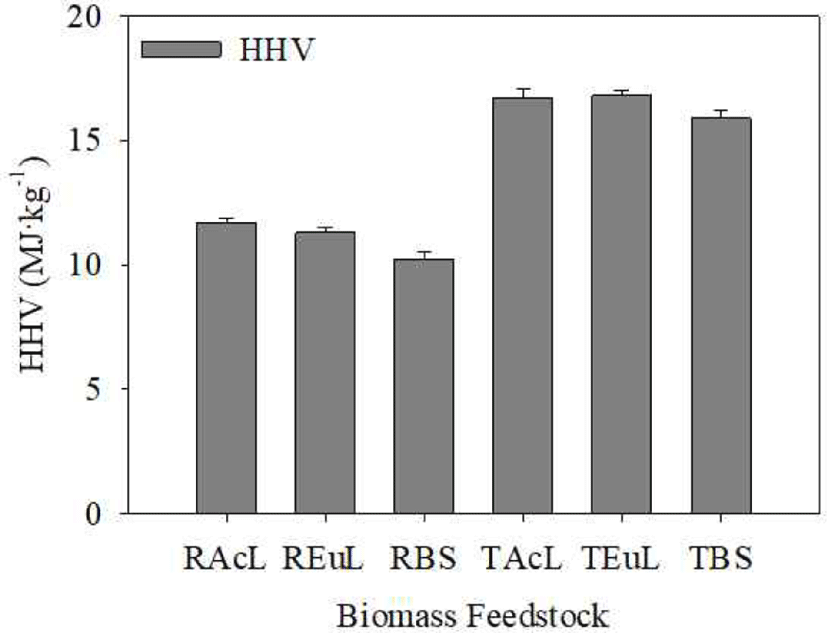
A comparison of the calorific values of raw and torrefied biomass feedstocks revealed a statistically significant difference (p < 0.01), as shown in Table 3 and Fig. 5. RAcL and REuL had identical average calorific values (DMRT, p < 0.05), whereas RBS had the lowest average calorific value. The values were 11.71 ± 0.17, 11.29 ± 0.20, and 10.24 ± 0.30 MJ·kg–1 for RAcL, REuL, and RBS, respectively. Torrefaction caused the calorific value to increase in all three types as follows: TBS, TAcL, and TEuL had average calorific values (DMRT, p < 0.05) of 15.88 ± 0.34, 16.70 ± 0.34, and 16.79 ± 0.20 MJ·kg–1, respectively. TBS had the lowest average calorific value, whereas TAcL and TEuL had identical average calorific values. ED or calorific value of the three biomass raw feedstocks increased by 42.65%–54.01%, consistent with that found by Orisaleye et al. (2022). In that study, torrefied corn cobs were compared with unroasted corn cobs, showing an increase in calorific values (HHV) of up to 65% alongside increased feeding temperature and residence time. This finding is also consistent with that of Chen et al. (2015). In that study, the torrefaction of bamboo charcoal at a temperature of 250°C increased HHV from 18 to 21 MJ·kg–1, which is an increase of approximately 20% independent of the holding time. When temperature was increased to 300°C or 350°C, HHV ranged 25–27 MJ·kg–1, which is close to that of coal. This finding is also similar to that of Phuangchik et al. (2023). In that study, torrefaction increased the calorific value of bamboo from 16.02–17.79 to 20.78–24.36 MJ·kg–1. These results indicate that the equipment used in torrefaction of RAcL, REuL, and bamboo sawdust have the potential to be applied as solid fuel sources.
The MY and EY (fuel value index) consist of mass loss (%) resulting from moisture loss and thermal decomposition of biomass. The yields of TBS, TEuL, and TAcL ranged 31.21%–33.83%. MY ranged 64.67%–68.79%, ED ranged 42.65%–54.01%, and EY ranged 98.07%–99.59%. The MY and EY obtained were quite high compared with most previous studies. The MYs of biomass that went through torrefaction ranged 57.64%–96.87%; their EYs ranged 73.12%–99.2% (Çetinkaya et al., 2024; Chen et al., 2023; Martins et al., 2023; Nyakuma, 2018; Orisaleye et al., 2022; Rafey et al., 2025). As shown in Table 2, EY was higher than MY, indicating that torrefaction was efficient in retaining the energy portion of the solid product (Khairy et al., 2024). In this study, EY values approached 100%. This finding is plausible and aligns with that of Martins et al. (2023). We explained that EY exceeding 100% under certain experimental conditions occurred in a fixed-bed dry oxidative torrefaction reactor (with Oxygen) that did not utilize inert gases (N2, CO2) to sweep and carry volatile compounds out of the reactor. This operational method creates a virtually static atmosphere within the reactor, allowing only light volatile compounds to escape. Consequently, heavy volatile compounds are physically trapped within the resulting char product during the process, leading to an increase in HHV of the torrefied biomass. Furthermore, Sun et al. (2020) reported the effect of torrefaction temperature and O2 concentration on the pyrolysis behavior of Moso bamboo. They found that at a torrefaction temperature of 200°C, the influence of O2 concentration on residual EY remained high. In that study, EY exceeded 99%, with some trials registering EY above 100% (as shown in Table 2). Specifically, at an O2 concentration of 3%, 6%, and 9%, EYs were 99.31% ± 0.27, 99.92% ± 0.26, and 98.43% ± 0.29, respectively. A comparison of the inert (N2 or complete O2 restriction) state with the O2 conditions at 3 and 9% revealed that N2 atmosphere or complete O2 restriction provided the best preservation of EY and HHV in the solid product. The resulting HHV values under N2 (19.24 ± 0.48 to 27.09 ± 0.78 MJ/kg) were higher than those under O2 conditions at 200°C and 300°C. However, at a torrefaction temperature of 250°C, the HHV under N2 was lower than that under O2. This finding suggests that this temperature might be the optimal level where a minimal O2 concentration provides supplementary energy by reducing low-energy bonds and increasing high-energy (C−C) bonds. Finally, the study by Orisaleye et al. (2022), which investigated the effects of torrefaction temperature and residence time on the fuel quality of corncobs in a fixed-bed reactor, reported a similar conclusion. The fixed-bed batch-type reactor was electrically heated to effectively control heating rate and temperature in an inert atmosphere (200°C−280°C, residence time 30, 60, and 90 min). The research found that torrefaction could be achieved using this type of reactor without necessarily using nitrogen or other gases to create an inert environment. Apart from increasing HHV of the corncobs by up to 65%, the process was able to maintain maximum EYs of close to 100%, ranging 92.8%–99.2% (with 99.2% measured at the most severe condition: 280°C and 90 min, as shown in Table 2). This finding confirms efficacy of the process in preventing carbon and energy loss to low-calorific volatiles, allowing the preservation of nearly all original energy of the corncobs within the bio-coal product, even when torrefaction is controlled to prevent combustion without inert gas feeding.
4. CONCLUSIONS
Utilization of the leaves of fast-growing economic trees that fall naturally or from cutting as renewable fuel assists farmers who grow fast-growing economic trees in increasing their income and reducing the risk of forest fires that cause pollution and damage to property. Torrefaction can be used to improve these raw feedstocks because it increases the product ED and helps with stability during combustion, storage, and transportation.
The results of this study showed that the three types of biomass raw feedstocks subjected to torrefaction had ACs of 4.45%–10.11%, VM contents of 61.14%–65.00%, FC contents of 26.21%–29.36%, combustible fraction contents of 87.37%–93.93%, heating values of 15.88%–16.79%, mass losses of 31.21%–35.23%, EYs of 98.07%–99.59%, and EDs of 42.65%–54.01%.
Torrefaction improved the basic fuel properties, with increased calorific value and ED of the processed products. However, limitations and application guidelines were also identified. AC of the products, particularly that of fallen leaves, tends to exceed the standards for high-quality commercial fuels. Therefore, the results of this study clearly indicate that these materials may be unsuitable for direct use as fuel; however, they should be considered for more flexible applications, such as co-burning as feedstock and as high-quality intermediates for other thermal processing.


