

1. INTRODUCTION
The growing population of Indonesia has increased the demand for building materials. As a result, the demand for wood as a construction material has continued to rise annually. However, this increasing demand has not been matched by the availability of wood for construction (Fernandes et al., 2024; Leszczyszyn et al., 2022; Setiawan et al., 2023). Currently, the supply of wood from natural forests has declined in both quality and quantity, leading to the increased use of lower-grade wood as an alternative because of the limited dimensions of commercially available timber (Rochmah et al., 2020; Setiyaningsih and Yeni, 2025; Widyati et al., 2022).
In addition, the demand for construction materials continues to increase in response to the growing need for adequate housing and infrastructure. Although wood is considered a renewable material, it has several limitations, including susceptibility to decay and flammability (Leszczyszyn et al., 2022; Russell et al., 2023). Uncontrolled logging without adequate reforestation has further reduced the availability of high-quality wood. Consequently, fast-growing wood species with low specific gravity and strength have become the primary choice in the market (Budiaman and Audia, 2022; Hadi et al., 2019).
Among the species widely used in Indonesia, red meranti (Shorea leprosula Miq.) is one of the most important commercial hardwoods (Aiso et al., 2025). Red meranti, a member of the family Dipterocarpaceae, is a medium-hardwood species characterized by relatively rapid growth and widespread availability in community and plantation forests (Sudomo et al., 2024; Zunis et al., 2022). Its physical and mechanical properties make it suitable for furniture, panel products, and lightweight construction applications (Lee et al., 2024; Mohammad et al., 2025; Ng et al., 2022). However, like other fast-growing wood species, it generally has lower specific gravity and strength than high-quality hardwoods, and its use in structural applications often requires quality enhancement through appropriate processing and joining technologies (Dwiyanti et al., 2024; Ng et al., 2023).
The limited dimensions of wood, particularly its length, pose challenges for structural applications requiring long spans, such as beams and purlins (Osa et al., 2024). To overcome this limitation, smaller pieces of wood are commonly joined to produce structural components with dimensions suitable for construction requirements. This joining method not only optimizes the utilization of small-diameter wood but also helps ensure the availability of structural components for construction (Xiao et al., 2021).
However, joints are generally considered the weakest points in wood structures, and many structural failures are associated with joint failure. Therefore, selecting an appropriate joint type and application method is crucial for ensuring the overall strength of wood structures. One type of joint that can provide strength comparable to that of solid wood is the finger joint (González-Prieto et al., 2022). Therefore, it is important to investigate finger-jointing techniques, particularly the effects of joint position and spacing on wood strength. The findings of this study are expected to contribute to optimizing the utilization of small-diameter wood while maintaining the material standards required for construction.
2. MATERIALS and METHODS
The raw materials used in this study were obtained from PT Cahaya Samtraco Utama in the form of red meranti (Shorea leprosula Miq.) blocks that had been pre-cut to the required specimen dimensions. The joint material was sourced from the company’s commercial finger-jointed product, “Door Core Korea 20 mm,” which followed the internal specifications used by PT Cahaya Samtraco Utama for door core production. Because the finger-joint geometry (finger length, end angle, and profile ratio) had been predetermined by the manufacturer, this study used the supplied material without modifying the factory-produced joint profile.
The final test specimens measured 2 cm × 2 cm × 34 cm and consisted of two groups: jointed wood and solid wood. The jointed specimens were prepared with different joint orientations and span positions, consisting of (1) horizontal joints at 1/2 of the span, (2) vertical joints at 1/2 of the span, (3) horizontal joints at 1/3 of the span, (4) vertical joints at 1/3 of the span, (5) horizontal joints at 1/4 of the span, and (6) vertical joints at 1/4 of the span (Fig. 1). For comparison, solid wood specimens (without joints) with identical dimensions were also tested.
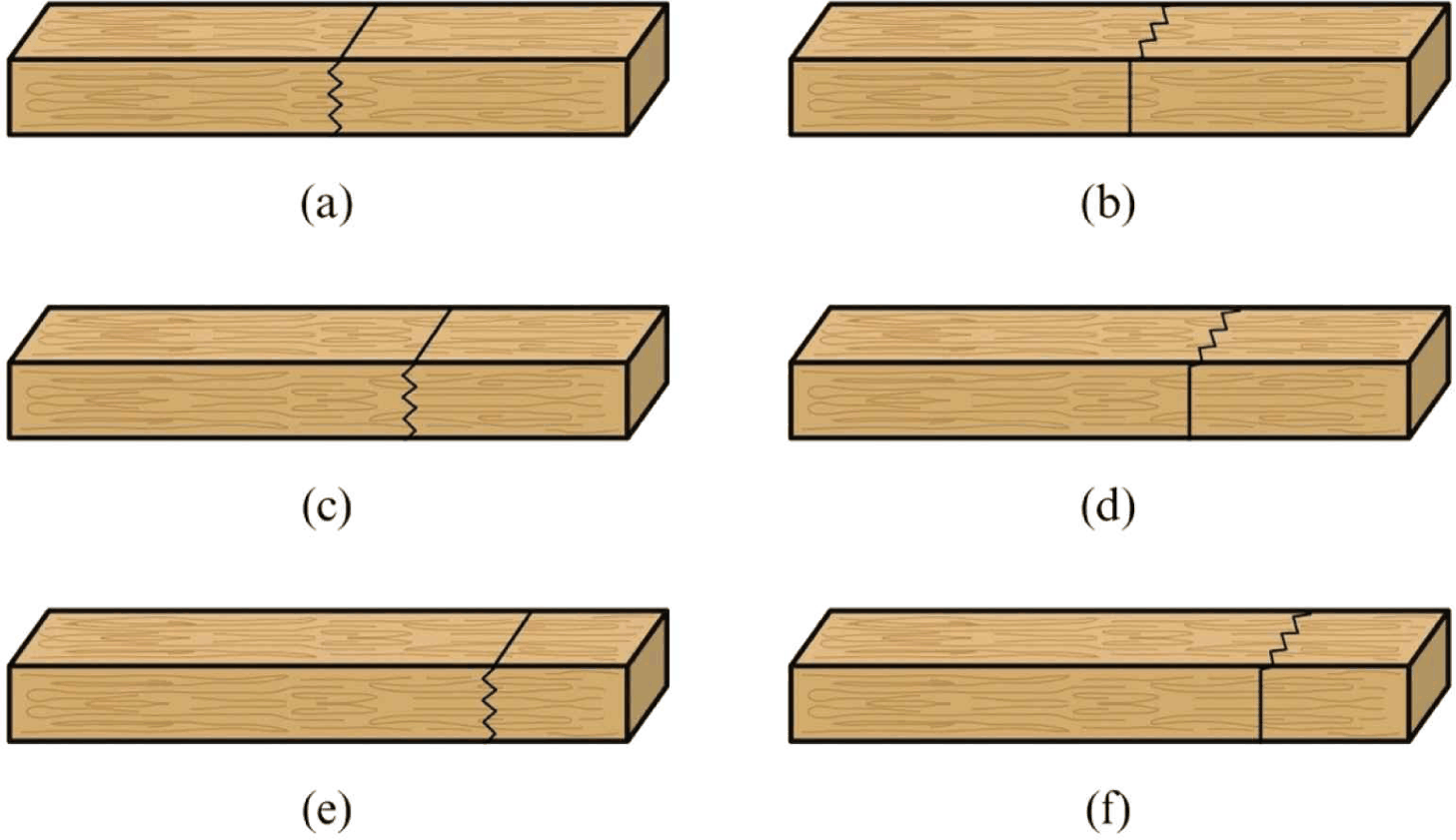
The finger-joint positions evaluated in this study (at 1/2, 1/3, and 1/4 of the span length) were selected based on structural mechanical considerations and modern glulam manufacturing guidelines. The most critical location (1/2 of the span) corresponded to the maximum bending moment under simply supported conditions and three-point loading, thereby providing a reference for joint performance under peak loading conditions. Although Frobel (2024) provided general guidance that joints in glulam members should be placed in regions of low bending moments to minimize reductions in structural capacity, the specific span ratios (1/3 and 1/4) adopted in this study were not directly prescribed in the handbook. Instead, these positions were selected to systematically represent regions with progressively lower bending-moment intensities along the beam length. Additionally, recent experimental studies on beam and glulam joints have emphasized the importance of carefully considering joint placement, orientation, and load paths to ensure adequate flexural strength, stiffness, and flexibility (Hubbard and Salem, 2024). Therefore, the selection of the 1/3 and 1/4 span positions in this study reflected a theoretical approach based on flexural moment distribution and adherence to contemporary industry practices and design recommendations.
A moisture content test was conducted using specimens measuring 2 × 2 × 2 cm. A total of 10 replicates were prepared, and each specimen was weighed before being placed in an oven at 103 ± 2°C for 24 h. After oven-drying, the specimens were reweighed to obtain the oven-dry weight. Moisture content was calculated using the following equation (Seta et al., 2023):
Where: MC = moisture content (%); W1 = weight of the specimen before oven-drying (g); W2 = oven-dried weight of the specimen (g).
A specific gravity test was conducted using the same specimens prepared for the moisture content test. Each specimen was oven-dried to a constant mass, and its dimensions (length, width, and thickness) were measured to calculate the oven-dry volume. Specific gravity was calculated using the following equation (Seta et al., 2023):
Where: SG = specific gravity (unitless); m = oven-dry mass of the specimen; v = oven-dry volume of the specimen.
The mechanical tests were conducted using a standard three-point bending configuration in accordance with ASTM D143-14. The specimens were tested with a span of 300 mm, a span-to-depth ratio of 15:1, and a constant loading rate of 5 mm/min under controlled environmental conditions (20 ± 2°C and 65 ± 5% relative humidity).
The modulus of elasticity (MoE) was determined using a universal testing machine (UTM). The test specimens measured 2 cm × 2 cm × 34 cm with a span length of 30 cm. Each treatment was replicated 30 times, and the MoE was calculated using the following equation:
Where: b = width of specimen (mm); h = thickness of specimen (mm); P = load at proportional limit (N); Δ = mid-span deflection at proportional limit (mm); L = span length (mm).
The modulus of rupture (MoR) was determined using the same procedure as that used for the MoE test with a UTM. Each treatment was replicated 30 times, and the MoR was calculated based on the maximum load sustained by the specimen before failure using the following equation:
Where: b = width of specimen (mm); h = thickness of specimen (mm); Pmax = maximum load at failure (N); L = span length (mm).
Joint efficiency was evaluated according to the Indonesian National Standard (SNI 01-7255-2006; BSN, 2007) using data obtained from the MoE and MoR tests. The efficiency was calculated by comparing the maximum load carried by the jointed specimen with that of the unjointed specimen using 30 replicates, as expressed by the following equation:
Where: JE = joint efficiency (%); MLJ = maximum load on the jointed specimen (N); MLU = maximum load on the unjointed specimen (N).
3. RESULTS and DISCUSSION
The moisture content of the solid wood and finger-jointed specimens ranged from 12.36% to 13.08% (Fig. 2). Stable moisture content was important because it affected the mechanical properties of wood. Moisture content above 20% significantly reduced mechanical strength, whereas moisture content below the fiber saturation point (12%–15%) was considered ideal for structural applications (Wulandari and Amin, 2022). These findings are also consistent with those of Nugroho et al. (2024), who reported that the moisture content of wood under dry air conditions in Indonesia ranges from 15% to 20%.
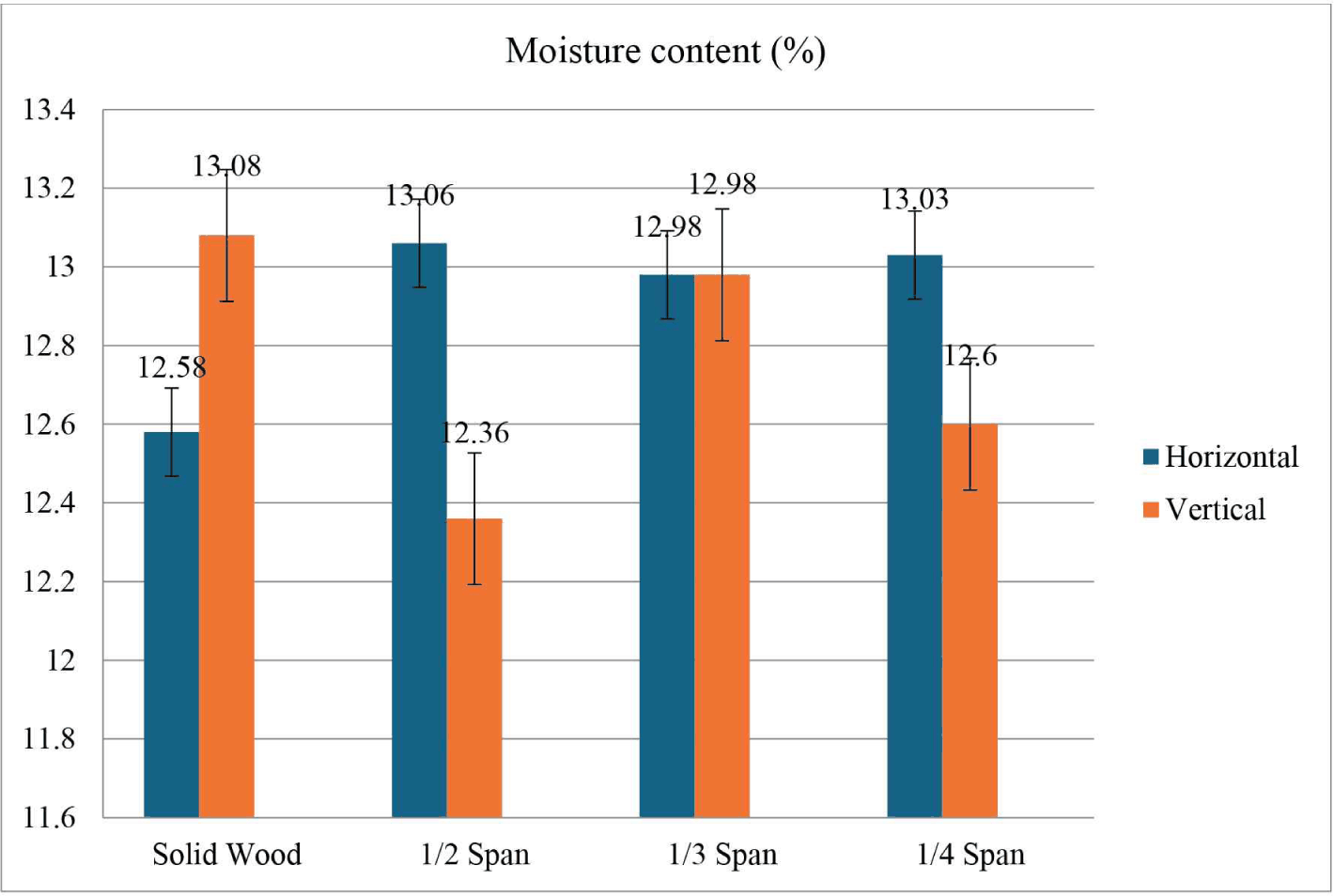
The results of this study indicated that the measured moisture content met the limits specified in SNI 7973:2013 (BSN, 2013), demonstrating that the material was suitable for further processing. In addition, this moisture content range indicated that the wood was in an appropriate condition for the jointing process and subsequent mechanical testing. Excessively high moisture content has the potential to cause failure during the jointing process because of the release of water vapor during compression (Bliem et al., 2020). Conversely, excessively low moisture content may prevent the adhesive from being adequately absorbed into the wood substrate (Slabohm et al., 2022).
Proper control of moisture-related properties is also crucial in other wood-based composites, as demonstrated in particleboard production, where dimensional stability and water absorption significantly affect physical and mechanical performance (Wanishdilokratn and Wanishdilokratn, 2024). Their findings indicated that moisture interactions played a vital role in determining thickness swelling and structural integrity, emphasizing the importance of maintaining appropriate moisture conditions during processing. Therefore, the moisture content obtained in this study was considered optimal for ensuring successful finger-joint adhesion while producing more consistent mechanical performance.
The specific gravity of the solid wood ranged from 0.41 to 0.44, whereas that of the finger-jointed specimens ranged from 0.43 to 0.50 (Fig. 3). ANOVA showed that neither joint orientation (horizontal or vertical) nor span position had a significant effect on specific gravity. However, the specific gravity of the jointed wood tended to be slightly higher than that of the solid wood. This trend was particularly evident in the horizontal joint configuration at the 1/3 span position, which exhibited the highest specific gravity (0.50).
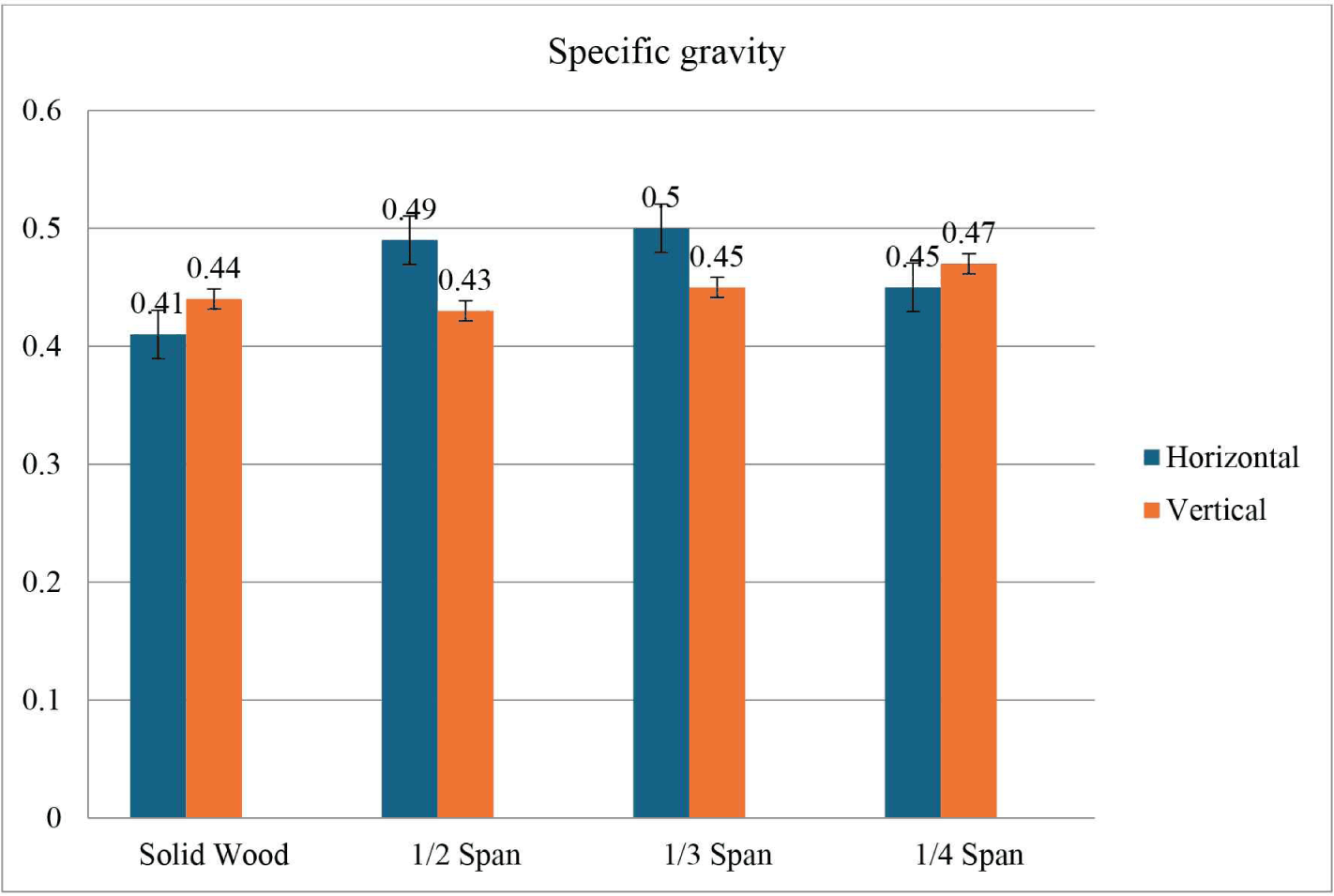
As shown in Fig. 3, the horizontal finger-joint configuration at the 1/3 span position exhibited the highest specific gravity. This increase was likely attributable to the addition of adhesive, which increased the mass of the jointed specimens and consequently affected their specific gravity. The observed specific gravity values (0.41–0.50) complied with the requirements of the Indonesian National Standard (SNI).
Overall, the specific gravity values obtained in this study were within the normal range reported for light hardwood species, indicating that the finger-jointing process did not adversely affect this physical property. Instead, the slightly higher specific gravity observed in some joint configurations suggested that the adhesive increased the mass of the composite without compromising its structural integrity. These findings are consistent with those of Meethaworn et al. (2022), who reported that adhesives used in jointed wood can increase specific gravity while improving its physical properties.
Furthermore, the absence of significant effects of joint orientation and span position on specific gravity, as demonstrated by the ANOVA results, suggested that specific gravity was influenced primarily by the inherent properties of the wood species and the adhesive rather than by the joint configuration. The effects of joint orientation and span position on specific gravity were statistically insignificant, as indicated by calculated F-values that were consistently lower than the corresponding critical F-values at both the 5% and 1% significance levels (F_calculated < F_table, p > 0.05). These statistical results confirmed that neither the presence of a finger joint nor its position along the span produced measurable changes in specific gravity. This finding is important because it suggests that finger-jointed wood may be used in applications requiring comparable specific gravity characteristics to those of solid wood, provided that appropriate adhesives and manufacturing processes are employed. Dauletbek et al. (2021) similarly reported that variations in joint orientation have a greater influence on mechanical properties, such as flexural strength, than on physical properties.
From a practical perspective, compliance with the specific gravity requirements of the Indonesian National Standard (SNI) indicated that the finger-jointed wood products were suitable for commercial applications. The ability of the jointed wood to achieve specific gravity values comparable to, or slightly greater than, those of solid wood further highlighted its potential as a sustainable alternative by enabling more efficient utilization of small-diameter wood and reducing waste in the woodworking industry.
Although the physical properties were measured using small specimens measuring 2 cm × 2 cm × 2 cm, these results may not fully represent the behavior of full-size finger-jointed laminates. The small cubic geometry of the test specimens may exhibit physical characteristics that differ from those of the larger rectangular finger-jointed laminates used in structural applications. Therefore, the physical property data obtained in this study should be interpreted with caution when extrapolating the findings to full-scale structural members.
The results of the MoE test showed that the solid wood had an average MoE of 14,044.95 MPa in both the horizontal and vertical orientations. Jointed wood with a 1/2 span exhibited an average MoE of 13,308.31 MPa in the horizontal orientation and 10,044.30 MPa in the vertical orientation. Jointed wood with a 1/3 span exhibited average MoE values of 15,492.21 MPa and 14,485.73 MPa in the horizontal and vertical orientations, respectively. Meanwhile, jointed wood with a 1/4 span exhibited average MoE values of 13,495.13 MPa in the horizontal orientation and 17,411.07 MPa in the vertical orientation (Fig. 4).
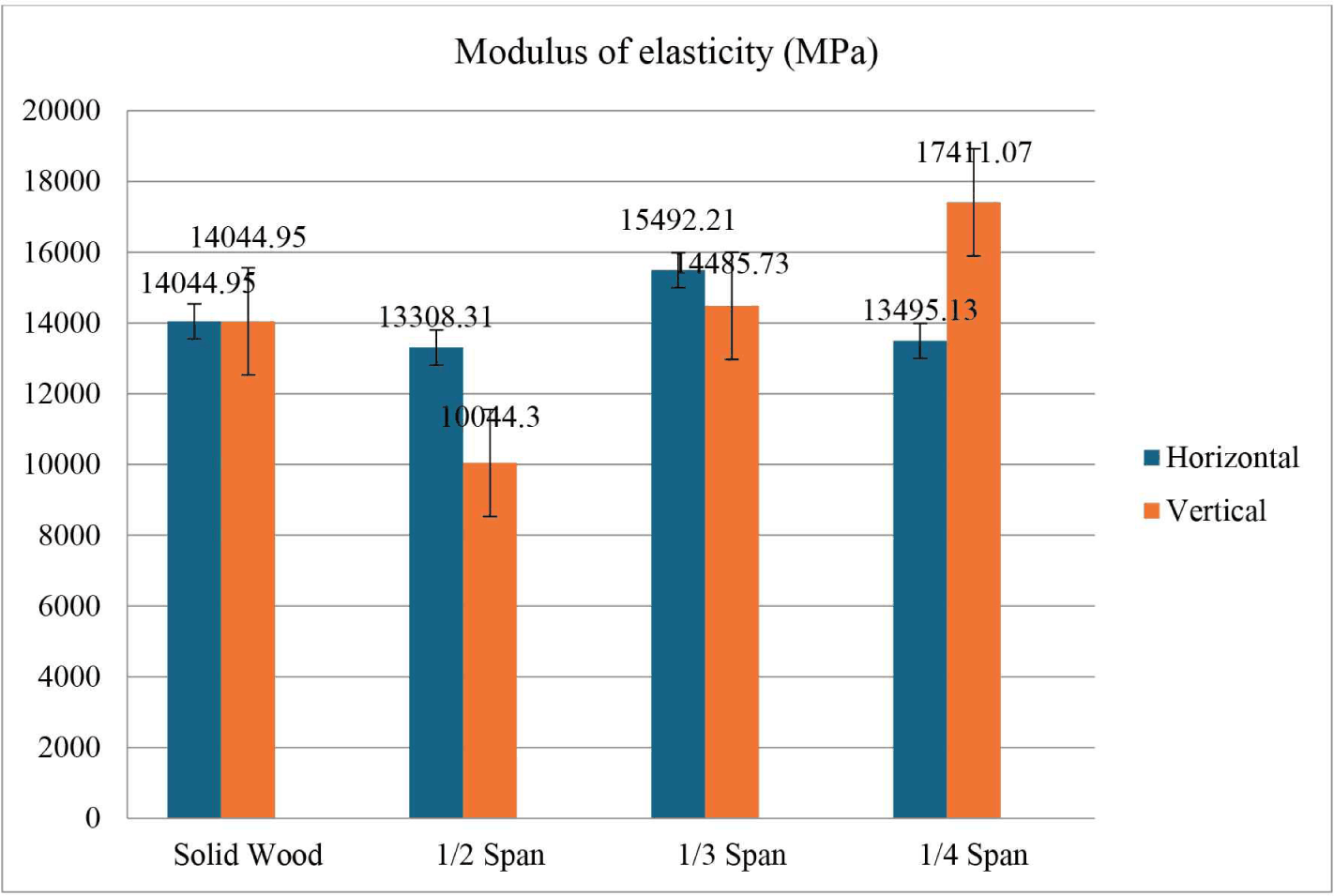
The test results also showed that the highest average MoE was observed in the vertically oriented finger-jointed wood at the 1/4 span position (17,411.07 MPa). This value exceeded those of the other treatments because positioning the joint closer to the support rather than at the location of the maximum bending moment reduced the applied bending stress and promoted a more uniform stress distribution within the member. Consequently, the joint experienced lower stress concentrations, resulting in improved elastic performance. In contrast, joints positioned at the 1/2 span were subjected to the maximum bending moment, leading to greater bending stresses and lower MoE values.
These findings are consistent with those of Bidzo et al. (2022) and Hou et al. (2022), who reported that finger-joint position influences the elasticity of jointed wood. Furthermore, loading orientation has also been shown to affect the mechanical properties of wood, particularly the MoE (Dauletbek et al., 2021; Muthumala et al., 2021). Therefore, the results suggest that finger-jointed wood, particularly with vertically oriented joints positioned at the 1/4 span, has considerable potential for structural applications requiring high flexural stiffness while meeting technical performance requirements.
The elastic behavior observed in this study indicated that joint placement influenced the local stress distribution. However, the overall structural response remained governed by the global characteristics of the member. Similar findings have been reported for cross-laminated timber (CLT) plate systems, in which variations in joint type did not significantly alter the overall structural performance, whereas panel thickness exerted a more pronounced influence (Ha et al., 2023). Although the evaluated performance parameters differ, these findings highlight that elastic behavior depends not only on joint configuration but also on the structural system as a whole.
The results of the MoR test showed that the solid wood exhibited an average MoR of 63.06 MPa in both the horizontal and vertical orientations. Jointed wood with a 1/2 span exhibited average MoR values of 44.92 MPa and 46.79 MPa in the horizontal and vertical orientations, respectively. Jointed wood with a 1/3 span exhibited average MoR values of 59.90 MPa in the horizontal orientation and 63.98 MPa in the vertical orientation. Meanwhile, jointed wood with a 1/4 span exhibited the highest average MoR values, reaching 67.27 MPa in the horizontal orientation and 66.98 MPa in the vertical orientation (Fig. 5).
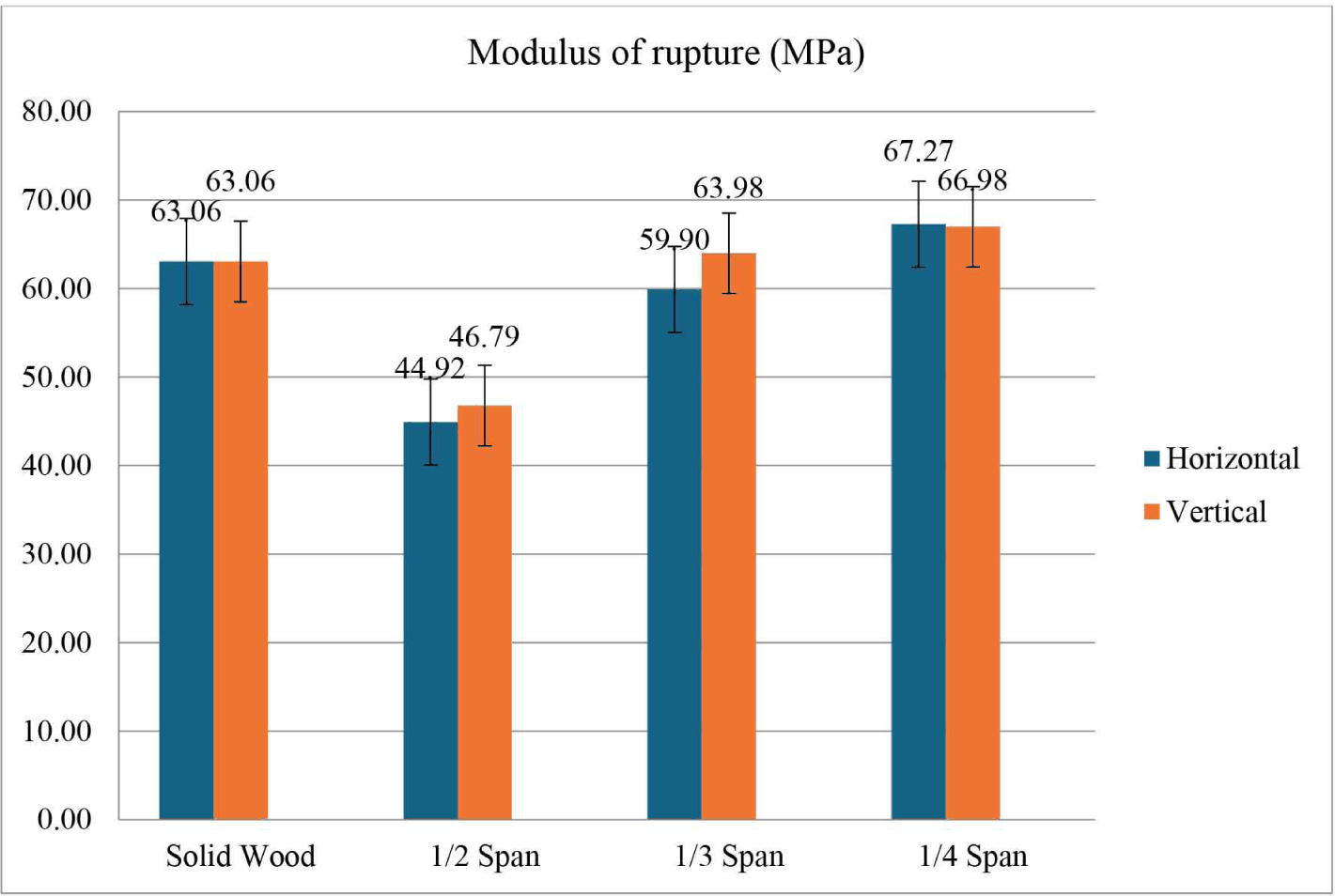
The highest average bending strength was observed in the horizontally oriented finger-jointed wood at the 1/4 span position (67.27 MPa). This superior performance was likely attributable to the placement of the finger joint away from the region of maximum bending moment, allowing stresses to be distributed more uniformly throughout the specimen while reducing stress concentrations around the joint. Consequently, the adhesive bond was able to transfer loads more effectively between adjacent wood fibers, thereby enhancing the structural integrity of the joint. These findings are consistent with those of Hou et al. (2022), who reported that joint location significantly influences the MoR of finger-jointed wood, with joints positioned away from the point of maximum loading generally exhibiting higher MoR values.
Comparable structural behavior has also been reported in engineered lignocellulosic materials such as laminated bamboo boards, in which the internal configuration and fiber orientation significantly influence bending strength (Rofii et al., 2024). Their findings demonstrated that the structural arrangement within the composite member contributes to load transfer efficiency and bending resistance, which is comparable to the influence of joint position on stress redistribution in finger-jointed wood members. Therefore, the horizontal finger-joint configuration at the 1/4 span demonstrated considerable potential for structural applications requiring high bending strength and even exceeded the bending strength of the solid wood specimens.
Several additional factors may also influence the MoR of finger-jointed wood, including the type of adhesive used and the specific gravity of the wood species. Ibrisević et al. (2025) reported that adhesive type significantly affects the mechanical properties of jointed wood, whereas Muthumala et al. (2022) found that higher specific gravity is generally associated with higher MoR values.
The joint efficiency results showed that, based on the MoE values, the horizontal finger-joint configurations exhibited efficiencies of 105.46%, 122.49%, and 106.55% at the 1/2, 1/3, and 1/4 span positions, respectively. In the vertical orientation, the corresponding efficiencies were 78.85%, 115.59%, and 139.93%. Based on the MoR values, the joint efficiencies in the horizontal orientation were 75.47%, 100.24%, and 112.79% at the 1/2, 1/3, and 1/4 span positions, respectively, whereas the corresponding values in the vertical orientation were 78.18%, 106.96%, and 114.62% (Table 1).
| Treatment | Joint efficiency (%) | |||||
|---|---|---|---|---|---|---|
| MoE | MoR | |||||
| Horizontal | Vertical | Horizontal | Vertical | |||
| 1/2 span | 105.46 | 78.85 | 75.47 | 78.18 | ||
| 1/3 span | 122.49 | 115.59 | 100.24 | 106.96 | ||
| 1/4 span | 106.55 | 139.93 | 112.79 | 114.62 | ||
The highest joint efficiency based on the MoE was obtained for the vertically oriented finger-jointed wood at the 1/4 span position (139.93%). Likewise, the highest joint efficiency based on the MoR was achieved for the same joint configuration, reaching 114.62%. These findings indicate that finger-jointed red meranti with appropriate joint positioning achieved excellent joint efficiency, with all measured values exceeding the minimum requirement of 70% specified in SNI 01-7255-2006 (BSN, 2007). These results demonstrate that finger-joint connections not only maintained the structural performance of the wood but, under optimal configurations, also enhanced its mechanical efficiency relative to solid wood. These findings are consistent with those of Ong et al. (2019), who reported that finger-jointed red meranti (Shorea spp.) exhibits favorable mechanical properties and considerable potential for structural applications.
Similar behavior has been reported for engineered bamboo composites, in which fiber orientation significantly affects mechanical performance, whereas layer composition has little influence (Sumardi et al., 2022). These findings emphasize that internal structural configuration and bond quality play dominant roles in determining overall efficiency and load transfer capacity. Likewise, the present study demonstrated that joint placement along the span influenced stress redistribution and adhesive performance, resulting in joint efficiency values that exceeded those of solid wood under the optimal joint configurations.
From an industrial perspective, these findings suggest that positioning finger joints within regions of lower bending moments (e.g., near the 1/3 or 1/4 span) rather than at the midspan can substantially improve the structural performance of laminated wood products. Such joint placement minimizes the detrimental effects traditionally associated with joints, thereby enabling manufacturers to maintain structural capacity while making more efficient use of wood waste and lower-quality sawn timber. These observations are consistent with those of Le et al. (2023), who reported that appropriate joint placement and layout significantly improve mechanical performance while minimizing wood waste. Consequently, these findings support the development of more detailed design guidelines and technical specifications regarding joint positioning in glulam and other laminated wood products, thereby facilitating safer and more reliable structural designs. Overall, the results of this study support established principles of structural mechanics while providing practical guidance for improving the performance and reliability of glulam products in industrial and engineering applications.
Although the mechanical performance of the finger-jointed specimens was evaluated quantitatively through the MoE, MoR, and joint efficiency tests, qualitative observations of the failure modes also provided valuable insights into joint behavior. During testing, specimens with joints positioned at the 1/2 span tended to exhibit tensile-side fiber fracture and mixed-mode failure near the adhesive bond line, consistent with the location of the maximum bending stress. In contrast, specimens with joints positioned at the 1/3 and 1/4 span locations exhibited a greater proportion of adhesive-line failures and localized cracking, reflecting the lower bending moments experienced in these regions. These differences in failure patterns were consistent with the quantitative mechanical results, demonstrating that joint placement influenced not only the measured strength but also the dominant failure mechanism. However, because this study did not include a systematic classification or photographic documentation of the failure modes, these observations remain qualitative and should be interpreted cautiously.
Future research should include a comprehensive evaluation of failure modes through visual documentation, high-resolution imaging, and standardized classification of crack patterns. Such analyses would facilitate a more comprehensive understanding of the relationships among joint position, adhesive performance, load distribution, and failure mechanisms. Integrating qualitative failure analyses with quantitative mechanical data would substantially improve our understanding of finger-joint performance and enhance the reliability of glulam and laminated wood products for structural applications.
4. CONCLUSIONS
Red meranti (Shorea leprosula Miq.) finger-jointed wood exhibited favorable physical and mechanical properties and complied with the requirements of SNI 01-7255-2006 (BSN, 2007). The moisture content ranged from 12.36% to 13.08%, which is considered optimal for structural applications, whereas the specific gravity ranged from 0.41 to 0.50, indicating that the finger-jointing process did not reduce and, in some cases, increased the specific gravity of the wood. The highest MoE was obtained for the vertical joint configuration at the 1/4 span position (17,411.07 MPa), whereas the highest MoR was achieved for the horizontal joint configuration at the 1/4 span position (67.27 MPa). Joint efficiency also demonstrated excellent performance, with maximum values of 139.93% based on the MoE and 114.62% based on the MoR, indicating that finger-jointed wood was not only capable of matching the mechanical performance of solid wood but, under optimal configurations, also exceeded it.
These findings demonstrate that red meranti finger-jointed wood is a viable and sustainable alternative material for structural applications. Furthermore, positioning finger joints within regions of lower bending moments (1/3 and 1/4 span) has important practical implications by improving structural performance while enabling more efficient utilization of small-diameter wood and reducing wood waste. Future studies incorporating detailed failure-mode characterization together with mechanical testing would further improve the understanding of finger-joint behavior and enhance the reliability of finger-jointed structural components.


